World Cup Delivers Assist For U.S. Hotels, But Not At Super Bowl Scale
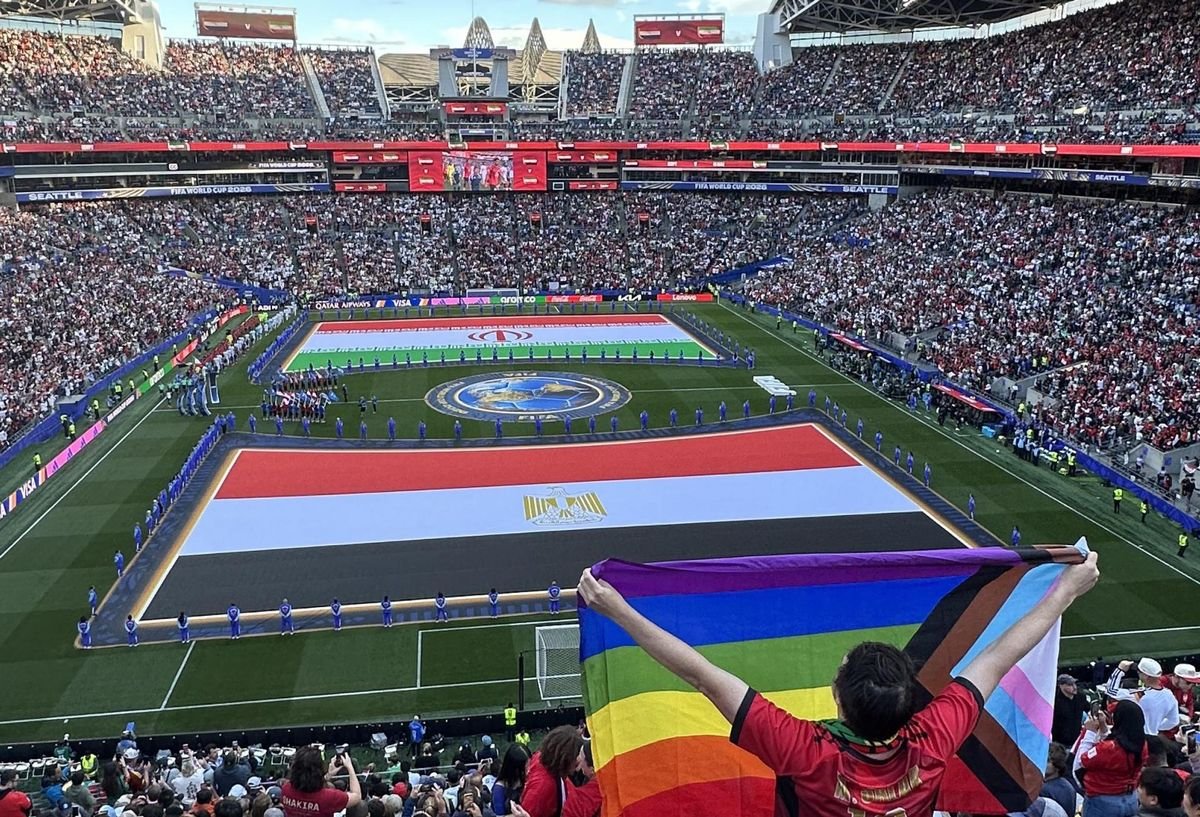
As global soccer superstars like Lionel Messi, Kylian Mbappé and Erling Haaland delight fans with an onslaught of goals at the 2026 FIFA World Cup, U.S. hoteliers are getting their first meaningful look at the tournament’s economic impact.

Courtesy of Ben Alexander
Rosiest projections for the event from tournament leadership promised Super Bowl-size impacts on host cities, while more conservative forecasters baked in the downside risks of high ticket prices, the conflict with Iran and issues over international travel visas.
Early returns for hoteliers on revenue per available room and average daily rate have been strong but not earth-shattering, with more shorter-term stays than expected.
“RevPAR will look OK, because ADR obviously jumped, but definitely not what would have been anticipated as a unique event,” said Suraj Bhakta, CEO of hospitality-focused brokerage NewGen Advisory. “It’s been so long since the U.S. has had some opportunity to do such a thing.”
FIFA President Gianni Infantino likened the impact of the event in multiple interviews last year to “104 Super Bowls in a month.” But the overall impact hasn’t quite reached that level: During the week of the 2026 Super Bowl in the Bay Area, San Francisco, San Jose and Oakland combined for a 128% increase in RevPAR and a 27.3% lift in demand, according to CoStar News.
From June 11-27 — the duration of the tournament’s group stage — RevPAR in host markets was up 18.7% year-over-year compared to a 7.9% improvement for non-host markets, according to STR/CoStar data. World Cup host markets in the U.S. also recorded a 16.7% uptick in RevPAR during the last week of the group stage despite a 2.9% decline in hotel demand.
“The World Cup doesn’t benefit just the cities where there are currently games,” Maverick Hotels and Restaurants CEO Bob Habeeb said. “Since those cities are now out of circulation for small groups and the like, there’s a compression effect. So, I think we’re all seeing some benefit from the World Cup.”
Returns are pacing a bit above CoStar’s February projections for host markets’ RevPAR growth of 12.7% year-over-year during the World Cup months, albeit not substantially. Multiple people in the hospitality industry told Bisnow in April that they had tempered expectations for the event and projected modest rate increases.
Bhakta said clients and friends who own hotels in host cities had anticipated that more people would come for weeklong stays for the tournament, much like for the Super Bowl. Instead, the reality has looked closer to the bump a city gets when it hosts a college football playoff game, he said.
“They didn’t have the longer-term stays,” Bhakta said. “The game day itself had a big surge. Outside of that, the stay length was probably dumbed down to about three days at max.”
The tournament has still helped drive headline numbers. The U.S. hotel industry hit all-time highs for both RevPAR, up 9.6% year-over-year, and ADR, up 9.2%, for the last full week of June as the tournament’s group stage concluded.
During the week of June 21-27, nominal RevPAR hit $129 and nominal ADR reached $178.82, the highest weekly totals for any week on record in the U.S., according to STR/CoStar data. Occupancy also reached a 2026 weekly high of 72.2%.
CoStar data shows the disparity between match days and those without. RevPAR has increased by 25.8% on match days, with ADR going up by 25.9% and occupancy nearly flat. On days with no match, RevPar has increased 9% on a 13.7% ADR gain, but occupancy has dropped 3.1%.

Bisnow/Ryan Wangman
Norway fans in Time Square for the World Cup
Rate increases haven’t been limited to hotels alone, as short-term rentals have also performed well during the tournament.
Fourteen of the 16 host cities have seen rates increase by more than 20% on game days and evenings, Bram Gallagher, director of economics and forecasting for AirDNA, said in an email.
“Overall, I think short-term rental performance so far has been in line with my expectations,” Gallagher told Bisnow. “If you had sky-high hopes for rate, you might be disappointed since gains are strong but not necessarily a doubling or tripling of regular prices.”
Gallagher added that as the tournament moves into the later stages, he expects premiums on rentals to increase as stakes ratchet up.
With the tournament now at the quarterfinal stage, Bhakta said popular teams continuing to progress will be key for operators to be able to drive prices. The continued run of Messi’s Argentina and Mbappé’s France is something that hoteliers are watching.
“It’s worth more when you have the right teams in play,” Bhakta said.
Miami benefited from a favorable draw of matches in the group stage, leading all major U.S. hotel markets with a 51.6% RevPAR increase in the last week of June. The city benefited from contests between teams with rabid fanbases, including Brazil against Scotland and Colombia versus Portugal.
Bhakta said a generally favorable perception of the U.S. among international travelers could help bring back those who stayed away from the country in recent years as the tournament winds down. Inbound international visits declined 5.5% in 2025 to 68.3 million, well below 2019 levels at 79 million visits, according to the U.S. Travel Association.
Habeeb said he expects the summer to be strong for hoteliers, but as the year continues, demand could falter.
“The question mark is going to come when we get back into the traditionally slower times of the year, when our demand in general starts to settle out a little bit,” he said. “When we hit the fourth quarter, where we’re back to a buyer’s market, that’s the next question mark.”