Will using ethanol-blended petrol affect your car insurance? Here’s what experts say
India’s push towards ethanol-blended petrol has raised concerns among many vehicle owners, especially those driving older cars. One common question is whether filling up with E20 petrol could affect the validity of a comprehensive motor insurance policy or lead to claim rejections if engine problems arise.
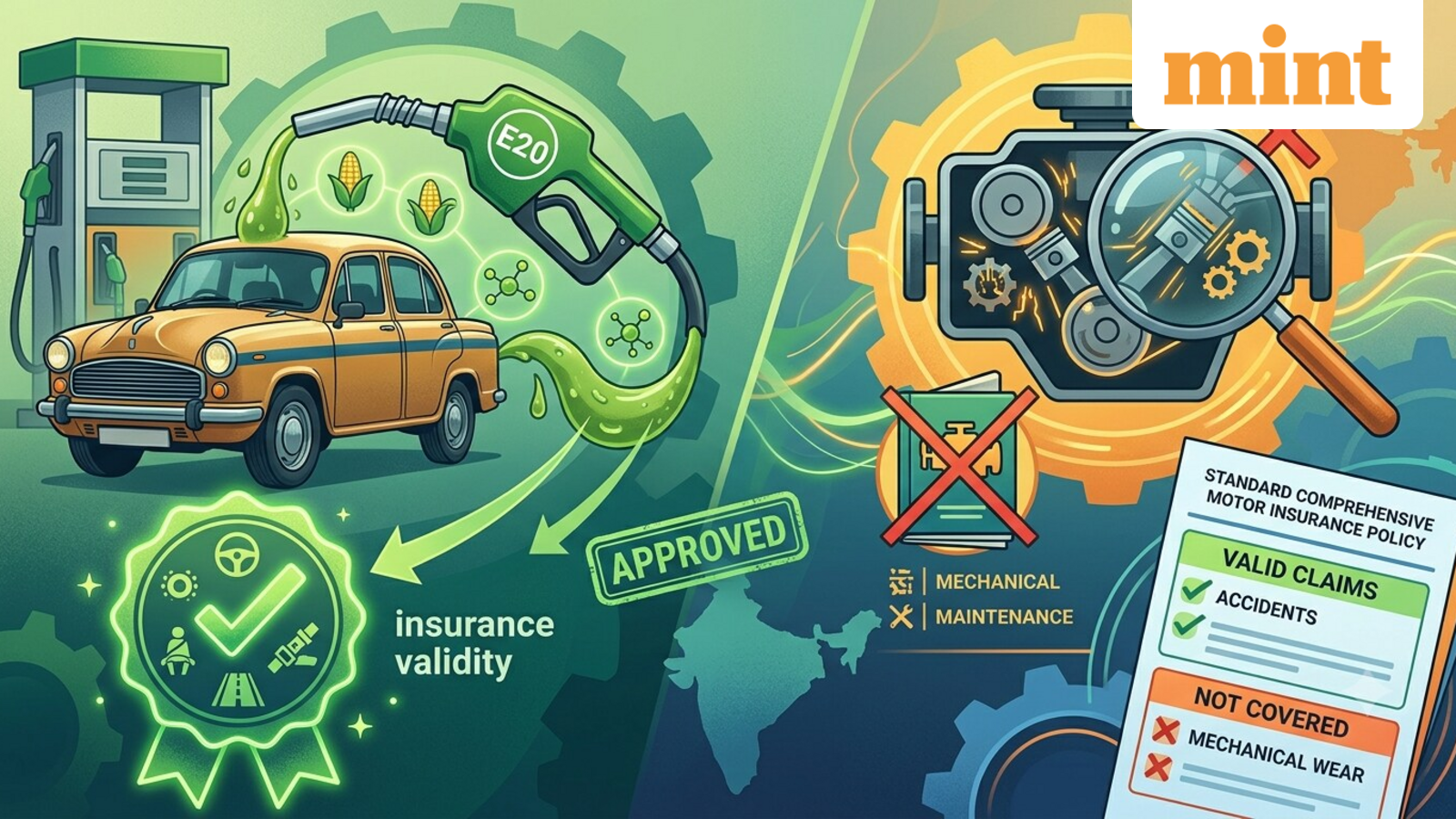
The short answer is no. Insurance experts say the use of government-approved ethanol-blended fuel has no bearing on the validity of a car insurance policy. However, policyholders should understand what motor insurance actually covers and, equally important, what it does not.
E20 fuel does not affect insurance validity
According to Hari Radhakrishnan, Expert at the Insurance Brokers Association of India (IBAI), using ethanol-blended petrol does not invalidate a comprehensive motor insurance policy.
“The insurance companies and the government have already clarified that usage of ethanol-blended fuels has no impact on the validity of the comprehensive insurance policy,” he said.
Radhakrishnan explained that using E20 fuel does not amount to unlawful or unsafe use of a vehicle. Since it is a government-approved fuel, insurers cannot reject a claim solely because a vehicle was running on ethanol-blended petrol.
The clarification comes as India continues to expand the rollout of E20 fuel as part of its strategy to reduce crude oil imports and lower emissions. While automakers have advised owners of older vehicles to check compatibility before regularly using E20, this is a mechanical issue rather than an insurance one.
What motor insurance covers and what it doesn’t
Many motorists assume that if ethanol-blended fuel causes engine damage, the repair costs would be covered under their insurance policy. Experts say that is a misconception.
Radhakrishnan noted that comprehensive motor insurance is designed to cover accidental external damage to the vehicle. It does not cover gradual wear and tear or mechanical deterioration that develops over time.
Even if prolonged use of incompatible fuel were to contribute to engine problems, such damage would typically occur gradually rather than as a sudden accidental event. Incremental mechanical defects fall outside the scope of standard motor insurance.
Similarly, an engine protection add-on is unlikely to help in such situations.
Engine protection covers are meant for accidental engine damage, such as water ingress during floods, loss of lubrication following an accident, or damage caused by an external impact to the underbody. They are not intended to cover mechanical issues arising from the long-term use of ethanol-blended fuel.
According to Radhakrishnan, one of the biggest misconceptions among vehicle owners is that E20 fuel and insurance are somehow linked. In reality, they are separate issues. Since the government is actively promoting ethanol blending as a public policy measure, insurers have no reason to deny coverage simply because a policyholder uses approved E20 petrol.
For consumers, the takeaway is straightforward. If your vehicle manufacturer recommends or permits E20 fuel, using it will not affect your insurance cover. However, owners should continue to follow the manufacturer’s fuel compatibility guidelines, as any long-term mechanical issues remain a maintenance matter rather than an insurance claim.