Will AI really wipe out all our jobs?
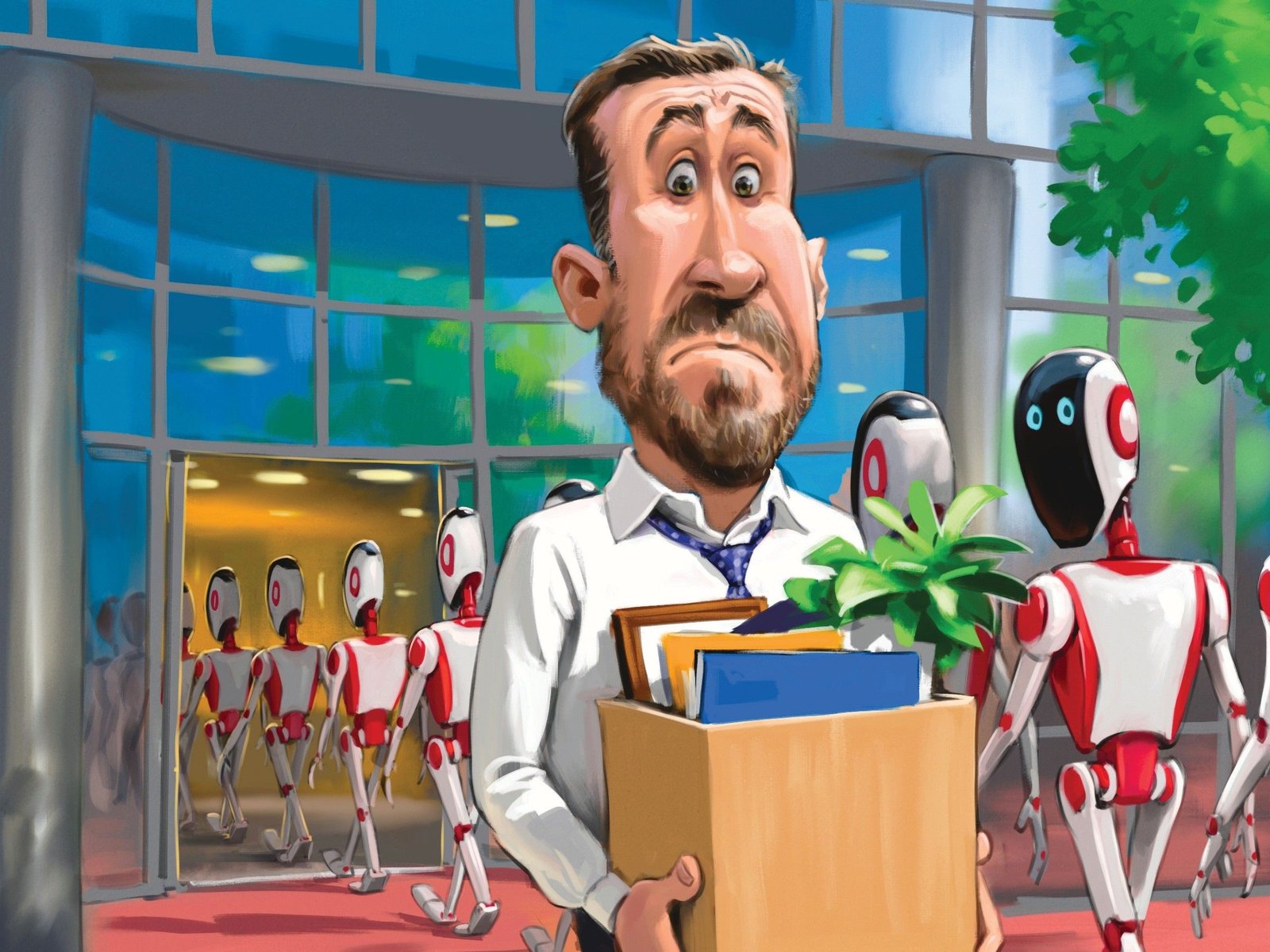
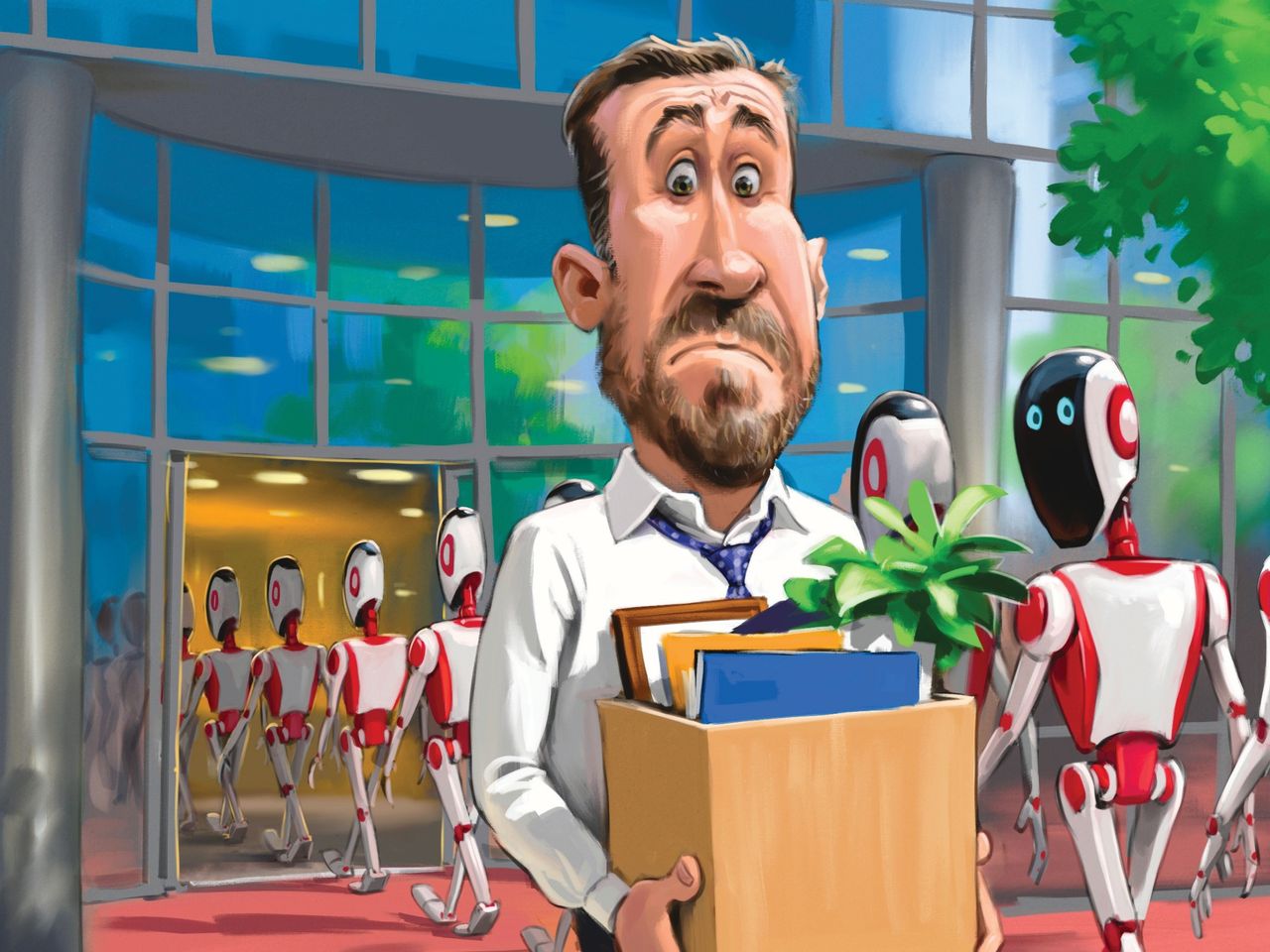
In May 2025, Dario Amodei, the CEO of AI company Anthropic, said that the technology his company is helping push forward could drive unemployment up to 10%-20% in the next one to five years and wipe out half of all entry-level white-collar jobs, as Josh Tyrangiel points out in The Atlantic.
Jim Farley, the CEO of Ford, has estimated that AI will eliminate half of all white-collar jobs in a decade. Sam Altman of OpenAI has opined that it is just a matter of time before we see a billion-dollar company staffed by just one person.
That the advent of a new technology has given rise to predictions of disastrous consequences is hardly new. But that the prophets of doom come not from the ranks of the usual suspects, but from the makers of the new technology and those most in a rush to adopt it, is.
Sign up to Money Morning
Don’t miss the latest investment and personal finances news, market analysis, plus money-saving tips with our free twice-daily newsletter
Don’t miss the latest investment and personal finances news, market analysis, plus money-saving tips with our free twice-daily newsletter
So, are they right? AI is clearly already transforming work, says Tyrangiel. Companies including Meta, Amazon, Walmart, and JPMorganChase have recently announced lay-offs due to “automation”.
Three academics from the Stanford Digital Economy Lab have found that entry-level jobs that are exposed to disruption from AI have already seen a 13% decline since late 2022. So the transformation may already be under way, even if it’s too early to be sure (other factors could explain the decline and the evidence is sparse and mixed).
If that transformation unfolds slowly and the economy adjusts quickly, then we may, as economists reassure us, be fine, or even better off in aggregate. But if AI instead triggers a rapid reorganisation of work, compressing years of change into months, affecting roughly 40% of jobs worldwide – as the IMF projects – then the consequences could be huge.
Is AI actually any good for us?
Which will it be? Let’s remember that humanity has been automating work for 250 years, as technology analyst Benedict Evans has pointed out. History shows that every wave of automation has destroyed whole classes of jobs and created new ones. The process may be painful for some, but over time and in the aggregate the result has been greater prosperity.
Two concepts from economics give us confidence that this time is unlikely to be different. The first is the “lump of labour fallacy” – the misconception that there is a fixed amount of work to be done and that if some work is taken by a machine then there will be less work for people. But if it becomes cheaper to use a machine to make a pair of shoes, say, then the shoes are cheaper, more people can buy shoes, and they then have more money to spend on other things, and we discover new things we need or want, and new jobs get created.
The second concept is Jevons Paradox. In the 19th century, the Royal Navy ran on coal and people worried about what would happen when the coal ran out. Don’t worry, said the optimists: steam engines are getting more efficient, so they’ll use less and less coal. Not at all, said economist William Stanley Jevons: if we make steam engines more efficient, then they will be cheaper to run, and we will use more of them and use them for new and different things, so more efficient steam engines means we will use more coal.
That paradox has been at work in relation to white-collar work for a long time, says Evans. In the 1880s, typewriters and carbon-copy paper meant that clerks could produce more than ten times the output of the days when they copied out documents one at a time by hand. The result for clerical employment? Far more clerks were hired. If one clerk can do the work of ten, then perhaps you might want to do more of the work that clerks do – more analysis, or manage more inventory, say. You might build a different and more efficient business that is only possible because of the new technology.
It was the same story when, much later, digital spreadsheets were introduced that could do at the click of a button what might previously have taken a whole team of accountants all week. Employment for accountants went up.
The most recent study into what AI is doing to jobs seems to confirm that this is indeed what is happening this time, as Noah Smith reports on Substack. A study by Ara Kharazian, Lisa Simon and Ryan Stevens, researchers at US technology start-ups Ramp and Revelio Labs, examined private data to determine what happens when companies start using generative AI. The answer is that they hire more humans. The number of entry-level jobs rose, too. So it seems that AI is “still mostly a complement to human labour rather than a substitute” for it, says Smith. For now at least, AI is “behaving pretty much like a normal technology”.
AI is just software
That’s the usual pattern, and if AI did indeed start to progress at the rates feared and with the consequences predicted, it would be “unprecedented in human history”, says The Economist. New technologies have never spread fast enough to make large numbers of people unemployed for long periods of time because the diffusion of the technology always proceeds slowly.
To see why that is unlikely to be different this time, remember that AI is just software, as Tyrangiel points out. And the thing about software is that “people hate it almost as much as they hate change”. Before AI can transform a company, it has to access data and be woven into existing systems. A “trade secret of most Fortune-500 companies is that they still run critical functions on lumbering, industrial-strength mainframe computers that almost never break down and therefore can never be replaced”. Integrating such legacy tech with AI would mean big changes involving lots of people with strong opinions about the “right” way to proceed. Meanwhile, months pass, then years – and “the CEO still can’t understand why the miracle of AI isn’t solving all of their problems”.
Indeed, the idea that “one magic piece of software” will change everything instantly and override all the complexity of real people, real companies and the real economy “sounds like classic tech solutionism, but turned from utopia to dystopia”, says Evans. The reality looks rather different, as Zeynep Tufekci shows in The New York Times. Firms that have experimented with fully automating functions such as customer service have been burned. The result has been scammers talking chatbots into handing over control of key functions, promising refunds or incredible deals, such as a new car for $1. The bot taking orders at McDonald’s proved “wildly dysfunctional”.
The key thing to understand is that these incidents are not the result of errors, but of the technology functioning as it is designed to do. Currently existing AI technologies are “not reasoning machines” – they simply produce answers that are probable based on the data they’ve been trained upon. They have no common sense or intelligence. AI can “do many things with astounding efficiency”, especially if those things are formal and structured and can be tested and checked in real time. Most jobs are simply not like that and still require “good old-fashioned human intelligence”.
This doesn’t mean the “job apocalypse” definitely won’t happen, says The Economist. Maybe this time will be different. Perhaps the technology will transform in ways we cannot yet predict. If so, you may know the apocalypse by these signs: sharply rising productivity combined with weak real-wage growth in the US, the world’s frontier economy. This would show up as an increase in GDP per person above the 2.5% upper limit that is the historical norm in frontier economies and a simultaneous jump in corporate profits, reflecting that the gains from higher output were flowing to capital, not labour. Another sign would be big job losses in lots of industries, showing up in a recession. Which jobs vanish in the next recession will “give a hint about the shape of the AI world to come”.
Is there actually any sign of any of this happening? Not really. The labour market “certainly is not cracking yet”, says The Economist. “The share of the OECD’s working-age population with a job keeps breaking records, unemployment across the club of mostly rich countries is just 5%, and America employs more people than ever in ‘AI-exposed’ industries, such as law.” American graduates have been struggling to find jobs since before the launch of ChatGPT fired the starting gun on the AI revolution in late 2022. Many economists foresee relatively little disruption ahead. Those at America’s Bureau of Labour Statistics think the country will add 5.2 million jobs between 2024 and 2034, increasing total employment by 3%.
Robots can’t do your job
There are broader reasons for scepticism. The heaviest users of AI have recently been scrambling to curtail its use as the cost of using it outweighs the gains. Surprisingly few people use the technology on a regular basis and the share of companies in the OECD that have adopted AI remains small (about 20% for the latter, although figures for both individual use and company uptake vary widely across different studies, depending on what is deemed to count.) The basic problem here is that most people just don’t know what AI is supposed to do for them, as Evans has argued. There’s a box you can type stuff into, and you get text in response. Often the text is roughly right, but precisely wrong. For how many people will that be life-changing? As Pablo Picasso perceptively saw in 1968, “Computers are useless. They can only give you answers.”
The likelihood is that AI will not so much replace jobs, as make certain tasks easier and quicker for some people. Generally, says Evans, jobs are a complex mesh of things that we might not even be able to explain explicitly. You may have a good idea of just why a chatbot is never going to be able to do your job, for example, but will be impressed if someone says that it can of course already do the job of a lawyer or a doctor. The blunt truth is we do not know just what is involved in jobs we are confidently predicting will be gone tomorrow, nor do we know how AI will change them, if at all.
What we should most fear is fear itself. A recent poll found that 70% of Americans believe that AI will reduce their employment opportunities, says Robert Shiller, also in The New York Times. That fear could in itself have economic consequences. When millions and millions of people make economic decisions based upon negative expectations, there is a risk that the fear can actually “help birth the reality”. The leaders of Silicon Valley should learn to do better than peddle alarmist narratives in the hope that the resulting media attention will highlight how powerful their latest AI model is. They will find it harder to sell their wares in future if the result is an economy paralysed by fear and recession.
This article was first published in MoneyWeek’s magazine. Enjoy exclusive early access to news, opinion and analysis from our team of financial experts with a MoneyWeek subscription.