Water bill moving forward, is a key step for revolving funds
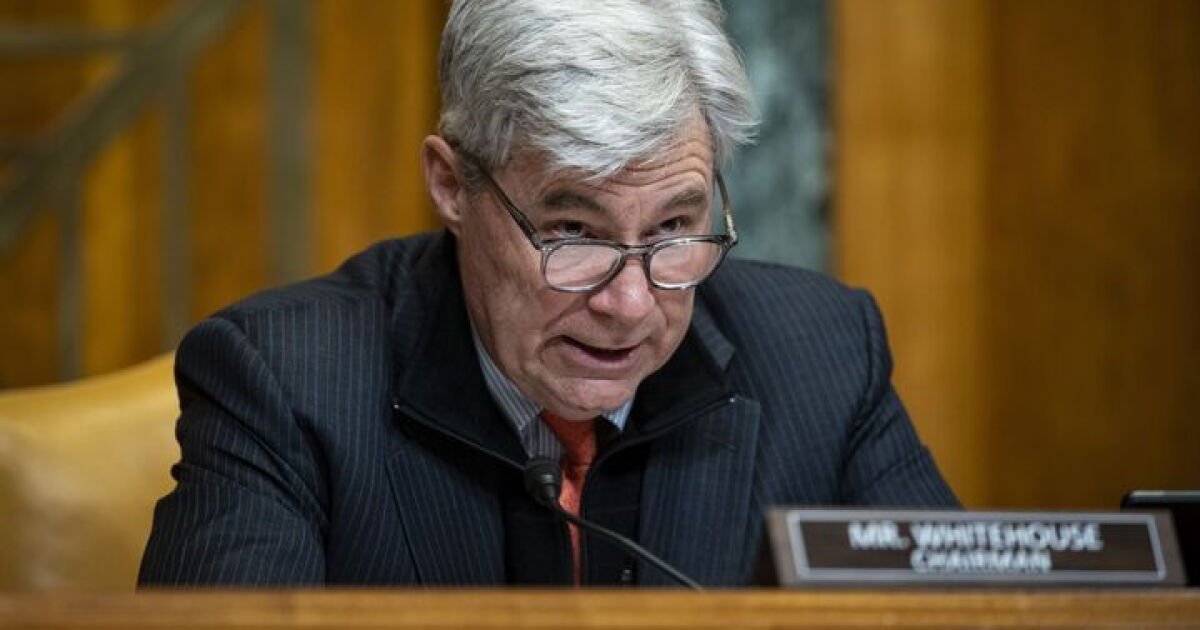

The Senate Committee on Environment and Public Works is moving toward completing a markup of the Water Resources Development Act, a key step in resolving the future of state revolving funds.
Processing Content
“Our markup to advance this significant package of legislation demonstrates a bipartisan commitment to maintaining and upgrading the nation’s water infrastructure,” said committee ranking member Sen. Sheldon Whitehouse, D-R.I.
“WRDA 2026” reauthorizes the Environmental Protection Agency’s drinking water and wastewater infrastructure programs, including the SRFs. The final markup session is scheduled for Wednesday.
Water infrastructure projects are financed through a complex public finance system where WRDA serves as the rule book.
SRFs are administered through the Environmental Protection Agency’s Clean Water State Revolving Fund and the Drinking Water State Revolving Fund.
The funds are subject to the appropriations process and are used by local water authorities for capital improvement projects, which are often supported by bond sales.
According to the document released Monday, “The DWSRF is reauthorized at $3.75 billion for fiscal year 2027, $4 billion for fiscal year 2028, $4.25 billion for fiscal year 2029, and $4.5 billion for fiscal year 2030.”
“The CWSRF is reauthorized at $3.5 billion for each of fiscal years 2027 through 2030.”
The numbers have been a subject of debate regarding whether the funding will be enough to maintain the high-water marks set by the Infrastructure Investment and Jobs Act, which expires on Sept. 30.
In 2026 the IIJA sent an additional $2.6 billion into each program, on top of appropriations of $1.16 billion for the clean water fund, and $1.1 billion for the drinking water fund.
If the EPW’s numbers hold, the clean water fund takes a $700 million cut while the drinking water fund gets a slight increase.
Big cuts could still come during the appropriations process, which has the final word on how much money goes where.
The House Appropriations Committee has already weighed in by recommending cuts of $1.2 billion for clean water funds and $911 million for drinking water projects.
The Senate Appropriations Committee has yet to come to an agreement.
EPW’s version of the bill also authorizes the use of revolving funds to solve the puzzle of removing perfluoroalkyl and polyfluoroalkyl substances, otherwise known as forever chemicals, from the water supply.
Fixing cybersecurity flaws in water infrastructure are also addressed.
A large portion of the of EPW’s 15-page working document addresses individual water infrastructure projects scattered across the country to be tackled by the Army Corps of Engineers.
“The Army Corps of Engineers conducts essential work to modernize water resources infrastructure, manage risk from floods and coastal storms, and improve navigation along our waterways and at ports,” said EPW Committee Chair Sen. Shelley Capito, R-W.Va. “This work protects lives and property and bolsters our economy.”
The EPA under the Trump administration has been openly