Trump’s shakedown is a bridge to cold reality
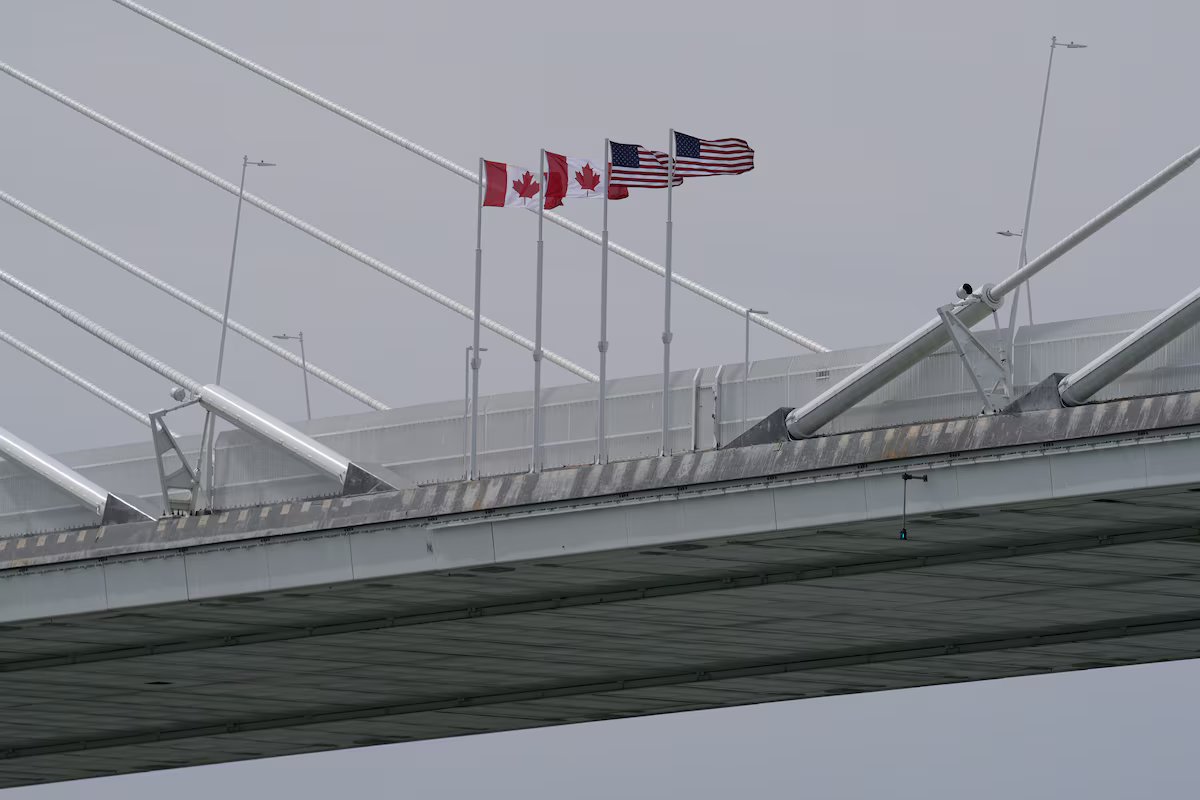


Canadian and American flags fly on the Gordie Howe Bridge between Windsor, Ont., and Detroit in May.Paul Sancya/The Canadian Press
Donald Trump’s brand is throwing his weight around. He did it as a real estate developer and as a television character. As President, he makes sure that everyone knows he’s the boss. Still, it could seem shocking that he would shake down Canada over the Gordie Howe Bridge.
Even though Canada paid for the $6.4-billion bridge and had planned to use the toll revenue to recoup the cost, the federal government agreed to share net profits with the United States. Otherwise the bridge might not open, hurting the Canadian economy.
Mr. Trump’s brazen aggression shouldn’t surprise. His harsh approach to international relations reflects how he sees the world. To him, there are strong and weak, winners and losers. Canada wanted to get the bridge operational and so had to pay up. Alliances and shared histories don’t carry any weight, not to mention existing agreements.
It’s also a reflection of the way that the polished art of diplomacy – building bridges, one might call it – has been abandoned by the U.S. Mr. Trump prefers to send his message in more belligerent ways. Only days after Canada swallowed hard and accepted the Gordie Howe deal, Mr. Trump was again posting on social media a picture of this country covered by a U.S. flag.
There are lessons in all this for Canada.
Opinion: A U.S. bridge shakedown in a rough world
The first and most obvious is that a deal with the United States exists only as long as Mr. Trump feels like continuing to honour it. That’s not to say that Canada should not seek to renew the USMCA continental trade deal. But Ottawa should not bend over backwards to make concessions in order to achieve that. A deal reached is not a deal secured.
More importantly, Canadians must see the United States with clear eyes.
For decades, Canadians convinced themselves that this country was a sort of kin to the United States, like-minded enough to share the continent peacefully but distinct enough to feel different. Cousins, or maybe even siblings.
This country’s belief that it was emotionally close to the United States has not protected it. Since Mr. Trump was elected a second time, Canada has seen a wave of threats about U.S. annexation and faces punishing tariffs. Other close allies have also been targeted by Mr. Trump, who insults NATO leaders and covets Greenland.
The world has been learning the lesson of 19th-century British prime minister Lord Palmerston, a pragmatist who stated “We have no eternal allies, and we have no perpetual enemies. Our interests are eternal and perpetual.”
What are Canada’s eternal and perpetual interests? Sovereignty comes first. Everything flows from independence. As a small nation, maintaining that requires military strength, partnerships with like-minded democracies and a robust economy. And that requires global trade. If the United States is no longer interested in free trade, it’s good that Canada is hedging its bets by building relationships elsewhere.
When it comes to pursuing its interests vis-à-vis the United States, Canada is not without cards to play.
Mr. Trump likes to claim that his country doesn’t need anything from Canada. This is plainly untrue. Americans import large quantities of oil, natural gas and hydro-electric power, as well as uranium, potash and other commodities.
The United States also wants the dollars spent by Canadian consumers. Tourism operators are concerned about the personal boycott many Canadians have applied to the U.S. And officials there are increasingly agitated about the fact that U.S. wine, beer and spirits have been taken off the shelves in a number of provinces.
When negotiating with Mr. Trump, Canada must also remember that his fondness for naked authority occasionally runs up against the limits of his own ability to shape events.
Why is Mr. Trump allowing the Gordie Howe Bridge to open after only a short delay, when he could have held out longer and probably secured a bigger slice of the pie? It may be because Michigan is a swing state and he is keenly aware that Democrats retaking the House of Representatives in the mid-terms, less than four months from now, would lead to two years of investigations and perhaps impeachment. Again.
One way or another, Mr. Trump will eventually leave office. Many Canadians will be relieved to see the back of him. But if anyone believes that his exit means Lord Palmerston’s advice no longer applies, well, we have a bridge to sell you.