The World Cup’s Other Final
Spain took home the trophy. The digital economy took everything else: our attention, our sleep, our snack budgets and, apparently, our remaining sense of distance. Uber data supplied to PYMNTS says one fan treated a 266-mile ride from Arlington to Houston as perfectly normal match-day transportation, while another logged trips at 10 venues in all three host countries. Somewhere, a product manager is already calling both of them “power users.”
The 2026 World Cup ended with Spain beating Argentina 1-0 in extra time, but the commercial match was never confined to the pitch. Across 39 days and 104 games, the tournament became a planetary behavioral experiment: What happens when billions of people receive the same emotional push notification at once? By the end of the round of 16, FIFA estimated 5.2 billion people had engaged with the tournament; by the quarterfinals, its digital channels had generated 34 billion impressions and two billion engagements. The answer, evidently, is that everybody taps something.
The Social Feed Needed Extra Time
During the group stage alone, FIFA counted 11 billion video views, 17 billion impressions and 39 million new followers across its platforms. A clip of Argentine soccer star Lionel Messi scoring against Algeria drew 53 million TikTok views; Shakira and Burna Boy’s opening performance reached 131 million views on Instagram and 44 million on YouTube. This was less “second screen” than “first screen, second screen and a third screen explaining the meme.”
Television Viewership Broke New Records
Brazil’s match against Haiti reached 51.3 million people across Globo’s ecosystem, while CazéTV set a YouTube record for the most-watched football match streamed on the platform. Mexico’s second match drew 25.5 million linear viewers, breaking the record for country’s highest FIFA World Cup audience of the 21st century.
In Britain, the BBC averaged 9.7 million viewers for the final and peaked at 13.6 million, according to the Guardian’s account of the ratings. Its new football YouTube channel separately generated 100 million views, while tournament clips, interviews and analysis drew 2.55 billion social views. The living room survived. It simply acquired tabs.
Merchandise Ran a High Press on eCommerce Inventory
By kickoff, Nike’s national-team kits had sold 2.5 times more than at the comparable point in 2022, according to Reuters. Adidas, which outfitted both finalists, booked roughly 250 million euros ($285 million) in World Cup products in the first quarter and expected a similar second quarter. The modern fan may stream in 4K, but still wants to wear the result on a polyester billboard.
Search Became an Emergency Travel Agent
After Argentina reached the final, searches on travel booking platform Despegar for New York flights jumped 6,000% within hours. Two special Buenos Aires-to-New York flights — 540 seats priced around $5,000 in economy and $10,000 in business — sold out by the next morning. Dynamic demand met irrational devotion and wisely stepped aside.
The Snack Economy Overcame Time Zones
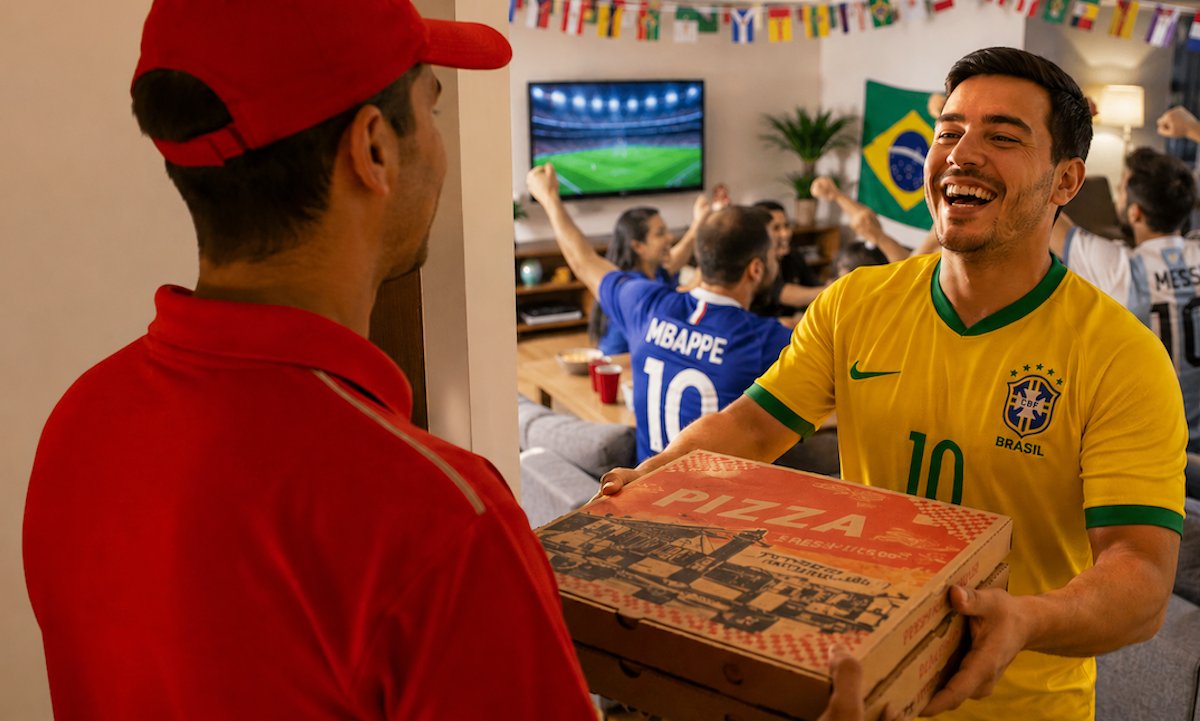
In India, midnight matches pushed pizzas, burgers, fries and beverages deep into the graveyard shift; one Chandigarh customer placed a 16,444-rupees ($140) finger-food order. In Israel, food delivery company Wolt reported match-hour orders up 20%, family pizzas up 35% and ice cream up 44%. Uber, meanwhile, counted more than 10 million ranch-dressing delivery orders during the tournament, followed by a convenience-store podium of water, electrolytes and Tylenol. Globalization, meet the next morning.
And then there was mobility: fans from 122 countries using Uber, 35,000 shuttle riders, a Dallas driver completing more than 70 stadium trips, Los Angeles winning the dubious lost-and-found title, and Bass Pro Shops enjoying a 20% tourism bump. The World Cup’s grand digital-economy lesson is that a goal is no longer merely a goal. It is a ride request, a jersey search, a delivery spike, a stream, a social clip and, occasionally, an urgent hunt for a missing passport.
Spain gets another star above the crest. Platforms get the case study. Ranch gets the golden bottle. And one fan gets a 266-mile receipt proving that, for five glorious weeks, “too far” was merely a surge-pricing category.