The Most Expensive ZIP Codes Reveal Where Wealth Actually Goes
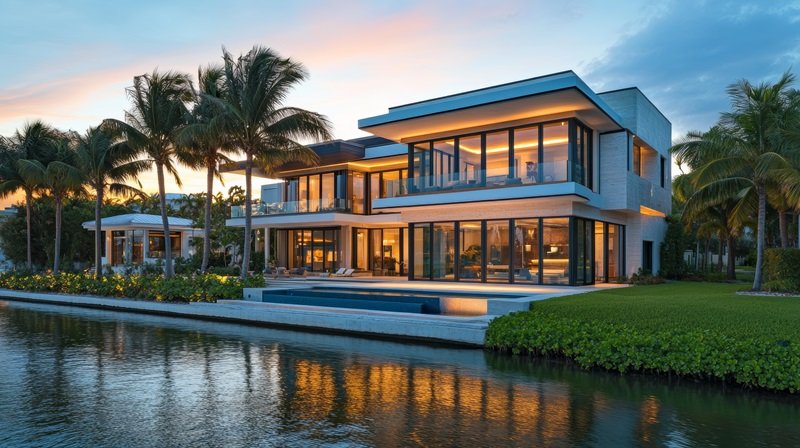
In some of the most expensive ZIP codes in the nation, the cost of basic necessities is dwarfed by the massive price of housing, according to a new report by Realtor.com. In fact, the numbers are staggering.
For example, Fisher Island, Florida, was among the top three with a median home price of $10.83 million. Water Mill and Bridgehampton, New York, two enclaves in the Hamptons, were close behind, with median prices approaching or exceeding $8 million, according to Realtor.com.
Beyond housing, however, living in those communities does not cost dramatically more than it does in other affluent area of the U.S.
Realtor.com said that using county-level data from United for ALICE—a nonprofit research initiative that estimates the minimum income households need to cover basic necessities—a family of four would need about $66,000 a year for essentials in Miami-Dade County and about $76,000 in Suffolk County, where Water Mill and Bridgehampton are located.
Massive Housing Costs
While those budgets are significant, Realtor.com said they are dwarfed by housing.
First, let’s look at Fisher Island, which has been a home for such celebrities as Julia Roberts and tennis pro Andre Agassi.
Financing the median-priced home there, assuming a 20% down payment and a 30-year mortgage at about 6%, pushes the annual cost of ownership to nearly $688,000 before taxes, insurance, HOA fees, and maintenance.
Realtor.com said that comparable totals reach roughly $582,000 in Bridgehampton (where Meg Ryan and Madonna have lived) and $531,000 in Water Mill (where such celebrities as Mel Brooks, Jennifer Lopez, and Richard Gere have lived).
By itself, the mortgage costs several times more than the annual cost of a family’s basic needs, Realtor.com said.
Realtor.com noted that the comparison offers a window into what happens when housing stops reflecting the local cost of living and starts reflecting something else entirely: scarcity, exclusivity, and wealth.
Realtor.com said most everyday expenses are tied to the local economy: Grocery stores compete for customers, child-care costs reflect local wages, and transportation, and healthcare expenses vary by region but are shaped by what residents and businesses can afford.
Luxury housing follows a different set of rules, however.
Local Wages, Employment Barely Factor In
“At the top of the market, the entry barrier is almost entirely the asset itself: land, structure, and a scarcity premium,” said Anthony Smith, Senior Economist at Realtor.com. “Local wages and the employment base barely factor in, because a lot of the time, the buyer pool is not local and not income-constrained.”
In other words, Realtor.com noted, the highest-priced homes are often competing for buyers who are not dependent on the local job market. A household’s ability to buy a $10 million property may have little connection to the wages earned by people who live and work nearby.
“In these ZIP codes, the wealth divide is the home value, not the cost of everyday life,” Smith said.
That dynamic helps explain why a county-level estimate for groceries, child care, and other necessities can remain relatively grounded while housing costs climb into the hundreds of thousands of dollars per year.
Fisher Island’s appeal begins with scarcity. The private island, accessible only by ferry, helicopter, or private boat, has a fixed geographic footprint with little ability to add new supply.
“Fisher Island carries its premium on true island scarcity,” Smith says.
Water Mill’s appeal is different, Realtor.com said. The Hamptons has some of the largest homes among the country’s most expensive ZIP codes, with a median home size of more than 6,100 square feet.
“Water Mill can lean into space,” Smith said.
Both command extraordinary prices, but the reasons behind those prices reveal how different forms of scarcity can shape the top of the housing market.
Ongoing Costs
Corey Wayne Ogle, a New York real estate advisor who specializes in the Hamptons, said some clients still ask about the ongoing costs associated with owning a large property.
“[One client] was asking these questions: How much is the seller spending every month to maintain the lawn, maintain the landscaping? What are these costs actually going to be for keeping the pool clean?” Ogle said.
Those expenses can add up, but Ogle says they are not unique to ultraluxury homes. A buyer with a large property in the Hamptons is still paying for many of the same categories of upkeep as someone with a second home elsewhere.
“If you have a pool and a garden, you have someone that you have to pay to help you maintain it,” he says. “You still have those things.” The difference is that buyers at higher price points often view those expenses differently.
United for ALICE publishes its estimates at the county level, not the ZIP-code level, which means Fisher Island shares the same non-housing budget estimate as the rest of Miami-Dade County, while Water Mill and Bridgehampton share Suffolk County’s estimate.