Should Altadena Residents Get a Pass From California’s New Housing Laws?
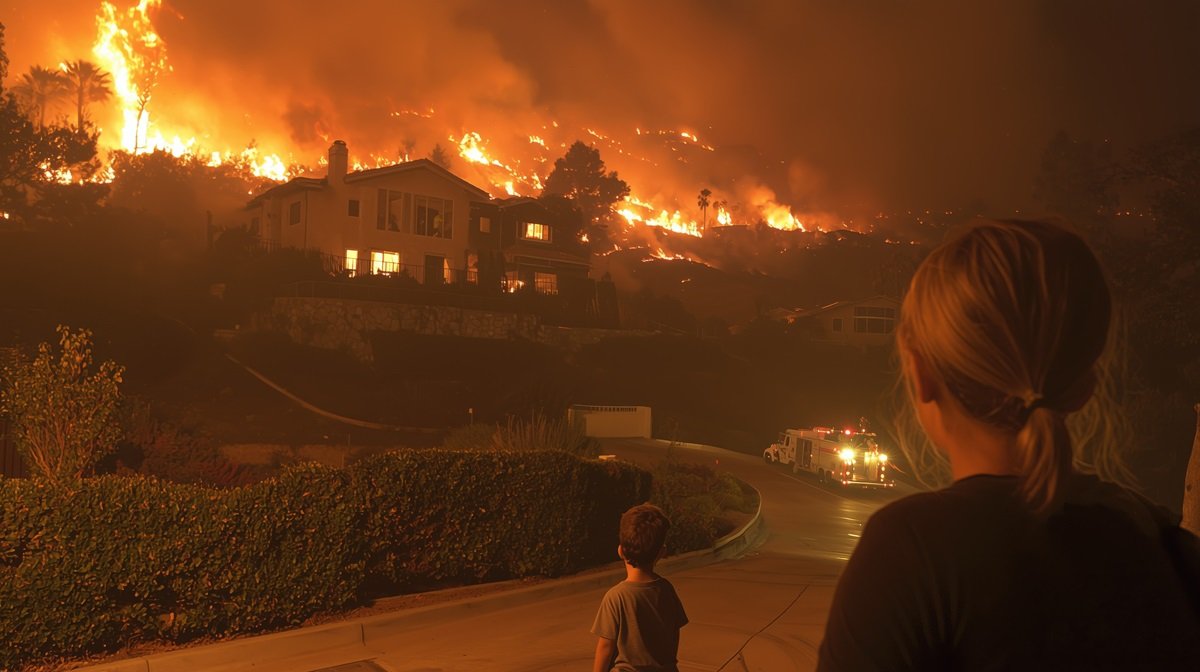
The Altadena neighborhood in Los Angeles was ravaged by the wildfires of January 2025, and according to a report by nonprofit news website CalMatters, it may get a reprieve from two of California’s marquee housing laws.
CalMatters said that a bill to temporarily exempt the fire-torn community recently sailed through back-to-back Assembly hearings.
It said that the two laws being put on hold — Senate Bill 9 from 2021 and Senate Bill 1123 from 2024 — legalize the construction of up to 10 small houses on plots that otherwise are reserved for single-family homes and make it easier to split land into smaller parcels that can be sold individually.
Senate Bill 1090 by Sen. Sasha Renée Pérez, a Democrat whose district includes Altadena, would exempt the unincorporated town’s single ZIP code from the two laws through 2030, CalMatters reported.
Eaton Fire survivors would be given “the time they need to rebuild their community without the overpowering influence of predatory developers looking to take advantage of the devastation and suffering,” Pérez said at a press conference recently.
About Protecting Altadena
Altadena “shouldn’t be a playground for people who want a return on investment,” said the town’s Assemblymember John Harabedian, a fellow Democrat. The bill is “about protecting Altadena and keeping Altadena Altadena.”
The rebuilding effort in Altadena is progressing slowly, delayed by sluggish insurance payouts, pending litigation, and escalating construction costs. CalMatters said that only a few dozen permits have been filed that make use of these state laws, either by professional property developers or individual homeowners.
According to CalMatters, some pro-housing advocates and some Altadena residents worry that the new bill, which supporters frame as a curb on out-of-town investors, could inadvertently make it harder for some fire survivors to rebuild and remain.
The purpose of the legislation is “to stop greedy developers from taking advantage of Altadenans, which, of course, we all agree with,” said Caroline Paules, a town resident and founder of a small home construction company, speaking before the Assembly’s housing committee. “I believe what it actually does is prevent Altadenans from housing themselves — and also Altadenans from helping to house each other.”
CalMatters noted that preventing speculators from profiting from the Los Angeles rebuild without also harming homeowners is a tough balancing act.
Lawmakers also are considering a bill to give the California Coastal Commission more authority over reconstruction projects pursued by anyone who purchased a property after a future disaster.
Could Impact Survivors Selling Properties
CalMatters noted that’s intended to check investor-led redevelopment. It could also make it more difficult for survivors to sell their properties should they decide or be forced not to rebuild.
SB 1090 received unanimous support from both the Assembly housing and local government committees, even if some “Yes In My Backyard”-aligned members expressed some apparent discomfort, CalMatters noted.
The website said that the debate over the bills pits California’s longstanding efforts to turbocharge housing construction against the interests of many Altadenans who want to rebuild the community as it was. And, it raises questions about who and what gets prioritized when a community is rebuilt after a natural disaster in California.
“I don’t think it’s NIMBYism and I don’t think it’s unreasonable for us to say, ‘We’re still in a state of emergency. Let us recover,’” said Nic Arnzen, chair of Altadena’s Town Council and a supporter of Pérez’s bill.
These kinds of arguments are common in California housing debates.
Local residents often object to new, denser development, or to the policies promoting it, because while more homes may be needed statewide, the conditions specific to a particular town or neighborhood — whether it’s heightened wildfire risk, historic significance, the physical scale or demographic make-up — argue that it shouldn’t be built here, CalMatters said.
Arnzen and other supporters of SB 1090 say that the temporary nature of the bill and Altadena’s extraordinarily unusual circumstances make this a legitimately special case.
Never Meant to Apply to Destroyed Towns
The housing laws at issue were aimed at gradually adding density to urban areas as existing homes are periodically sold and as rare vacant parcels are developed, he said.
They were “never meant to apply to towns that were two-thirds destroyed,” he said.
Before the fire, 95% of all the houses in parts of Altadena touched by fire were single-family homes, according to a UCLA analysis.
Forcing the state laws upon the burn area would “completely reshape the character of the neighborhood,” Arnzen said.
Even though Pérez’s bill is written to help Altadenans rebuild on their terms, Andrew Post worries it might prevent his parents from rebuilding at all.
Post’s parents, retired physicists Jonathan and Christine, lost their house on North Marengo Avenue.
They were determined to rebuild from the start, over their son’s initial objections, CalMatters said. But an as-yet uncertain insurance payout, the couple’s modest fixed incomes, and unclear construction costs make for a tight reconstruction budget.
Unexpected construction delays or a denied insurance claim and “they could be dead broke and have an unfinished house,” Post said. Even if construction goes as planned, the couple will have little left to live off of.
Typical Homeowner Still Short on Money
In early June the family filed paperwork with the county to see if they could split the parcel, as allowed under the law.
According to CalMatters, the typical Altadena homeowner hoping to rebuild is short $550,000 after accounting for past and expected insurance payouts, according to a survey by the nonprofit Department of Angels.
Splitting up a lot and selling a chunk to a developer, as SB 9 allows, could help many homeowners close that gap, said Azeen Khanmalek, director of the pro-housing advocacy group Abundant Housing LA.
He said that those density-boosting state laws should be seen as “potential tools and pathways to help some homeowners come back and rebuild, rather than as threats.”