Self-Checkout Rules Could Reshape Store Tech Spending
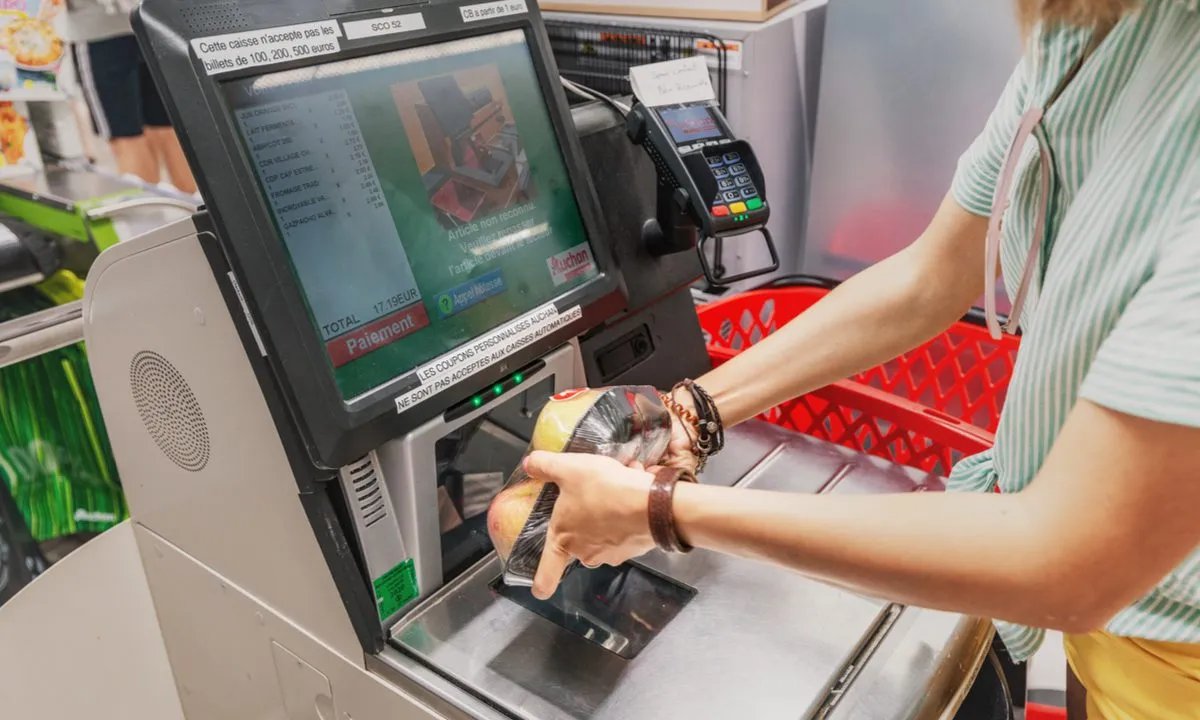
Retailers have treated self-checkout as an operational decision shaped by labor costs, consumer preferences and technology. Rhode Island may be setting a precedent and changing those calculations by making parts of the checkout experience a matter of state law.
The state recently enacted the Restrictions on Self-Service Checkout Stations Act, becoming the first state to establish statewide operating requirements for grocery self-checkout. The law establishes minimum staffing standards and defines how employees assigned to self-checkout may perform their work.
The statute requires grocery stores to maintain “a minimum of one manual checkout station in operation for every three (3) self-service checkout stations in operation,” while also requiring at least one staffed checkout lane that complies with the Americans with Disabilities Act. It further provides that “an employee shall be relieved of all other duties when monitoring any self-service checkout station.”
Those provisions alter staffing schedule and establish that front-end automation carries operating obligations that retailers cannot offset simply by assigning one employee multiple responsibilities during busy shopping periods.
The law also establishes a formal enforcement structure. Employees and consumers may file complaints with the Department of Labor and Training, repeated violations may result in financial penalties and continued noncompliance can constitute an unlawful act under Rhode Island law. The measure takes effect Jan. 1, 2027.
Automation May Face New Constraints
Rhode Island is not alone. Legislatures in Massachusetts, Connecticut, California, Ohio, Tennessee, Oklahoma and Washington have all considered proposals that would regulate some aspect of self-checkout, although the details vary. Some bills would establish minimum numbers of staffed checkout lanes, while others would limit the number of self-checkout stations that a single employee may supervise, restrict the types of merchandise eligible for self-checkout or impose transaction limits. There are more localized efforts, too. A proposed law in New York City, by way of example, would require one employee for every three self-checkout kiosks and impose a 15-item limit in food stores and pharmacies.
The discussion is moving from technology adoption to technology management. Proposed legislation introduces another variable: statutory compliance. If operating a bank of self-checkout terminals requires additional staffed lanes or dedicated employees whose responsibilities cannot overlap, the financial and perhaps even staffing equation changes.
Rather than expanding the number of self-checkout terminals, merchants could devote a larger share of technology budgets to reducing inventory shrink, improving exception handling and giving store associates better tools to resolve problems quickly. Computer vision, artificial intelligence, electronic article surveillance, smart carts and shelf-monitoring systems all address operational challenges that persist whether a customer checks out with a cashier or scans merchandise independently.
Legislative scrutiny could place renewed value on workforce scheduling, queue management and associate mobility. Better forecasting tools and mobile devices that allow employees to assist customers throughout the store could become as important as adding another row of self-checkout terminals.
Consumer demand for self-service has not disappeared. PYMNTS Intelligence research found that 84% of consumers say they like using self-service kiosks, while 66% prefer them to traditional staffed checkout lanes. At the same time, the research found that satisfaction with existing self-service experiences remains uneven.
Whether additional states ultimately enact similar laws remains uncertain, but the obligations retailers assume once they deploy it are crystalizing state by state.