Sam Neill’s Ultimate Escape: Inside Late Actor’s Epic New Zealand Winery
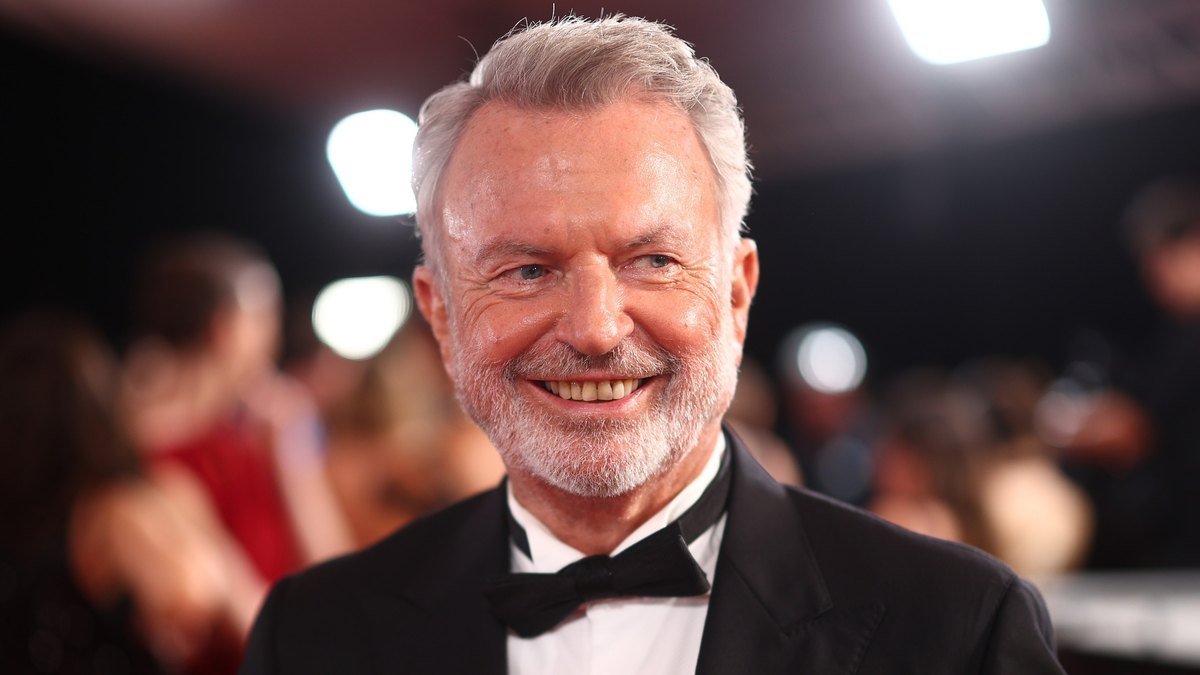
“Jurassic Park” star Sam Neill has died at the age of 78, just a few weeks after he declared that he was “cancer-free” following a yearslong battle with stage 3 angioimmunoblastic T-cell lymphoma.
His passing was announced by his family in an emotional post shared on the actor’s Instagram account, where they revealed that he had been surrounded by his loved ones when he died, referring to them as “whānau,” the Māori word for extended family.
“It is with immense sadness that the whānau of Sam Neill share the news of his passing on Monday 13th July, in Sydney, Australia,” the post began. “Sam was surrounded by family and passed with the dignity that has characterised his whole life.
“The loss was sudden and unexpected but blessed by the fact that Sam remained cancer free.”
They went on to express their gratitude to the staff at St. Vincent’s Private Hospital for the “incredible care” they showed Neill.
Neill, who was born in Northern Ireland to an English mother and a New Zealand father, leaves behind an incredible legacy, both in Hollywood and beyond, having starred in more than 100 film and TV productions during his decadeslong career.
However, though the actor was best known for his work in front of the camera, he expressed on several occasions that his true passion lay elsewhere: at a sprawling New Zealand winery called Two Paddocks, which he purchased in 1993.
Over the years, Neill—who had four children—turned the extraordinary property into a thriving business, albeit one that he admitted in 2008 was only possible because of the money he made in acting, despite his desire to turn the vineyard into his full-time focus.
“I’d like the vineyard to support me but I’m afraid it is the other way round. It is not a very economic business,” he told The West Australian.
Still, “The Piano” star confessed that the satisfaction he gained from running the vineyard more than made up for the amount of time and money he was forced to pour into it.
“It is a ridiculously time and money-consuming business,” he added. “I would not do it if it was not so satisfying and fun—and it gets me pissed once in awhile.”
The actor said that his priority with the vineyard was to produce some of the best organic wines in the world, stating on the property’s official website: “I wanted to produce a good pinot noir that would, at the very least, be enjoyed by my family and friends.
“Frankly, my friends will pretty much drink anything, so this didn’t seem too hard.”
He went on to explain how his passion project—which is located in Gibbston, Central Otago “in the deep south of New Zealand”—slowly grew over the years, evolving beyond just wine production to become a fully-fledged farm with an array of animals.
“To our great surprise, our first vintage in 1997 was much better than we hoped, in spite of a difficult growing season. 1998 was a more distinguished vintage, and in 1999 we were astounded to produce a pinot that was, we thought, world class,” he continued.
“Here was a wine of considerable complexity with an amazing nose, delicious fruit and a good lengthy finish. So rewarding has this vineyard been over the years (and so unpromising as a sheep paddock) that we planted another 5 acres of Burgundian clones there in 2008 bringing the total acreage at The First Paddock, Gibbston, to 5 hectares.”
By the time he passed, Neill’s winery had grown to include four different properties across several regions, beginning with his first property in Gibbston—aptly named The First Paddock—as well as Red Bank Farm & Vineyard in Alexandra, which he described as the winery’s headquarters, The Last Chance which is also in Alexandra, and The Fusilier in Bannockburn, which he added to his collection in 2013.
While Neill’s ownership of the property went largely under the radar for many years, outshone by his successes on the big and small screens, during the 2020 COVID pandemic, it suddenly began to receive a wave of attention, when the actor began documenting his life at the winery during lockdown.
He delighted his social media followers by revealing the animals who lived on the farm, many of which are named for actors, producers, and directors he has worked with over the years—including a cow named after Helena Bonham Carter and a pig called Taika after director Taika Waititi.
In 2021, he told Australian outlet Women’s Weekly that being able to spend time on the land—and to share it with so many people around the world—felt like “an enormous privilege,” noting that he was filled with gratitude at being able to return from shooting in all different locations across the globe.
“I feel like I am part of the soil,” he said. “I love the whole process and the changing of the seasons.”
He added in another interview with The Sydney Morning Herald: “When I wrap a film, I plunge back into life on the farm with my people here, with the animals, vines, the landscape.
“And the annual rhythm of winter, growth, harvest, fermentation. I think one is kind of a relief from the other; they are completely different worlds.”
Get real estate news in your inbox