Pfizer Incident or Not, New York Still Has a Lot of Office Conversions Left to Go – Commercial Observer
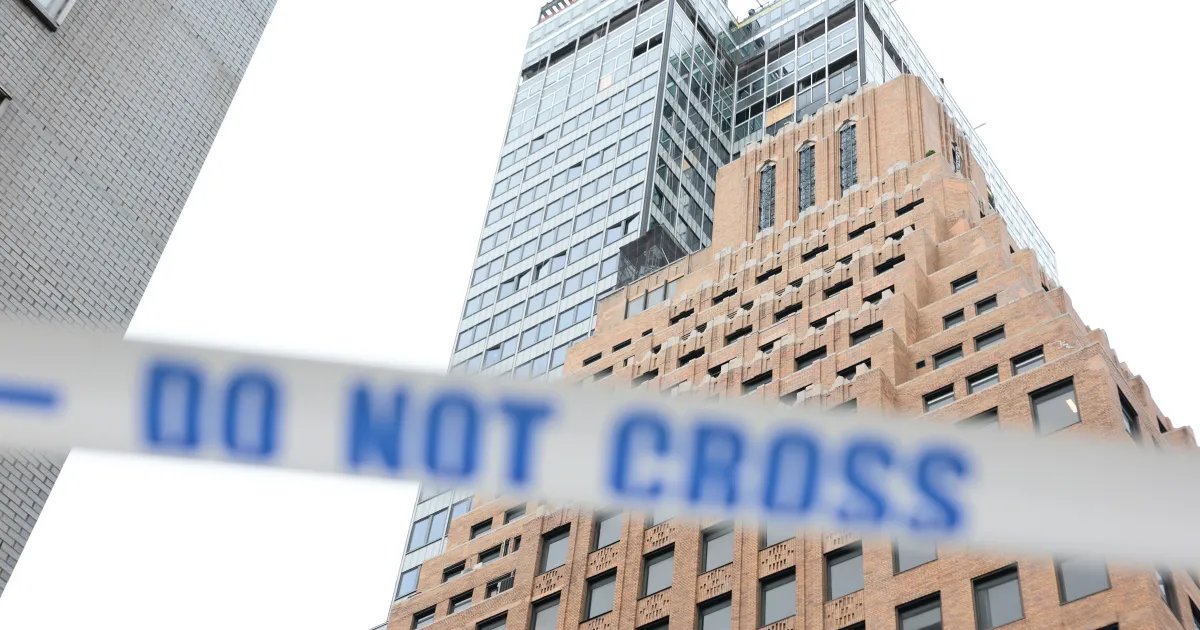
For a few days last week, two buckling steel columns at the Pfizer Building became the biggest real estate story in America.
If you only read the headlines, you might conclude that office-to-residential conversions are suddenly in trouble.
The opposite is closer to the truth.
Quietly, New York has become the national leader in conversions. Approximately 70 projects with more than 20,000 potential units are underway, representing billions of dollars of investment and one of the fastest shifts in generations for how the city builds housing.

Yet, remarkably little has been written about what is actually happening — or why.
Over the past two years, office-to-residential conversions have gone from a trickle to a pour, and now represent a meaningful share of the multifamily pipeline. Thousands of units of affordable housing are being delivered in some of the wealthiest areas, including into buildings on Billionaires Row and Wall Street. Millions of square feet of defunct office space are being repurposed. And, despite a troubling week for the Pfizer building conversion, this trend is only accelerating.
So how did New York City become the shining beacon for the office conversion revolution?
Two game-changing moments occurred over the last two years. First, in April 2024, the governor and state legislature reached a landmark housing deal that included critical regulatory changes and a new incentive program called 467-m, designed to induce conversion projects and ensure that 25 percent of the resulting homes would be permanently affordable.
The second moment came later that year, when the City Council passed City of Yes for Housing Opportunity, the most sweeping overhaul of zoning since the 1960s. For office conversions, City of Yes updated arcane rules around qualifying buildings and addressed regulatory incoherencies that had blocked past projects.
What has resulted is one of the most effective housing production programs New York City has seen in recent memory. Within two years, approximately 5,000 units of permanently affordable housing are underway, generally located in high opportunity neighborhoods.
Contrast that track record with the 485-x program for ground-up new construction, which also emerged from the 2024 housing deal, but is thus far on track to generate less than half as many affordable units in its first wave of projects. There’s an important lesson here for future housing program design: Success is judged not only by how many worthwhile goals are pursued, but rather how much housing is delivered.
There are headwinds to consider that could dampen the next wave of conversions. The office market has gradually recovered such that certain office buildings now want to remain office. There are new opportunities to take advantage of high-density zoning, creating conditions in which teardowns are increasingly compelling alternatives. It will also be important to see how policymakers react to the Pfizer building incident and whether new regulatory oversight or program adjustments slow future projects.
Despite those headwinds, New York City is probably only halfway through its current conversion cycle. There is a credible pathway to another 20,000-plus units, repurposing another 20 to 25 million square feet of obsolete office space. And many other cities will emulate the New York playbook and deliver thousands more units.
For New York City, past performance is a good indicator of future prospects. By tracking every conversion project through public and proprietary data, we can predict the next generation of projects, including over 1,000 target sites that have the features of a successful conversion. Even if only a small subset of these projects materialize, the cityscape is poised for further transformation.
As many cities confront the dual challenges of post-COVID office obsolescence and persistent housing shortages, office-to-residential conversions continue to reflect the single greatest opportunity to achieve multiple benefits: downtown vibrancy, office market stabilization, environmental benefits of reusing existing infrastructure, and rapid development of new homes in supply-constrained urban areas.
If you walk around any modern city, there are architectural clues that point to industries long gone. Adaptive reuse of old structures — from industrial loft buildings to garages — is not a new phenomenon. Decades from now, New Yorkers will probably forget that many of these apartment buildings were ever offices at all. They’ll simply be neighborhoods.
That’s the quiet success of adaptive reuse — and we’re still much closer to the beginning of this story than the end.
Nate Bliss is the founder of Latent Urban Ventures, a real estate investment and advisory firm. He was formerly a vice president at Taconic Partners, executive director for economic development in the Office of the New York City Mayor, and the chief of staff to the first deputy mayor as well as an official at the New York City Economic Development Corporation.