‘Next step is jail’: What SC’s Parsvnath order means for homebuyers | Personal Finance
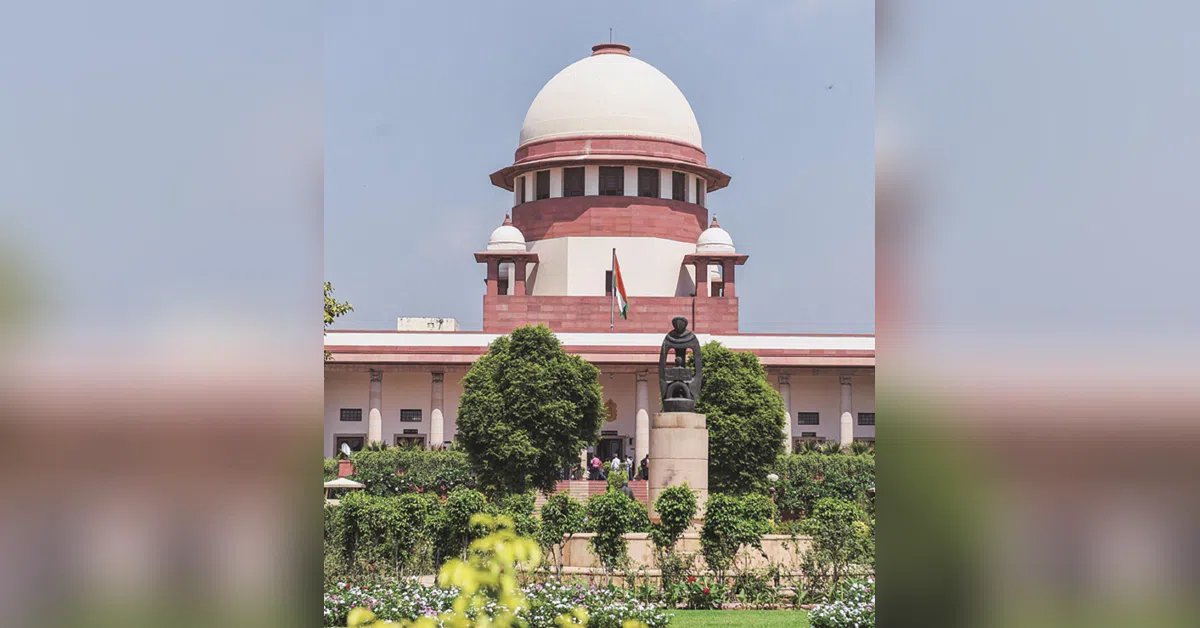
The Supreme Court has delivered one of its strongest warnings yet to a real estate developer, making it clear that builders cannot indefinitely ignore orders passed in favour of homebuyers. In the case involving Haryana-based Parsvnath Developers, the court gave the company one final week to deposit the entire recoverable amount with 12 per cent annual interest, while warning that failure to comply would lead to imprisonment. The bench made its position clear, observing, “Let there be no misunderstanding about our order. The next step is jail.”
For lakhs of homebuyers stuck in delayed housing projects, the order is significant because it signals that courts are prepared to take tougher action against developers who continue to defy orders of real estate regulators.
A bench of Chief Justice Surya Kant and Justices Joymalya Bagchi and V Mohana also refused to allow the developer to rely on insolvency proceedings as a defence, saying payment to affected homebuyers must take priority in the circumstances of the case.
Why the Supreme Court took a tough stand
The case relates to Parsvnath Exotica in Gurugram, where homebuyers Rita Tikku and Lokaish Tikku have been waiting for possession of their flat for nearly 20 years despite paying the full sale consideration of Rs 1.78 crore.
The homebuyers had already secured favourable orders from the Haryana Real Estate Regulatory Authority (HRERA), directing the builder to compensate them. However, according to the Supreme Court, those directions remained unimplemented despite repeated notices, recovery proceedings and warrants.
The apex court had earlier frozen the bank accounts of Parsvnath Developers and its directors, restrained the creation of third-party rights over the flats and issued warrants against the company’s leadership. During Monday’s hearing, it granted what it described as the final opportunity before initiating imprisonment.
The bench also made it clear that it was exercising its extraordinary powers under Article 142 of the Constitution to ensure “complete justice” and would not permit insolvency proceedings to frustrate the rights of homebuyers.
Why this ruling matters for homebuyers
Legal experts say the order sends a strong message that RERA orders cannot remain mere paper decrees.
Yatharth Rohila, partner at Aeddhaas Legal LLP, said the judgment restores confidence among homebuyers by showing that prolonged non-compliance, even after two decades, can attract serious consequences. He noted that the Supreme Court has demonstrated its willingness to proceed not only against the company but also against individual directors by freezing personal bank accounts and warning of jail.
Anjali Jhawar, advocate at D M Harish & Co., said the ruling is significant because the court used its plenary powers under Article 142 to ensure that insolvency proceedings or company law disputes do not become obstacles to delivering justice to affected homebuyers.
Himesh Thakur, associate partner at PSL Advocates & Solicitors, said the order reinforces that builders cannot continue to ignore RERA directions without consequences. According to him, freezing personal bank accounts, execution of warrants and even imprisonment of responsible directors are among the coercive measures the court has indicated may be used in appropriate cases.
Can builders still use insolvency to avoid RERA orders?
The Supreme Court has not abolished the protection available under the Insolvency and Bankruptcy Code (IBC). However, experts say the judgment substantially limits the ability of developers to use insolvency proceedings as a delaying tactic.
According to Rohila, while insolvency proceedings ordinarily trigger a moratorium under the IBC, the Supreme Court made it clear that such protection cannot become a shield to defeat homebuyers’ rights. He pointed out that the court described the insolvency plea as a “feeble attempt” in the facts of the case.
Thakur similarly said the judgment does not create a blanket prohibition on invoking insolvency. Instead, it establishes that insolvency alone cannot justify failure to comply with final RERA orders, particularly where the Supreme Court is exercising its powers under Article 142.
Supriya Majumdar, partner at Elarra Law Offices, said the ruling will act as a deterrent against developers who attempt to rely on insolvency proceedings or the IBC moratorium to avoid statutory obligations. However, she cautioned that the directions were passed in exceptional circumstances and cannot automatically be applied to every insolvency case involving a real estate company.
Shashank Agarwal, founder of Legum Solis, echoed this view, saying insolvency proceedings cannot be treated as a blanket defence against compliance with RERA directions. Genuine insolvency cases will continue to be governed by the IBC, but the framework cannot be misused to frustrate consumer protection laws or judicial orders.
What can homebuyers do if builders ignore RERA orders?
The ruling does not create any new legal remedy, but experts say it strengthens the enforcement tools already available.
Homebuyers can:
-
Seek execution of RERA orders through the prescribed recovery process. -
Request attachment of the developer’s assets where recovery remains unpaid. -
Approach higher courts in cases of persistent and wilful non-compliance.
In appropriate cases, seek coercive measures such as freezing of bank accounts or action against company directors.
According to Rohila, homebuyers need not wait for the Supreme Court to intervene. Existing legal remedies, including recovery proceedings and contempt petitions, remain available, and the latest order provides stronger judicial backing for their enforcement.
The Parsvnath case is unlikely to change insolvency law itself, but it sends an unmistakable message that prolonged non-compliance with RERA orders will invite closer judicial scrutiny.
For homebuyers, particularly those waiting years for possession or refunds, the judgment strengthens confidence that courts are willing to use extraordinary powers in exceptional cases where developers repeatedly ignore regulatory and judicial directions.
While each dispute will continue to be decided on its own facts, legal experts believe the order raises the cost of non-compliance for developers and signals that courts may increasingly hold promoters personally accountable where homebuyers have been left waiting despite final RERA orders.