Lithium Market Trends: Q2 2026 Review and Forecast
Lithium prices recovered during the second quarter of 2026 as stronger-than-expected demand and tightening supply helped lift the market from the cyclical lows reached in 2025.
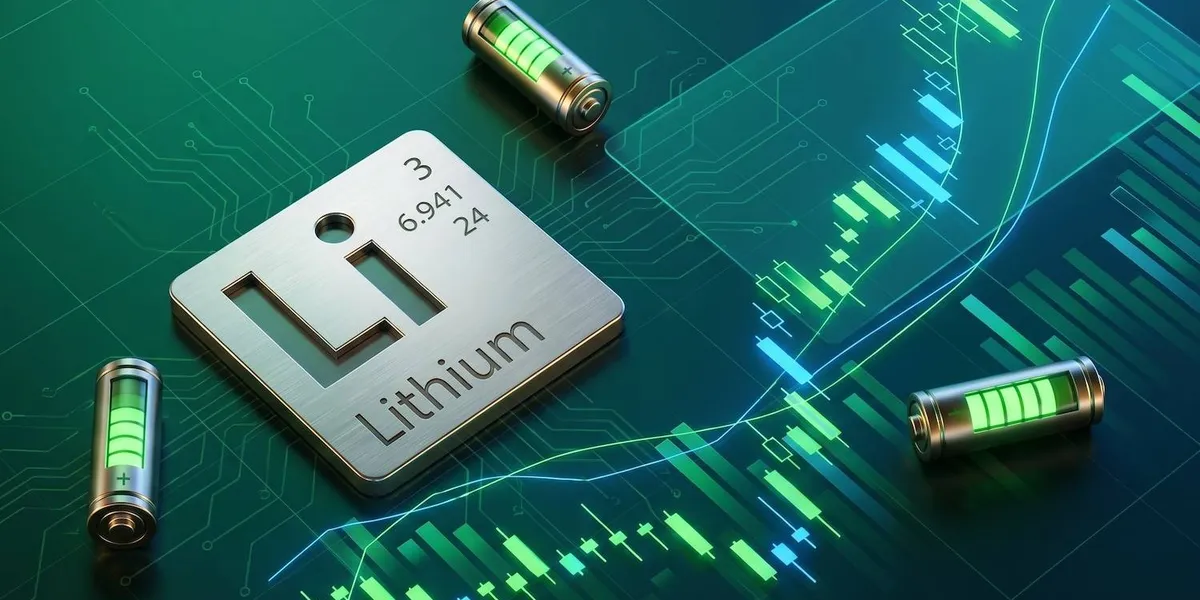
Battery-grade lithium carbonate prices climbed from approximately US$8 per kilogram in May 2025 to more than US$25 by this past May, reflecting improving sector fundamentals after nearly two years of oversupply.
According to Paul Lusty, head of battery raw materials at Fastmarkets, the rebound has surprised many industry participants, particularly given ongoing concerns over electric vehicle (EV) demand in some regions.
“I think what has surprised the market is the strength of the demand side of the industry,” Lusty told the Investing News Network (INN) at the Fastmarkets Global Lithium, Battery & Critical Materials conference in Las Vegas.
While EVs remain the dominant source of lithium consumption, Lusty said energy storage systems are emerging as a second major demand pillar, driving strong downstream activity, particularly in China.
He noted that robust order books among China’s tier-one battery cell manufacturers have translated into increased lithium consumption, creating tighter conditions after an extended period of excess supply.
Additionally, energy storage demand has the potential to rival — and in some markets even exceed — automotive demand over time, reflecting the sector’s rapid expansion. This improving demand picture has coincided with growing government intervention on the supply side, contributing to greater market volatility.
Lusty pointed to a series of recent policy developments across key lithium-producing nations, including Zimbabwe’s decision to accelerate its ban on lithium concentrate exports, and China’s increasing efforts to regulate domestic lithium mining. Similar interventions in the nickel and cobalt sectors have reinforced the growing influence that global governments are exerting over battery raw material supply chains.
“I think what’s very apparent now is the influence of policy in key producing nations in terms of the supply side,” he said.
Beyond policy, broader macroeconomic conditions also provided support during the quarter.
Lusty said rising oil prices and geopolitical tensions have strengthened the case for electrification and renewable energy deployment, while reinforcing the importance of energy security. Those trends continue to accelerate investment in battery energy storage systems, which are becoming an increasingly important source of lithium demand.
“I think energy security has very much come to the fore over the last few months,” Lusty explained to INN. “Energy storage is an absolutely critical part of that new energy infrastructure.”
He added that growing electricity demand from artificial intelligence data centers is creating another structural tailwind for energy storage deployment as operators seek reliable backup power and greater grid stability.
Combined with continued EV adoption, these emerging end uses are broadening lithium’s demand base and helping the market mature beyond its historical reliance on passenger EV sales.
Battery chemistry shifts continue to reshape lithium demand
The rapid adoption of lithium iron phosphate (LFP) batteries continues to reshape lithium demand, particularly as energy storage systems become a larger share of the market.
Presenting at the Fastmarkets event, analyst Rob Searle said China’s battery market has largely transitioned to LFP chemistry, which now accounts for roughly three-quarters of the country’s EV market.
While higher-performance nickel-rich battery chemistries continue to serve premium EVs in Europe and North America, LFP remains the dominant choice for energy storage as well as cheaper passenger vehicles due to its lower cost and ongoing improvements in energy density.
According to Searle, the growing preference for LFP is changing demand across the lithium value chain. Because LFP batteries rely on lithium carbonate rather than lithium hydroxide, the technology shift has strengthened carbonate demand, particularly as China’s battery manufacturers continue to expand exports to Europe and emerging markets.
“We can clearly see the energy storage system market driving the preference for carbonate, and now it is also driving price rallies as well,” Searle told listeners.
Higher lithium prices needed to incentivize new supply
While lithium prices have rebounded significantly from last year’s lows, Searle said the market is entering a new phase in which sustained higher prices may be necessary to encourage investment in new supply.
Fastmarkets expects lithium prices to remain elevated through 2027 before gradually easing, arguing that the market will require several years of stronger pricing to support the next wave of greenfield mine development.
“We’re forecasting higher prices in 2026 and 2027,” Searle said, adding that the industry will likely need “three to four years of higher prices” to encourage enough investment to meet future demand.
He noted that the previous downturn prompted many developers to delay feasibility studies and postpone final investment decisions, leaving the industry with a thinner project pipeline just as demand is accelerating.
Unlike previous cycles, however, Searle believes the scale of future demand growth will make it increasingly difficult for existing operations and incremental brownfield expansions to satisfy the market’s requirements.
Lithium supply deficit looms despite expanding production
Although new lithium production continues to come online, Fastmarkets expects the market to tighten further over the coming years as demand growth outpaces supply additions.
Searle said energy storage has accelerated the timeline for future deficits, pulling forward forecasts published just a year earlier. At the same time, long development timelines — often spanning a decade or more for new mining projects — mean today’s investment decisions will determine whether sufficient supply is available later this decade.
“The investment is going to be needed in the market,” Searle said.
He argued that the current rally differs from previous price cycles because the industry’s annual supply requirements have grown substantially. As the global lithium market expands, replacing depleted production and adding enough new capacity each year becomes increasingly challenging, supporting a more constructive long-term pricing environment.
RK Equity founder and partner Howard Klein discusses the current trajectory of the lithium market and the need for greater midstream capacity in this exclusive interview with the Investing News Network at the Fastmarkets Global Lithium, Battery & Critical Materials conference.
Broader demand base sets today’s recovery apart
During a panel at the Fastmarkets event, industry leaders said the current recovery differs markedly from the rapid price rally seen in 2021 and 2022, pointing to a broader and more resilient demand base.
Barbara Fochman, CEO of Rio Tinto’s (ASX:RIO,NYSE:RIO,LSE:RIO) lithium arm, said robust end-use demand is underpinning the current market, although she cautioned that cyclical price swings are likely to persist.
“I think the difference is the demand is there,” Fochman said. “There’s strong demand.”
Pilbara Minerals (ASX:PLS,OTCPL:PILBF) CEO Dale Henderson echoed that view, arguing that nearly every aspect of the lithium industry has evolved since the previous cycle.
Beyond continued EV adoption, he pointed to the rapid growth of battery energy storage systems, advances in battery technology and an increasingly complex geopolitical landscape as evidence that the market is in a new phase.
“The demand vectors are stronger and broader,” Henderson said, adding that while volatility remains, “everything is different” compared to the last major rally.
Policy increasingly important to market growth
Looking beyond supply and demand fundamentals for lithium, the panelists said government policy is playing an increasingly influential role in shaping the lithium market.
While producing jurisdictions continue to pursue regional supply chains and greater resource security, geopolitical considerations are also influencing investment decisions across the battery materials value chain.
Gracelin Baskaran, director of the Critical Minerals Security Program at the Center for Strategic and International Studies, said critical minerals have become central to US foreign and economic policy.
“Almost every major foreign policy decision has had critical minerals at the center of it,” she said, citing countries including Argentina, the Democratic Republic of Congo, Greenland and Ukraine.
At the same time, Baskaran said resource-rich nations are increasingly seeking investment partners beyond China while pursuing policies designed to capture more value from their domestic mineral industries.
Although these efforts create opportunities for producers, she noted they have also introduced greater uncertainty through export controls, tariffs and changing regulatory frameworks.
Long-term lithium demand will ultimately drive investment
As governments around the world explore mechanisms to support domestic critical minerals production, Baskaran argued that stronger demand will ultimately determine whether sufficient lithium supply is developed.
She noted that while proposals such as price floors may help producers weather market downturns, they are inherently temporary solutions: “The way you get prices up long term is by picking up demand.”
In her view, China succeeded by investing across the entire battery supply chain rather than focusing solely on mining, providing decades of support for EV manufacturing that created sustained downstream battery raw materials demand.
“We’re going to need to think about those more mineral-intensive industries, and particularly the transportation sector, and how to boost demand there,” Baskaran explained.
Her comments align with one of the panel’s broader conclusions: as the lithium market matures, the industry’s long-term success will depend not only on bringing new supply online, but also on fostering durable end markets capable of supporting investment through future price cycles.
Stable policy needed to support new lithium supply
Panelists at the Fastmarkets event also stressed that long-term policy certainty will be essential as lithium industry participants prepare for the next wave of mine development.
Baskaran noted that lithium projects often require a decade or more to move from discovery to production, making consistent industrial policy as important as financial incentives. “We’re going to need to see longer timelines, confidence that the industrial policy mechanisms that are being rolled out are here to stay,” she said.
That view was echoed by producers, who argued that regional processing capacity and diversified supply chains will require sustained public and private investment rather than short-term policy initiatives.
As governments seek to reduce reliance on China for critical minerals, speakers agreed that building competitive supply chains will depend on balancing economic viability with security of supply — a challenge they expect will shape the lithium market for years to come.
Don’t forget to follow us @INN_Resource for real-time updates!
Securities Disclosure: I, Georgia Williams, hold no direct investment interest in any company mentioned in this article.
Editorial Disclosure: The Investing News Network does not guarantee the accuracy or thoroughness of the information reported in the interviews it conducts. The opinions expressed in these interviews do not reflect the opinions of the Investing News Network and do not constitute investment advice. All readers are encouraged to perform their own due diligence.
From Your Site Articles
Related Articles Around the Web