Inside the making of the category-busting Nike Air Zoom Hyperslide
The first thing most athletes do after a game is kick off their sneakers and slip into a pair of slides. Nike and Hyperice are betting that ritual will become something much more intentional.
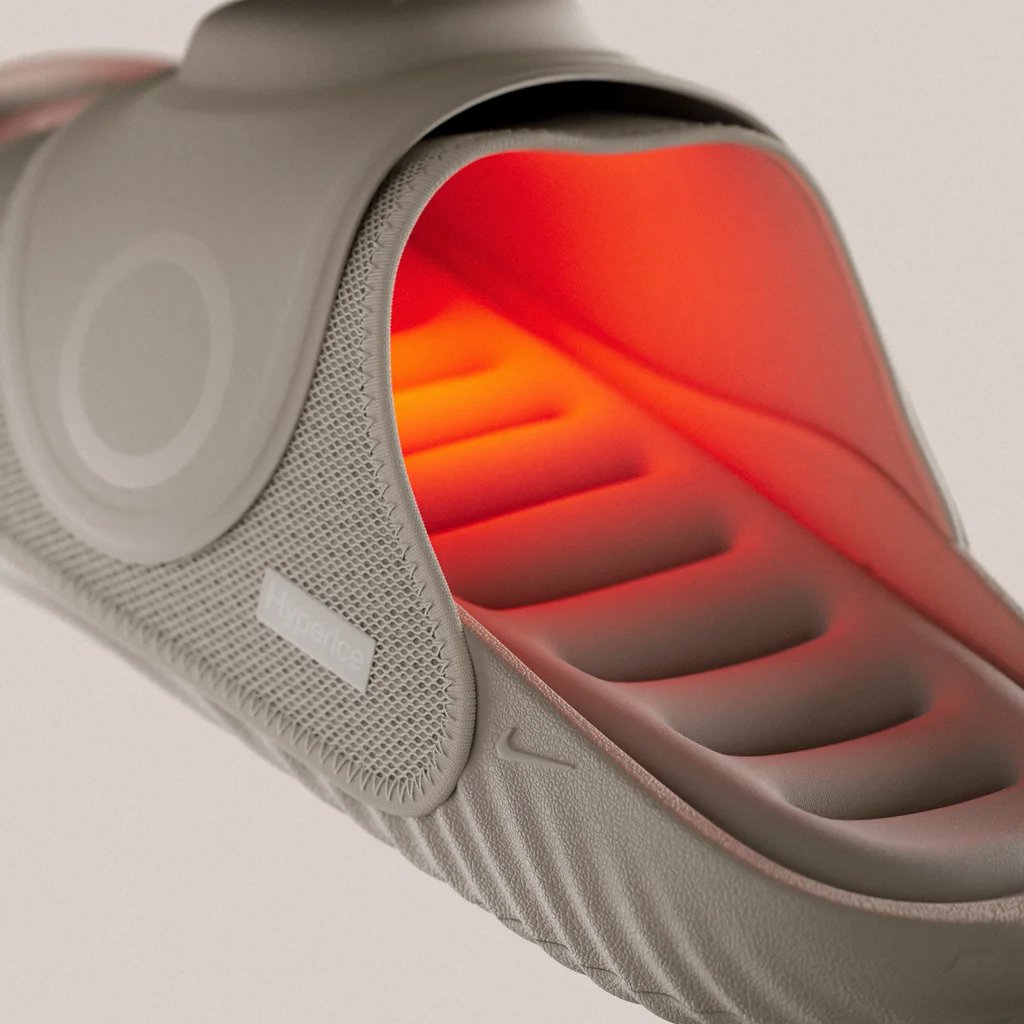
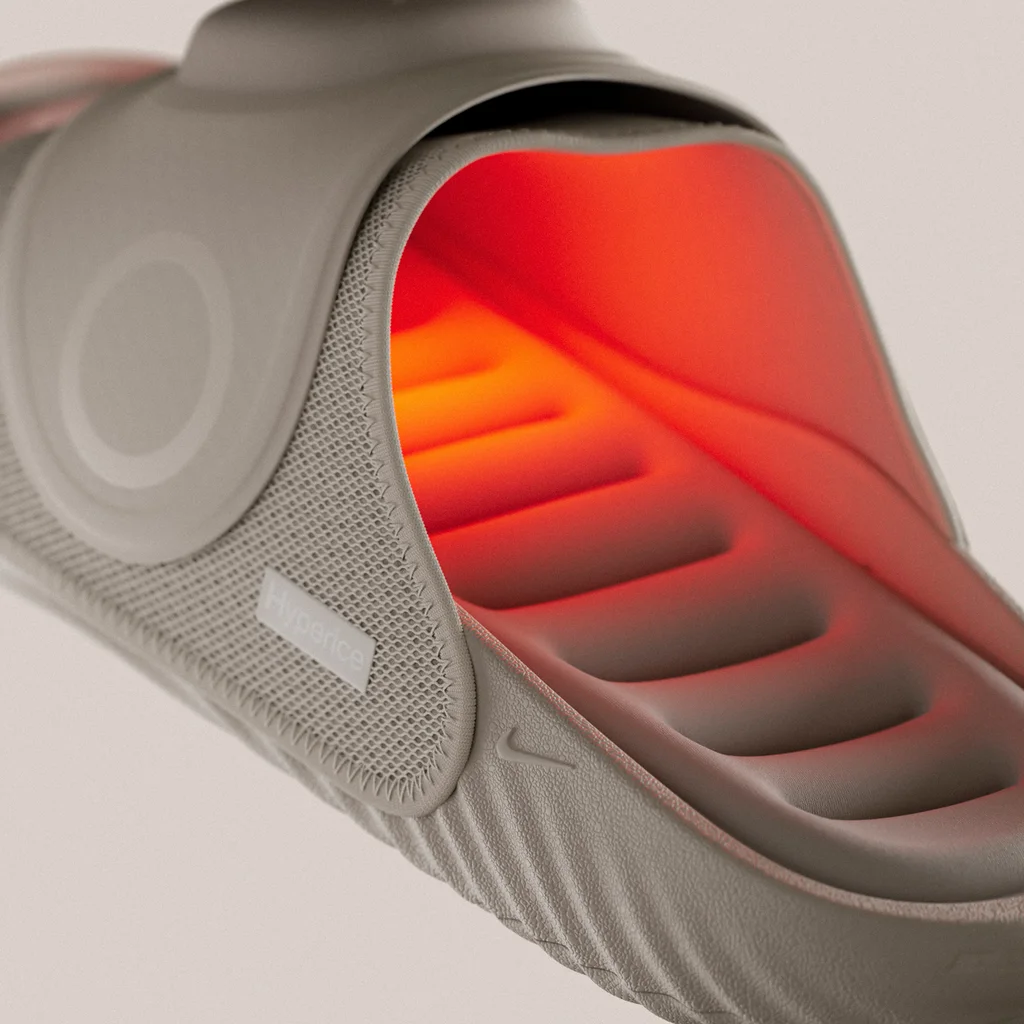
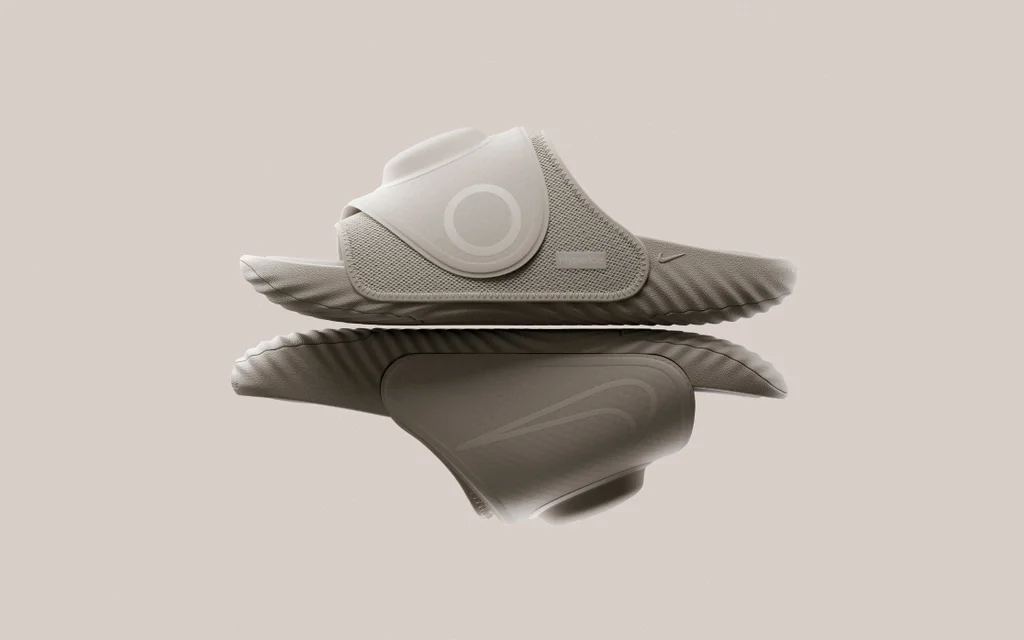
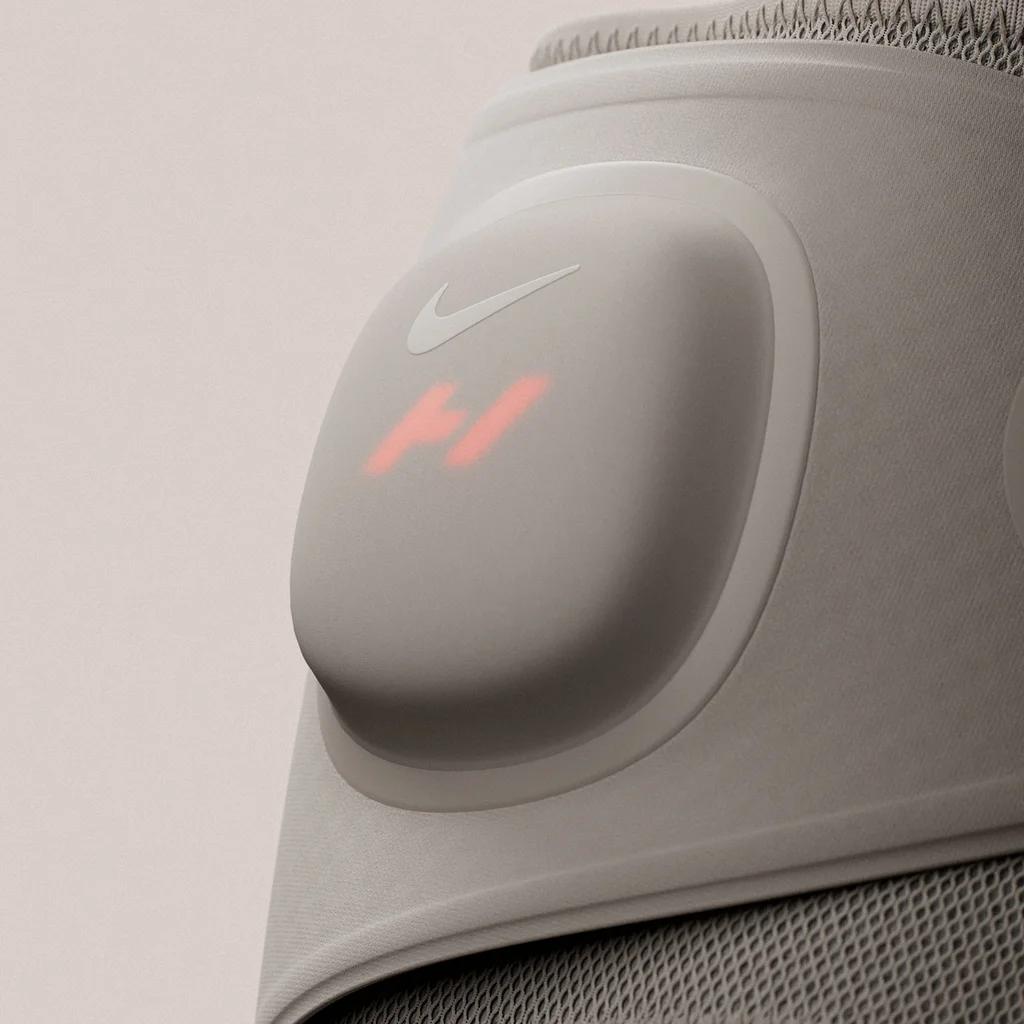
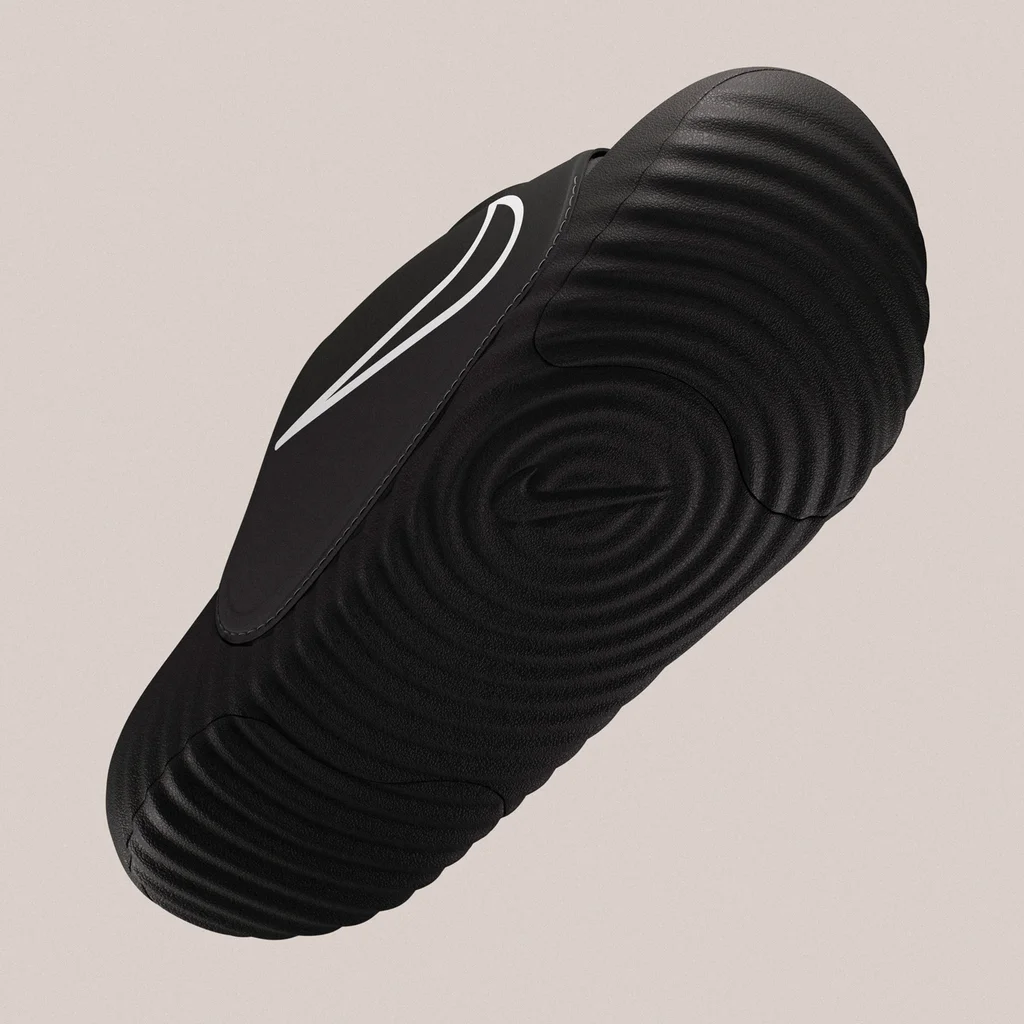
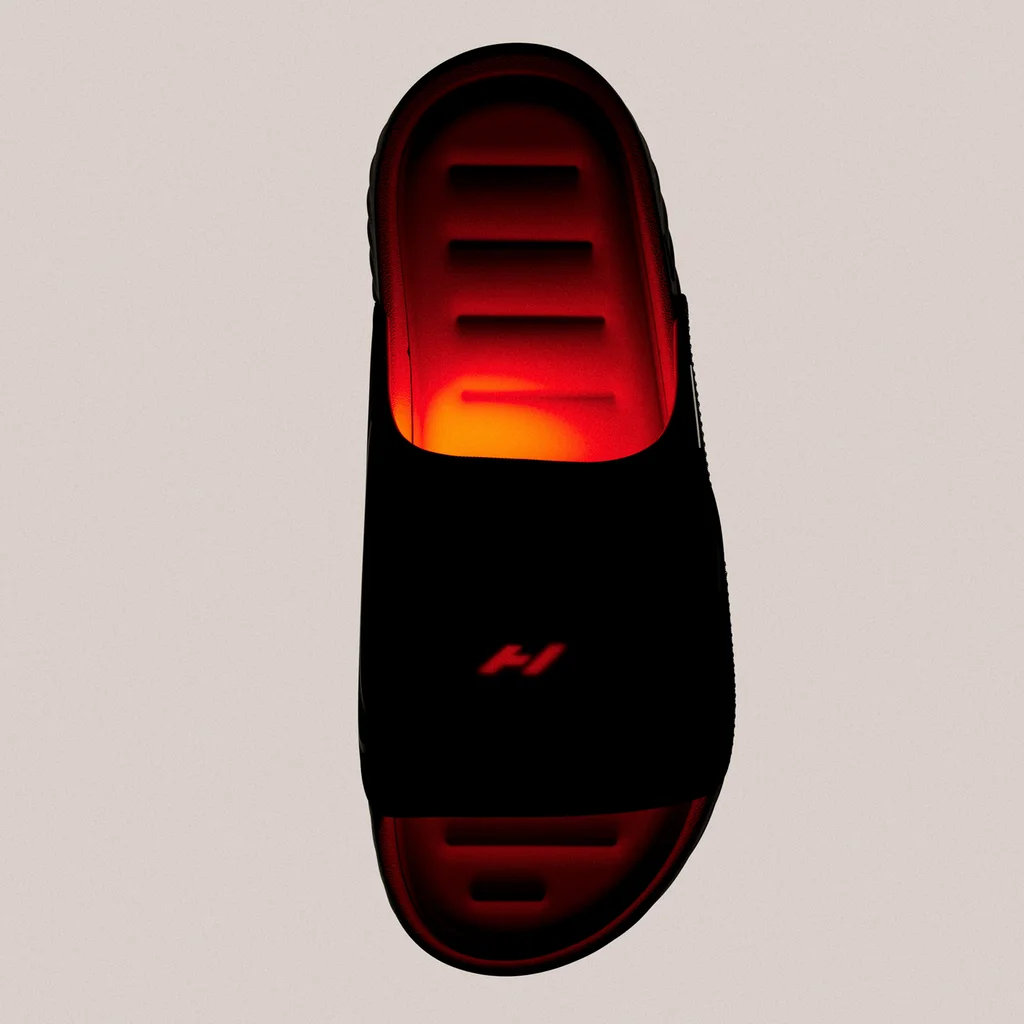
Their latest collaboration, the Nike Air Zoom Hyperslide, looks like an everyday recovery slide, but hidden within its simplistic design is a combination of Air Zoom cushioning, heat, and vibration technology. During Nike’s media briefing, Tobie Hatfield, senior director of athlete innovation, described the Hyperslide as a product designed to begin recovery in the first five minutes after activity.
For decades, athletic innovation focused on helping athletes run faster, jump higher, and generate more power. Recovery was treated as something that happened after an effort was completed—an hour on the training table, a dip in the cold tub, or active stretching. Today, however, recovery is intrinsically a part of performance itself. Teams spend millions on sports science; athletes are extending their careers well into their late thirties and beyond, and longevity is talked about almost as much as explosiveness.
Hyperice believes recovery shouldn’t start once an athlete has time to be still. It should start the moment the final buzzer sounds
“The opportunities around this wearable tech segment just become limitless,” says Jim Huether, Hyperice’s CEO. Rather than viewing the Hyperslide as another product across their portfolio, he sees it as part of a larger evolution where footwear and apparel become intelligent, connected technologies that work while athletes go about their day.
That vision extends well beyond a singular product launch. Along with last year’s launch of the Hyperboot, the Hyperslide signals what Nike and Hyperice believe is the beginning of an entirely new category: tech-enabled footwear that blends performance equipment and wearable electronics.
The Hyperslide will be available on September 29 for $249 on Nike.com and Hyperice.com, as well as at Best Buy and Dick’s Sporting Goods in the U.S.
Recovery: The new performance frontier
The conversation around elite performance has shifted beyond what happens during competition. For years sports technology used to revolve around making athletes perform better.
The question driving many a research lab and product development team across the industry today is: How quickly can athletes recover so they can do it all again tomorrow?
That evolution has transformed recovery from a postgame routine into a strategic investment.
“You have recovery and longevity, and those two words are somewhat synonymous because you need recovery to enhance longevity.” Huether says. “There was a time 15 years ago where everybody was just focused on training. Athletes were overtraining; their bodies were breaking down. Over the last decade, as science has evolved, athletes have understood it’s not just about my performance; it’s about the duration of my performance over time.”
This shift has reshaped product development. Companies are now focused on how technology can help athletes stay healthier over the span of their careers.
Huether believes the shift is creating a new competitive edge.
“If you’re feeling better, if you recover properly and you’re coming back the next day feeling in top form, you’re performing better,” he says. “If you’re an athlete who keeps your body intact for 15 years . . . you’re going to have a lot more contract dollars.”
This has extended well beyond professional sports. As recovery science has become more accessible, the same technologies that were once limited to training facilities have found their way into the routines of weekend golfers, runners, and anyone who is hoping to stay active later in life. The opportunity, Huether believes, isn’t simply helping people recover faster but helping them continue to do what they love for years longer.
Why a slide?
Innovation comes in various forms. Sometimes it’s inventing something new, and sometimes it means reimagining something so common that people won’t notice it.
For athletes, slides are as common in locker rooms as towels. That familiarity was intentional. Rather than inventing a new recovery ritual, Hatfield said the team wanted to build around one athletes already embraced.
“The Nike and Hyperice brains got together . . . and really started thinking about how do we innovate a slide, which is so common for athletes to use in all sports,” says Huether.
While last year’s Hyperboot introduced many athletes to wearable recovery technology, its form represented a new category consumers had to gain some understanding of. A slide doesn’t require much education.
Huether believes that one of the hallmarks of successful product designs comes from not changing consumer behavior but making the behavior they already have more valuable.
Beyond competition
“We learned a lot with the Hyperboot,” Huether says. “If you know the history there, we announced that at the Olympics in Paris. But we had done a whole bunch of product testing with Olympians prior to the actual games, getting their feedback.”
What they discovered was that recovery wasn’t lacking because athletes didn’t believe in it. It was lacking mainly because of the complexities of their schedules.
“Athletes needed innovation for recovery, and they needed something for on the go,” Huether says. “They’re doing a ton of travel. They’re getting on planes, walking to arenas, and have very little time in between to take care of their body.”
Hatfield said Nike initially viewed the Hyperslide primarily as a post-performance recovery tool but realized athletes were also wearing prototypes before practices and competitions, using the gentle heat to loosen their feet and ankles before activity. The discovery reinforced the idea that recovery and preparation often overlap.
Nike and Hyperice began focusing on providing recovery while athletes were on the move. This thinking shaped nearly every aspect of the Hyperslide.
“The ecosystem of tech-enabled footwear and apparel is designed in a wearable format to meet the athlete with their lifestyle,” he says. “The more advanced our technology gets as time goes on and battery and sensor technology gets better, then we can make things smaller, lighter, more powerful. The opportunities around this wearable tech segment just become limitless. And it’s really, really exciting.”
Prototypes
Innovation often comes down to a willingness to discard good ideas in pursuit of better ones. For Nike and Hyperice, this meant building and rebuilding the Hyperslide dozens of times before arriving at the final product. Huether estimates the teams cycled through up to 40 prototypes, refining details from the heat settings to overall feel underfoot.
The challenge wasn’t just about integrating heat and vibration into a slide. It was also ensuring those technologies worked in tandem with Nike’s Air Zoom cushioning, leading to an experience that feels naturally and not heavily engineered.
“We wanted the vibration and the heat to feel like it was going through the whole foot,” Huether says. “But you’re using Air Zoom technology that’s meant to be very comfortable. So we changed the vibration sequences. We changed the strength of the settings. We explored a ton of different heat temperatures . . . and we ended up with something really great driven by athlete feedback.”
Hatfield, the athlete innovation director, said many of those refinements centered on restraint rather than adding more technology. Unlike the Hyperboot, whose compression system is designed to prepare the lower leg, the Hyperslide’s heating and vibration systems had to remain subtle enough that athletes could comfortably walk in them. The goal was to make recovery feel effortless.
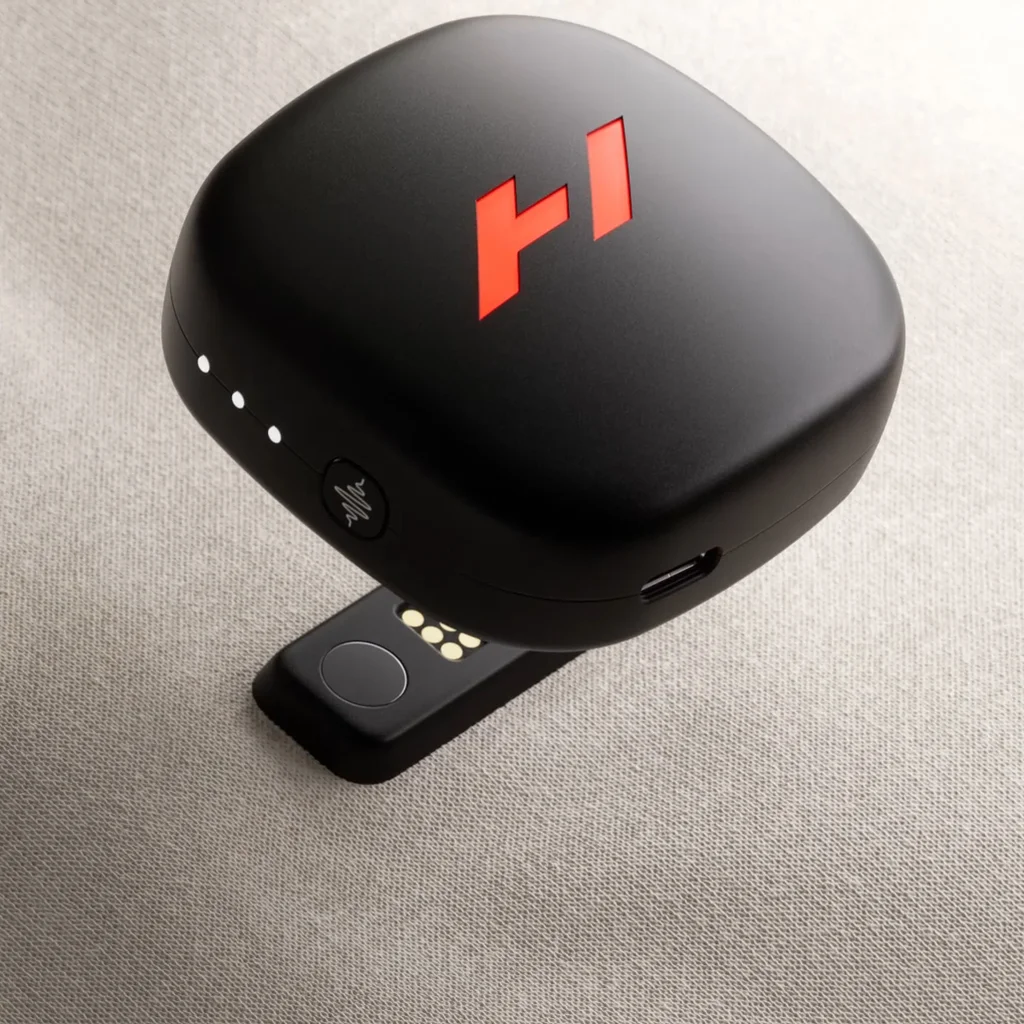
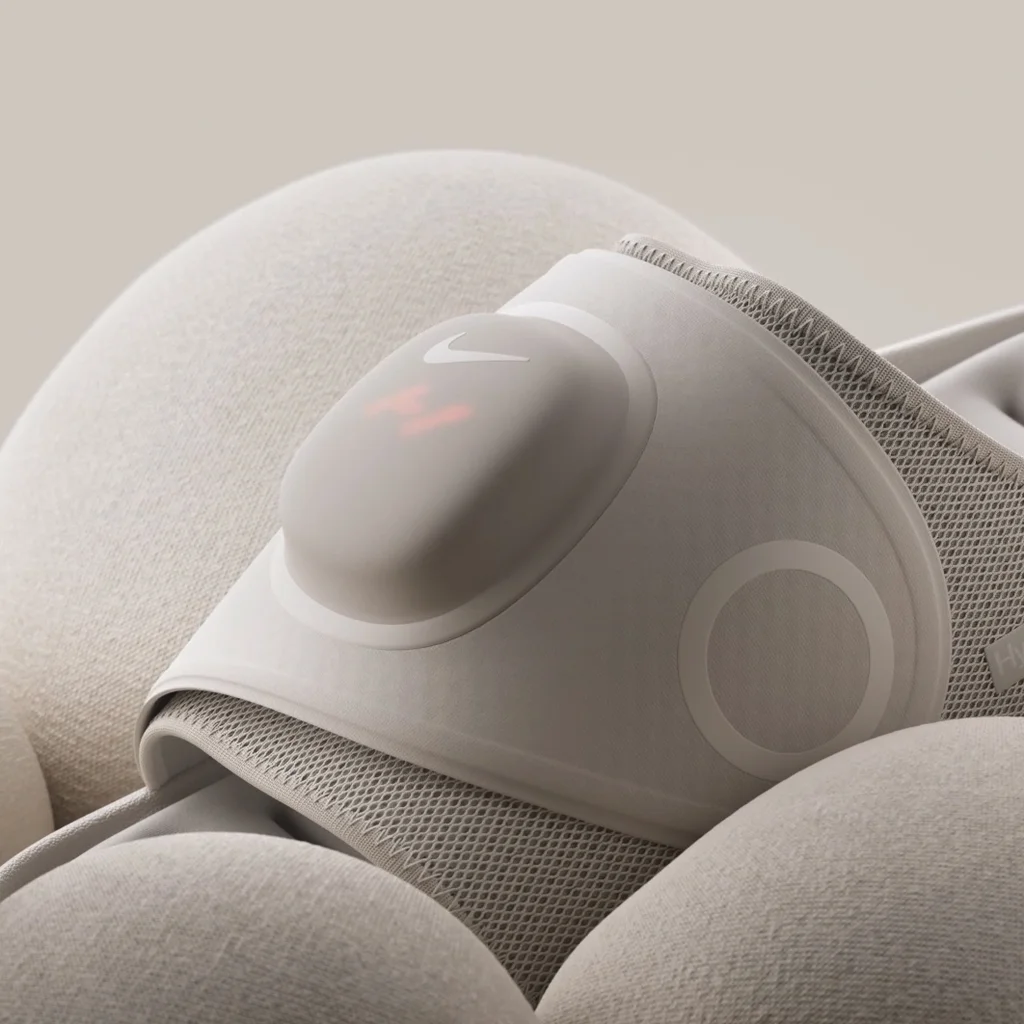
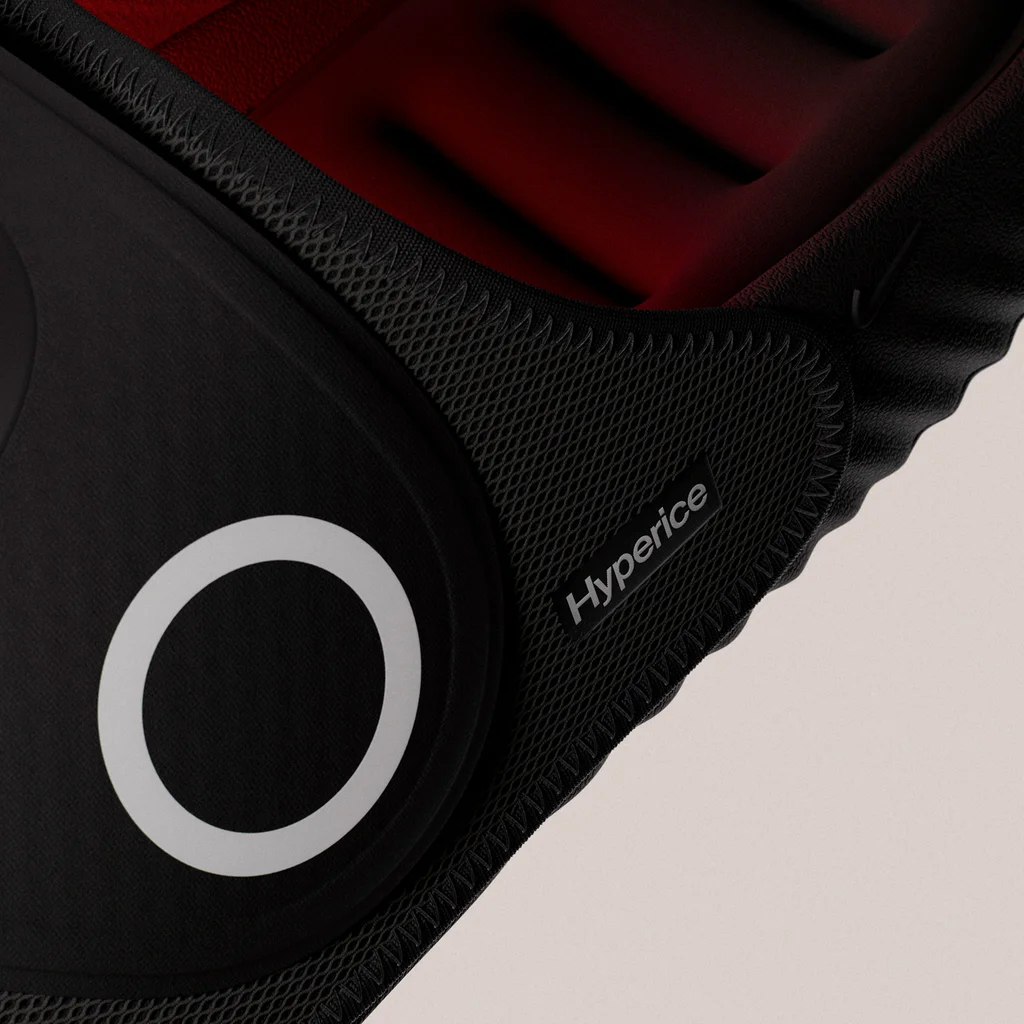
The final Hyperslide utilizes magnetic, independently operable Hyperslide Pods to provide three levels of “HyperHeat” and three levels of vibration to the top strap while maintaining the plush feel Nike fans have come to expect from an Air Zoom platform. Users will be able to personalize vibration intensity and session settings via Bluetooth through the Hyperice app. The slide is designed to work immediately out of the box with a default 15-minute recovery session.
As for Nike, athlete testing is of the highest value for Huether and Hyperice. It’s about bringing athletes into the design process long before the public sees the final result.
“When we bring on a pro athlete, it’s not just about marketing,” he says. “We want your feedback with products in the early stages so that we can use that knowledge, funnel it to our product development team, and get better.”
Every adjustment to the vibration pattern, heat profiles, shape, and feel of the Hyperslide reflects countless hours of testing from the very individuals who depend on the product during the demands of their profession. The final version is defined by how seamlessly all of those technologies disappear once the slide is on foot.
Footwear meets recovery
Footwear companies and consumer electronics companies used to operate in separate worlds. Material, fit, and biomechanics were the focus of one, and the other homed in on software, batteries, and processors.
The convergence of Nike and Hyperice is all the more intriguing when you consider future possibilities. While Nike brings decades of expertise in performance footwear, Hyperice approaches product development in an entirely different way. The company’s reputation is around connected recovery technologies, from percussion devices and compression systems to heat and thermal therapy.
Huether says that combining these disciplines has expanded what footwear can do beyond cushioning and support.
“Nike is the expert on creating performance-driven footwear and apparel,” he says. “We know so much about consumer electronics and these different modalities and how they change the physiology of the body. Those together are just unlocking tons of new capabilities.”
The partnership between the two brands required more than combining technologies. It commanded a different approach to design. Hyperice has long looked outside the sports industry for inspiration, particularly to Apple, whose products, while technologically sophisticated, are rooted in simplicity.
“Everything they do is very intuitive and simplistic,” Huether says. “It is so advanced on the back end . . . but from a consumer experience perspective, it’s simple, it’s intuitive, and it’s easy to understand.”
Early concepts of the Hyperslide explored more complexities before the teams intentionally simplified the experience.
“We wanted to make sure it was easy to understand, really comfortable, really convenient,” Huether said.
Hatfield believes that convergence works only if athletes stop thinking about the technology altogether. Every design decision was intended to create a product that feels familiar first and technologically advanced second.
Within its familiar silhouette is a carefully orchestrated combination of Air Zoom cushioning, integrated heating elements, embedded vibration motors, rechargeable electronics, and app connectivity. The goal for users isn’t to think about those individual systems but for the product to feel as seamless as slipping on a pair of slides after a workout.
In that lens, the Hyperslide is more like a wearable device for your feet. It blurs the boundaries between sports equipment and consumer electronics and could very well influence how future performance products are designed.
An ecosystem of products
The Hyperslide may be Nike and Hyperice’s newest collaboration, but it’s only another building block in what both brands believe will become an interconnected ecosystem of wearable performance technologies. The Hyperboot introduced athletes to tech-enabled footwear, and the Hyperslide expands that idea into a more casual form. The broader ambition is to create products that work in tandem rather than in isolation.
This vision began to crystallize during the Paris Olympics. As Nike and Hyperice watched athlete after athlete experience the Hyperboot for the first time, Huether says the reaction confirmed they were onto something much larger than a single product launch.
“We knew we had something big,” he said. “We went back to the drawing board after that Olympic experience and said we got to create a long-term roadmap and get ahead of the game on everything footwear and apparel and really own this ecosystem.”
Huether says multiple products are planned over the next four years, each building on lessons learned from the last. Longer term, he envisions those products becoming increasingly intelligent and working together as a coordinated system.
“When you think about apparel and footwear and having a whole ecosystem of products that communicate with each other . . . you can have a full-body experience on recovery, body maintenance, or warm-up,” Huether says.
As battery technology and sensors continue to evolve, he believes those systems will become more adaptive than controlled—adjusting the level of recovery on an athlete’s activity rather than relying on fixed routines.
It’s a vision that mirrors the evolution of other technology industries. Smartphones have become lifelines. Smartwatches have become health hubs. These are individual devices that have gradually transformed into ecosystems where each new product makes the others more valuable.
Nike and Hyperice appear to be set on the idea that performance technology will follow a similar path. In this version of the future, athletes won’t think in terms of individual recovery products. They’ll think in terms of connected experiences that will aid them before training, during competition, and long after the game is over.
The iPhone for feet
Every product launch comes with great promises. However, it’s rare that a company will compare their newest innovation to one of the most influential consumer devices ever created, the iPhone.
Huether doesn’t shy away from the comparison. When asked how he hopes people will look back on the Nike-Hyperice partnership a decade from now, he didn’t talk sales or market shares. It was about changing expectations.
“We believe that the Hyperboot . . . we want people to look back and [say] that’s like the iPhone 1,” he says. “It’s going to get smaller, lighter, more dynamic, and more technological.”
It’s a bold analogy, but one that reveals how both companies are thinking beyond today’s product cycle. The first iPhone was revolutionary because it fundamentally changed what people knew a phone to be. Huether believes wearable recovery technology is coming to a similar inflection point, where footwear and apparel will transform from passive equipment into active performance tools.
That future will require advances in batteries, materials, and the increasing ability to integrate sophisticated technologies without sacrificing comfort or simplicity. For Nike and Hyperice, the Hyperslide is a step in that evolution. If the past decade of sports innovation was defined by helping athletes perform at their peak, the next decade may be defined on helping them stay there.