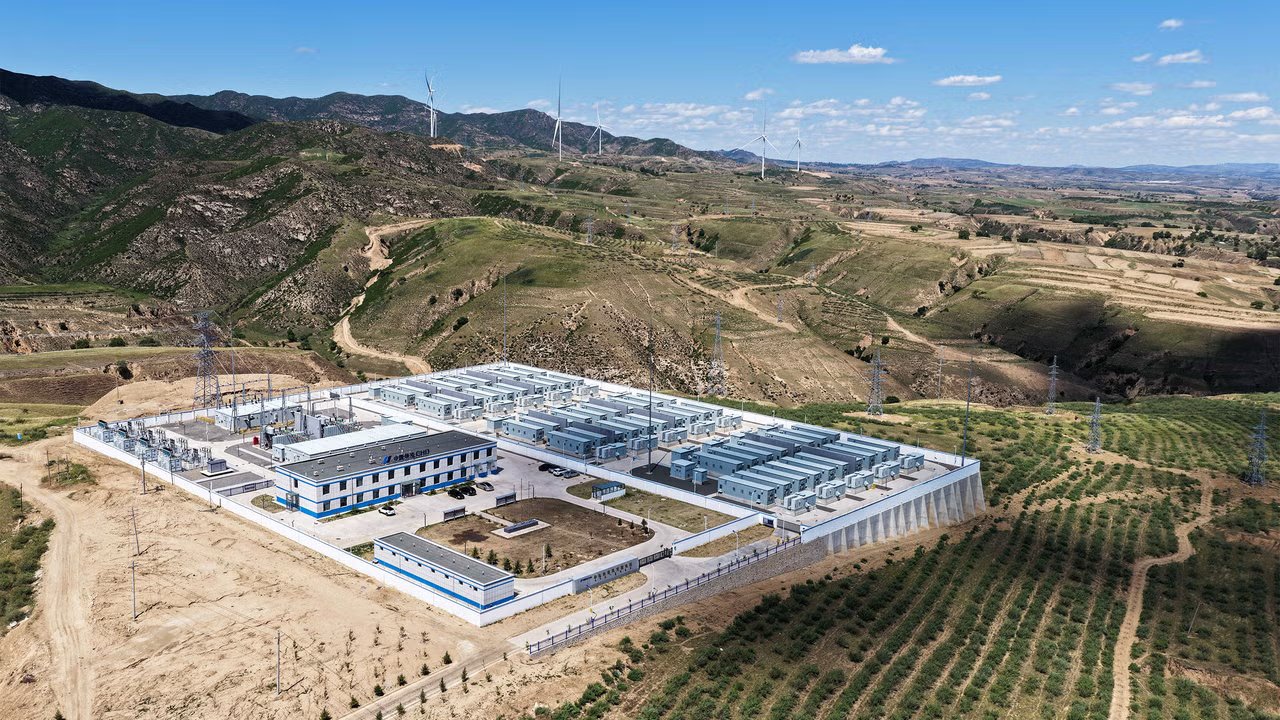
How China is powering new data centers with clean energy
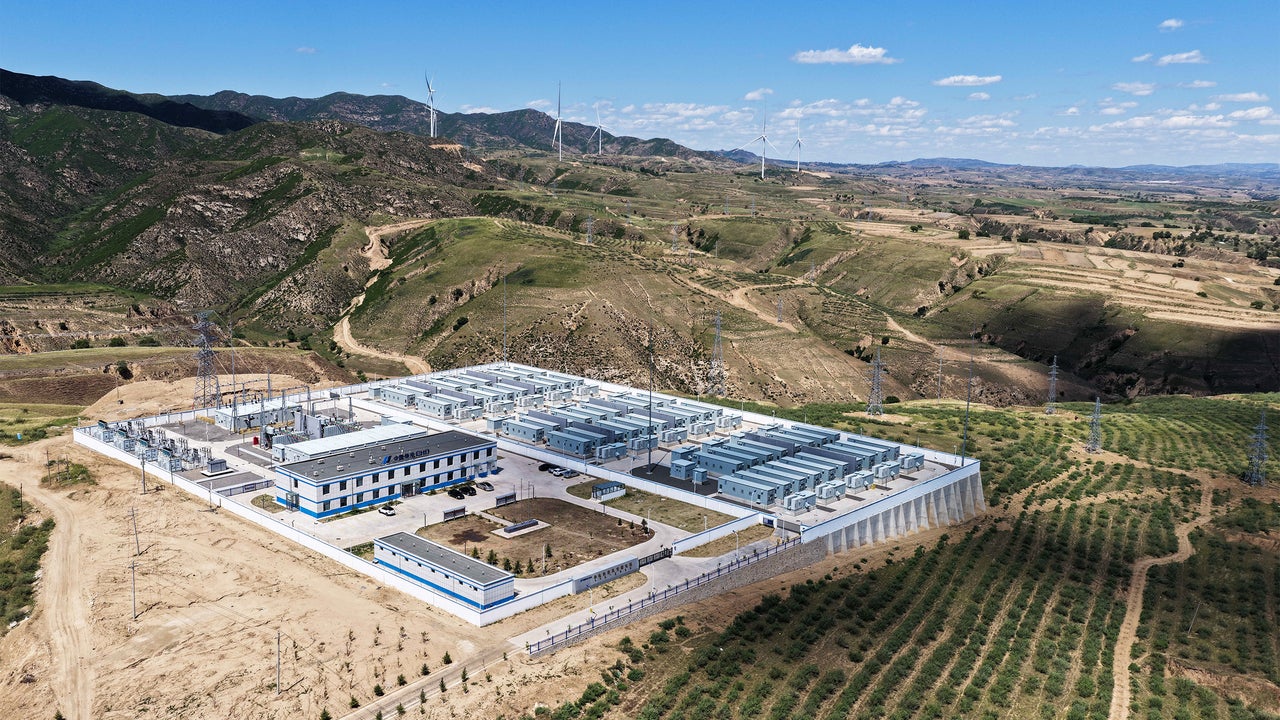
The number of data centers in China is surging thanks to AI, just like in the U.S. But unlike the U.S., China is racing to power them with clean energy.
A data center in Mongolia, for example, is connected to 200 megawatts of wind power, 100 megawatts of solar power, and 45 megawatts of battery storage. In remote Qinghai, a pilot data center runs fully on a solar microgrid. In another part of northern China, a data center is connected to 500 megawatts of solar and 1.5 gigawatts of wind power.
Some data centers in the U.S. also use clean power. But in China, they’re part of a national strategy. Inside eight large data center hubs created in China’s “East West Computing Strategy”—focused on building data centers in the areas where China has the most renewable energy—all new data centers need to source at least 80% of their electricity from clean sources. In another action plan the Chinese government released in May, it outlined 29 measures to boost the amount of clean power at data centers.
China’s latest five-year plan aims to keep building an extensive clean energy system for all uses, not just data centers, by 2030. That’s both for energy security, a long-term focus for the country, and because of climate change. “I think Chinese policymakers take climate change seriously,” says Kyle Chan, a Brookings Institute fellow who focuses on China’s technology development and industrial policy.
The country is the world’s largest emitter of climate pollution, but that also means that any improvements have an outsized impact. It’s now aiming for renewable generation to grow 53% by 2030, and for coal and oil consumption to peak by the same year. (The U.S. is moving in the opposite direction, as the Trump administration makes it harder to build clean energy and tries to bring back coal plants, despite the lower cost of renewables.)
Data centers are a key part of China’s broader plan. By one estimate, China will more than double the amount of electricity it uses at data centers by 2030. Another estimate suggests the sector’s energy use could triple to as much as 600 terawatt-hours—more than the whole country of Germany uses now.
Still, it will be a small fraction of China’s overall electricity demand, which is dominated by factories. And because China has been quickly building clean energy for industry for years, it’s in a good position to quickly build more. Compare that to the U.S., where electricity demand has been flat for decades, and the sudden demand from AI is a shock to the grid.
“I do think this is an area where China has an edge,” Chan says. “Not to have too hokey of an analogy here, but on building out new power capacity, China has been working out every year for decades, for reasons not related to AI. The U.S. hasn’t gone to the gym in this space in a while.”
There are still challenges. As in other parts of the world, it’s hard to predict exactly how much demand there will be from data centers, and building new transmission lines and other capacity comes with some risk. New data centers built in more remote areas near wind and solar farms can’t serve all AI workloads; the Chinese government is currently looking at which workloads are less time-sensitive and can be handled farther away from cities. Cities can access offshore wind and some nuclear energy, though the bulk of new clean power is being built farther away from the most populated areas.
It’s feasible, Chan says, that China can keep up with AI demand with new clean energy. It helps that there are efficient systems in place for building more. “One of the key factors is that the local governments often have so much authority and control invested in them at the level that they can get a whole bunch of things taken care of at once—they can serve as sort of a one-stop shop for permitting and licensing,” he says. “There are dedicated teams coordinating and constantly communicating with each other, and they’re all highly incentivized.”
In the U.S., it can take several years for solar and wind farms to get permits to connect to the grid—and the federal government has frozen some projects for now.