From NAIOP to CREDA: New Name, Expanded Scope, Same Mission
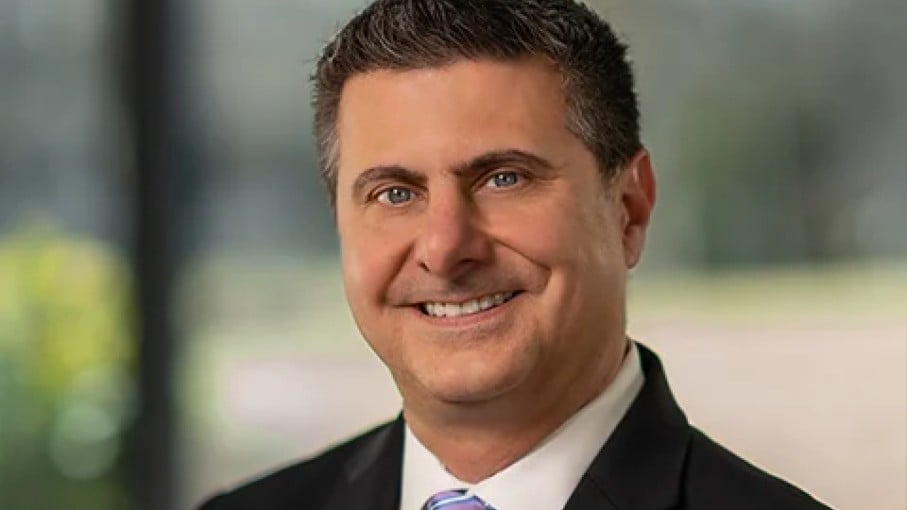
The rebranding of NAIOP to the Commercial Real Estate Development Association didn’t occur overnight—the association has worked for years on crafting its new identity. Nor is it the first time the organization has undergone a name change; in fact, President and CEO Marc Selvitelli told Connect CRE, the new name is its fifth since its establishment as the National Association of Industrial Parks in 1967. Selvitelli sat down with Connect CRE to discuss the rebranding and the future direction of what is now the Commercial Real Estate Development Association.
Q: Why was now the proper time to rebrand as the Commercial Real Estate Development Association?
A: The simple answer is that our membership has changed. I’ve been with the organization since 2006 and can tell you that when I came on, the vast majority of our members were office developers. Next were industrial, and after that, it was a small mishmash of other property types. Now, the number one asset class for our membership is industrial, the second is mixed-use, the third is multifamily, the fourth is data centers, and office is fifth. This reflects a real change in our members’ primary focuses.
Part of it is that there’s been a change in how commercial real estate companies operate. They used to just be primarily in one asset class. Office developers only did office. But as time went by, whether through mergers and acquisitions or just sound risk management, many developers began working in other asset classes too, providing a buffer. We can use the current environment as a good example, where office right now is a little soft, but multifamily has done well. And if you do both of those, your balance sheet isn’t nearly as impacted.
Q: In addition to the fact that many developers now encompass multiple property types, what are some other ways that development has evolved? And how and why was it important for the Commercial Real Estate Development Association to evolve with the industry?
A: One thing we were very specific about is including the word development in our name. There was a lot of debate about that. We elected to include it because development is a process: from acquiring the land to entitling it, hiring architects and contractors, to the work of attorneys and beyond. An extensive scope of professionals and industries are involved in the development process. About 60% of our members work for companies that have a stake in the development process.
Q: What is the real value proposition that the association has created for such a wide-ranging constituency, representing all aspects of the development process?
A: We were ultimately founded as an organization, like so many here inside the Beltway, on advocacy, and that remains one of our core pillars. Advocating for policies and positions that position commercial real estate to succeed ultimately helps everybody involved with the development process. But it extends beyond advocacy, and this is true of many trade associations. A lot of the education that we provide is designed to help people better understand development. As an example, we offer an advanced certificate in commercial real estate development that explores the full development process. This is targeted not just toward people who work for development companies, but also to lawyers, architects, brokers and others who are involved in the industry, so they can be even more effective in their jobs.
Q: Although the name has changed to the Commercial Real Estate Development Association, the organization’s mission will remain fundamentally the same. What are some of the core priorities that members and other stakeholders can expect?
A: Our mission continues to be to provide advocacy, education, networking and research to all of our members—and doing that in combination with our chapters. Real estate can be local, and often is. We’re enabling our chapters to provide that and giving them the resources so that commercial real estate professionals can get it within their markets and also on a broader scale. Somebody in Vancouver can talk to another person down in Atlanta about, “Well, how do you approach developing something like this?” Or, “What might be best practices in your market when it comes to XYZ?” That doesn’t change.
Q: The rebrand comes after years of conducting research, speaking with members and conducting interviews with stakeholders. What are some of the key insights that came out of that process?
A: One thing we heard over and over again was that when members or staff of the organization were speaking with an elected official or a reporter, there was only a finite time for that conversation, particularly with electeds. If you’re lucky, you get five minutes. With most elected officials, whether it’s inside the Beltway or outside, they see NAIOP and their natural inclination is to think, “Well, that must stand for something.” They’re used to associations. So they might look it up and they’d say, “Oh, you’re with the National Association of Industrial and Office Properties.” Now you have to take 30 or 60 seconds to say, “Well, no, actually our name is NAIOP, and we represent more than just industrial and office.” It was taking up valuable real estate in the five minutes you would have with a reporter or an elected.
And because so much more of our membership is beyond just industrial and office now, describing ourselves as Commercial Real Estate Development Association was going to make it easier for us to make it clear who we represent and who we work for. This is self-descriptive, exactly who we are.
Q: What opportunities do you see on the horizon for the development industry and the association?
A: One of the biggest opportunities ahead is to continue telling the industry’s story. We have an opportunity to help elected officials, community leaders and the public better understand what commercial real estate is, why different property types matter and how they contribute to stronger communities. Whether it’s housing, retail, industrial, office or data centers, commercial real estate creates jobs, generates tax revenue, helps provide essential services and creates the places where people live, work and gather.
In terms of the association itself, we want to make sure that our new name reflects a strategic shift in what we’re providing to our members. It isn’t just programming or advocacy that’s focused on industrial and office, but instead on a wider swath of commercial real estate asset classes. The best example is our annual conference, which for years was known as CRE.Converge and we’ve now relaunched as CREDA Conference. We will have four distinct program tracks now that focus on multifamily, tech, mixed-use and office, and industrial. So it’s our first, and quite honestly, our flagship example to showcase howwe’re further expanding our ability to be that resource for all development asset classes.
Q: What message would you like to deliver to current members of CREDA, potential members and other stakeholders in terms of where the association is headed?
A: We’ve just emerged from one of the most challenging periods in commercial real estate. The only one that might challenge it is going back to the tax code changes in the late 1980s, and the savings and loan crisis that came along with that. If there’s one thing that a crisis, particularly of that magnitude, shows, it’s that professionals need their trade association more than ever. And look at where we emerged from the pandemic. We didn’t lose members. As a matter of fact, we grew. We subsequently expanded our programming. And we’ve been at the forefront of discussions on some critical advocacy issues that impact all commercial real estate.
And it isn’t just with advocacy; it’s with the resources and benefits we provide. But the message that we want to get across to all commercial real estate professionals is that we can be the primary stop, regardless of whether it is mixed-use, data centers, office, industrial, industrial outdoor storage, medical office or student housing. You can run the gamut. We are really the resource for all asset classes in the industry.
The post From NAIOP to CREDA: New Name, Expanded Scope, Same Mission appeared first on Connect CRE.