DC vs. Congress in new tax fight

Bloomberg News
The strained relations between Washington D.C. and the Congress that oversees the city opens another chapter as the House Committee on Oversight and Government Reform considers new tax legislation.
Processing Content
“Radical D.C. Democrats want to solve their spending problem by reaching deeper into taxpayers’ pockets and driving further on the path to socialism,” said Committee Chair James Comer, R-Ky.
“Faced with a billion-dollar budget hole, the D.C. Council has rejected necessary spending reforms and is instead now considering tax increases that would punish residents, burden businesses, and further weaken the District’s economy.”
Washington is required by law to maintain a balanced budget, but Congress maintains financial oversight of the city’s finances.
The proposed legislation “requires Congress to approve any legislation passed by the District of Columbia that imposes or increases a tax or fee. Such legislation would not take effect unless Congress passes a joint resolution of approval within 60 days after it is transmitted to Congress.”
In order for the new bill to become law it would need to be approved by the committee and both chambers of Congress.
“Congress already has the authority to block tax increases passed by the D.C. Council by passing a disapproval resolution during the congressional review period,” said Eleanor Holmes Norton, the city’s non-voting Congressional delegate.
The Committee appears to be responding to a proposal by D.C. Council Member Brianne K. Nadeau that would impose a 3% tax on investments and other passive income for individuals earning more than $400,000 a year and households earning more than $500,000 annually.
Nadeau believes the tax would generate about $200 million the first year and $100 million in subsequent years.
The city maintains the new bill would violate the Home Rule Act of 1973 that gave governing power to an elected mayor and city council.
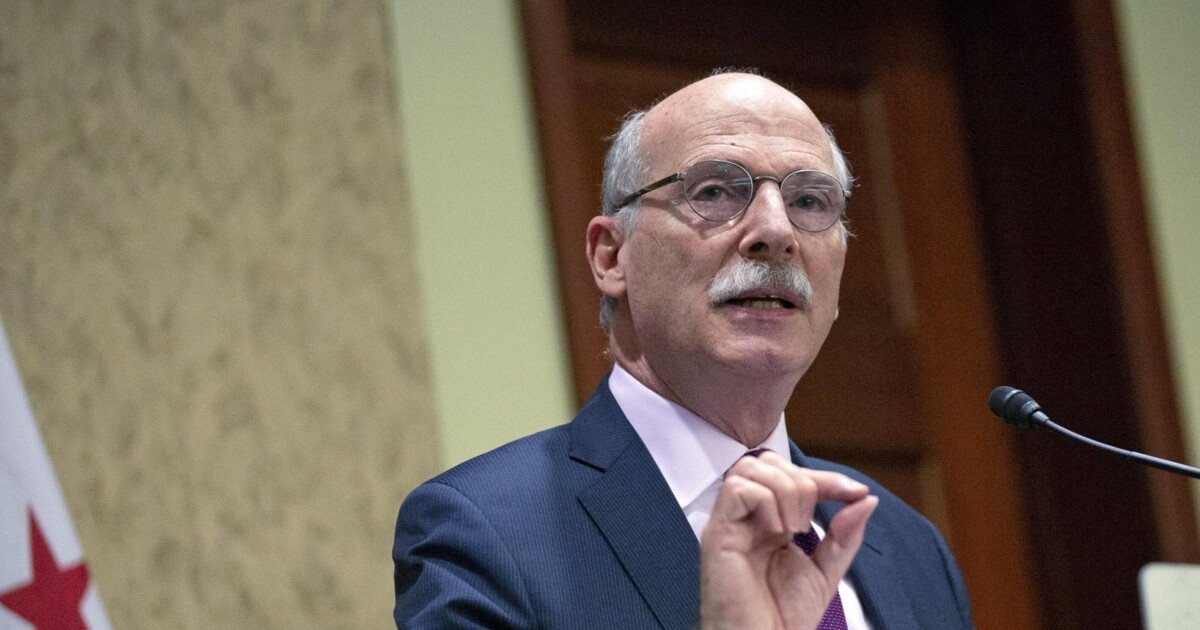
“The bill would straitjacket the District because it would paralyze our tax code,” said D.C Council Chairman Phil Mendelson. “If Congress cannot approve our judges, and could not fix last year’s continuing resolution error, then it is highly unlikely to affirmatively approve D.C. tax bills.”
The battle over the city’s budget stretches back to a continuing budget resolution passed in
“Requiring Congress to proactively approve changes to D.C.’s tax code would prevent D.C. from taking fiscally responsible measures to address abrupt cash flow shortages of the type Congress itself is known to cause,” said Norton.
The budget gap was filled by tapping $150 million in reserve funds and savings realized through a contentious tax decoupling from provisions in the One Big Beautiful Bill Act that erupted in
Janeese Lewis George, who won the Washington D.C. mayoral primary last month is running as a democratic socialist.
It’s presumed she’ll be taking over for current Mayor Muriel Bowser who decided not to seek a fourth term.
The city is coming to market