Crypto Today: DOJ Moves to Drop Fraud Case, New Hampshire Rejects Bitcoin Bonds, Circle Wins Trust Bank Approval

Today in crypto, the US Department of Justice is reportedly seeking to drop its case against alleged BitClub fraudster Matthew Goettsche, New Hampshire rejected a proposal to issue $100 million in Bitcoin-backed bonds, dealing a blow to one of the most closely watched state crypto initiatives in the US, while Circle secured final approval to establish a federally regulated national trust bank.
DOJ moves to dismiss charges against alleged $722M BitClub fraudster: Report
The US Department of Justice is reportedly moving to drop charges against the founder of BitClub Network, a purported crypto mining platform that allegedly defrauded investors of $722 million between 2014 and 2019.
A court filing shows Matthew Goettsche’s attorneys wrote to New Jersey district court Judge Claire Cecchi on Wednesday, stating that the parties “reached an agreement in principle” to resolve the pending charges “but need time to finalize the terms.”
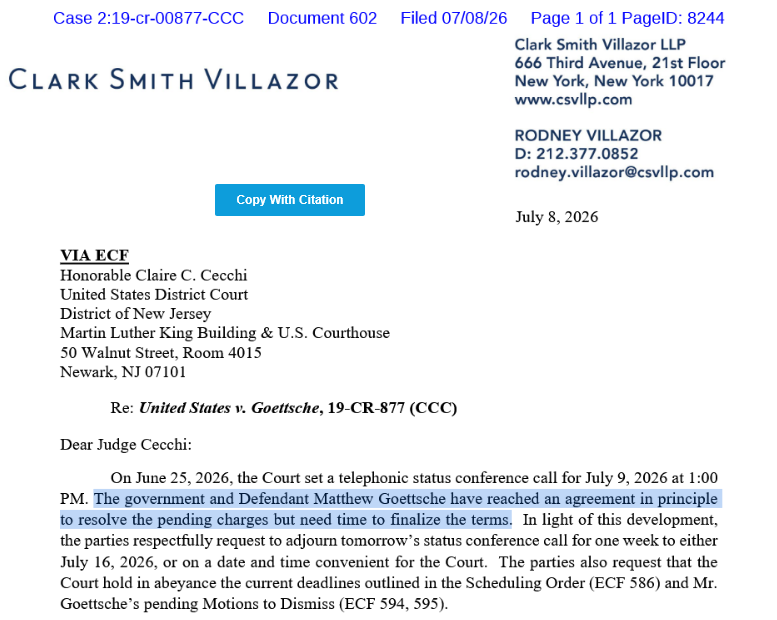
Goettsche’s attorneys’ letter to New Jersey district court Judge Claire Cecchi. Source: Bloomberg Law
The filing came after the deputy attorney general’s office in Washington reportedly ordered the New Jersey attorney general’s office to dismiss the case against Goettsche with prejudice, according to a report on Friday from Bloomberg Law, citing two sources familiar with the matter.
Goettsche was indicted in December 2019 and was set to face trial in October for conspiracy to commit wire fraud and selling unregistered securities. A reversal would mark one of the more notable changes in US crypto enforcement history, particularly given that three of his former colleagues, Silviu Balaci, Joseph Abel and Gordon Beckstead, have pleaded guilty for their involvement in the scheme.
The potential reversal follows an April 2025 memo from Deputy Attorney General Todd Blanche, who directed the DOJ to end its “regulation by prosecution” strategy against the digital asset industry.
New Hampshire rejects $100 million Bitcoin-backed bond proposal
New Hampshire’s executive council has voted down a proposal to issue $100 million in Bitcoin-backed bonds, marking a setback for one of the highest-profile state crypto initiatives in the US.
The five-member council rejected the measure 3-2 despite support from Governor Kelly Ayotte and prior approval from the New Hampshire Business Finance Authority. The proposal would have seen CleanSpark provide Bitcoin as collateral for the bonds, building on the state’s crypto-friendly agenda after lawmakers approved a Bitcoin reserve law in 2025. State representative Keith Ammon called the decision “short-sighted” and urged the council to reconsider.
Supporters argued the bonds would strengthen New Hampshire’s position as a digital asset leader, while opponents warned they would expose the state to unnecessary financial risk. Moody’s had assigned the proposed bond a provisional Ba2 rating earlier this year.
USDC issuer Circle wins final approval for US national trust bank charter
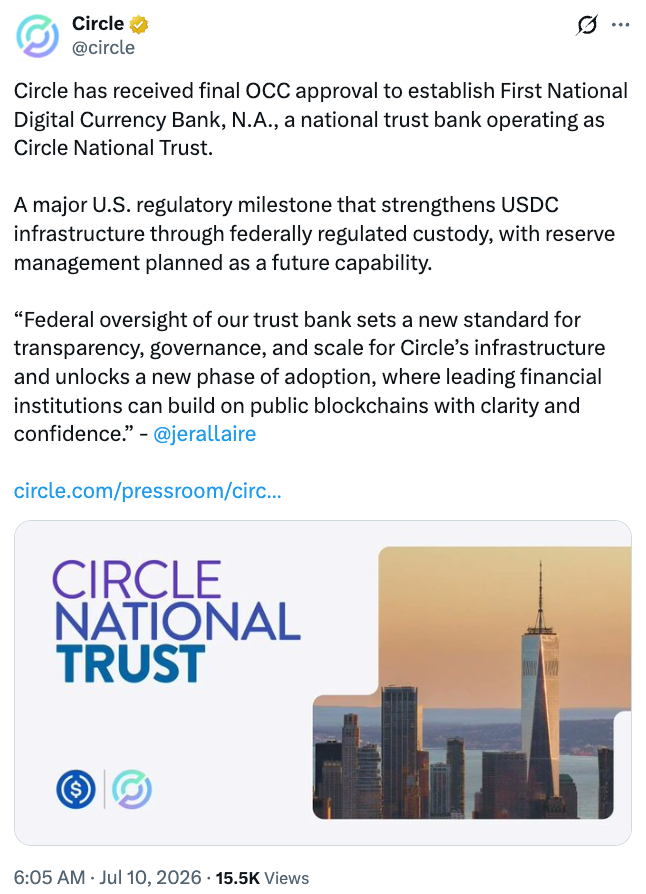
USDC stablecoin issuer Circle on Friday announced it received final approval from the US Office of the Comptroller of the Currency (OCC) to establish First National Digital Currency Bank (FNDCB), a national trust bank that will operate under the name Circle National Trust.
“OCC approval to establish Circle National Trust marks a defining step in bringing blockchain technology and digital assets into the core of the US financial system,” Circle CEO Jeremy Allaire said.
The approval comes after Circle applied for the charter in June 2025, allowing it to establish a federally regulated trust institution and expand its digital asset custody infrastructure.
Circle National Trust will initially provide fiduciary digital asset custody services for Circle and its affiliated companies, according to the company’s approved business plan.
The bank could later expand those services to a limited group of institutional customers, including banks and other financial institutions such as regulated derivatives firms, if demand develops.
Source: Circle