CBDT’s new crypto reporting guidance explained: What it means for digital asset investors and taxpayers
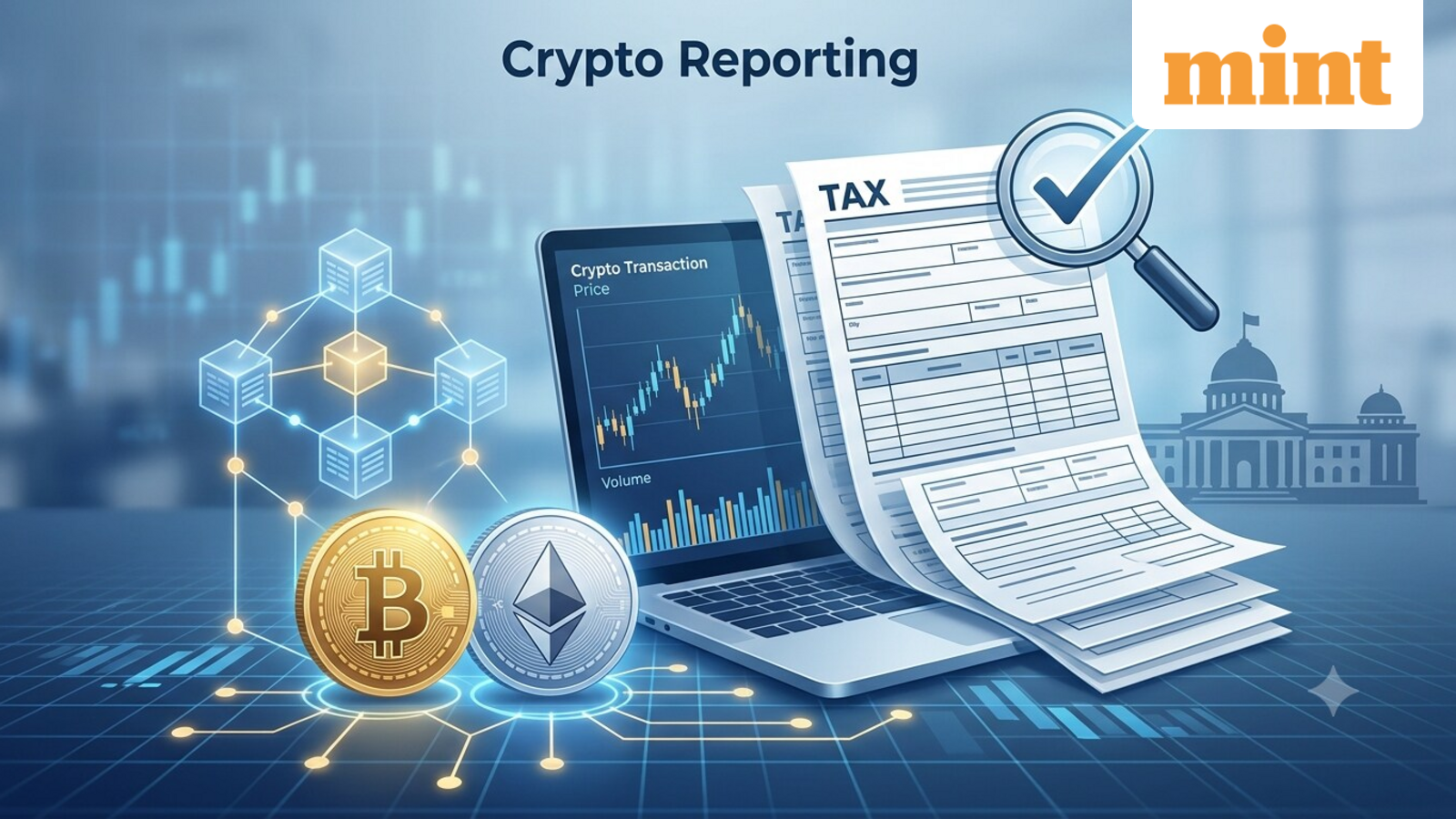
The Central Board of Direct Taxes (CBDT) has recently issued a guidance note explaining how crypto-asset reporting obligations will work under the Income Tax Act, 2025, bringing India’s reporting framework in line with the Organisation for Economic Co-operation and Development’s (OECD) Crypto-Asset Reporting Framework (CARF).
The guidance note is meant for Reporting Financial Institutions (RFIs), including crypto-asset service providers, and explains how they should comply with the new reporting requirements.
For investors, however, there is no change in taxation. The existing 30% tax on gains from Virtual Digital Assets (VDAs) and 1% TDS on eligible transactions continue to apply. What changes is how crypto exchanges report transaction data to the Income Tax Department, making tax reporting more standardised.
What changes for crypto investors?
According to Punit Agarwal, Founder & CEO, KoinX, the guidance note does not introduce any new Income Tax Return (ITR) form or investor-facing filing requirement. Instead, it standardises how crypto exchanges report transaction data to the Income Tax Department, making it easier for tax authorities to verify disclosures.
“The CBDT’s guidance note doesn’t change what crypto investors owe; the 30% tax on gains and 1% TDS on transactions are untouched,” he adds.
Agarwal noted that crypto exchanges have so far reported information to the Income Tax Department using different formats. “There wasn’t one common format tying identity, tax residency and transaction history together. This guidance note fixes that,” he adds.
“Under Section 509 of the Income Tax Act, 2025, exchanges will file this information annually through Form 167, starting with transactions from calendar year 2026 and the first filings due in 2027,” Agarwal mentioned.
As exchange-reported data and taxpayers’ ITRs begin to be matched under a common reporting framework, investors should ensure that their transaction records are accurate and consistent from 2026 onwards.
What should investors and taxpayers do now?
According to Agarwal, taxpayers do not need to change how they file their returns, but they should ensure that the information reported in their ITR matches the records maintained by crypto exchanges.
He suggested that investors should:
- Download annual transaction statements from every crypto exchange they have used, including inactive accounts.
- Reconcile TDS certificates with the crypto income reported in their ITR, particularly if they have traded on multiple exchanges.
- Review transaction records before filing returns, as discrepancies are likely to be detected much faster under the new reporting framework.
What else should investors keep in mind?
Agarwal also cautioned investors using overseas crypto platforms.
“As cross-border information sharing under the OECD’s Crypto-Asset Reporting Framework expands, investors should not assume that transactions on foreign platforms will go unnoticed by Indian tax authorities,” Agarwal explained.
Pranav Pagaria, Head of Finance & Strategy at CoinDCX, said, “The guidance provides much-needed operational clarity on how India’s crypto-asset reporting framework will be implemented, making compliance expectations more transparent for both crypto-asset service providers and taxpayers.”
Pagaria added that investors should maintain accurate records of their crypto transactions, correctly disclose all crypto-related income and transfers in their tax filings, and use compliant platforms that support evolving regulatory requirements.
Meanwhile, Edul Patel, CEO of Mudrex, noted, “The framework requires crypto exchanges to report transaction data to tax authorities, similar to how banks and mutual funds already report financial information.”
According to Patel, investors should also keep records of wallet transfers, in addition to purchases and sales, reconcile exchange statements with their income tax return, and ensure all taxable transactions are correctly disclosed moving forward.
Disclaimer: This story is for educational purposes only. The views and recommendations made above are those of individual analysts or broking companies, and not of Mint. We advise investors to check with certified experts before making any investment decisions.
About the Author
Sheetal Goel is a Content Producer at Livemint, where she covers corporate developments, personal finance, business trends, markets, and SEBI-related updates. She focuses on simplifying complex financial concepts and presenting them in a clear, reader-friendly manner, thereby helping audiences better understand investment trends, personal finance, and market developments. Her writing focuses on making finance more accessible to everyday readers while maintaining clarity, accuracy, and relevance.
She holds a degree in Economics (Hons.) along with an MBA in Finance, which has helped her develop a strong foundation in financial analysis, market understanding, and business reporting. Before joining journalism, she worked with finance and broking firms, where she closely followed market developments, investment strategies, and evolving industry trends. This practical exposure strengthened her understanding of financial markets. She has also written content across multiple formats and platforms, including YouTube, LinkedIn, and Instagram.
Over time, she has developed expertise in covering market-linked stories, investor-focused topics, and regulatory updates in a simplified yet informative style. She also enjoys reading and listening to Hindi poetry, reflecting her appreciation for literature and creative expression beyond the world of markets and numbers.