Billionaire Ken Griffin of Citadel Dropped a Can’t-Miss, 2-Word Reality Check on the AI Revolution
For the better part of the last four years, nothing has put the wind in Wall Street’s sails quite like the evolution of artificial intelligence (AI).
Empowering software and systems to make autonomous, split-second decisions is a technology that PwC believes can create $15.7 trillion in global economic value by 2030. It’s also a technology that’s fueled the Dow Jones Industrial Average (^DJI -0.01%), S&P 500 (^GSPC -0.14%), and Nasdaq Composite (^IXIC -0.57%) to all-time highs.
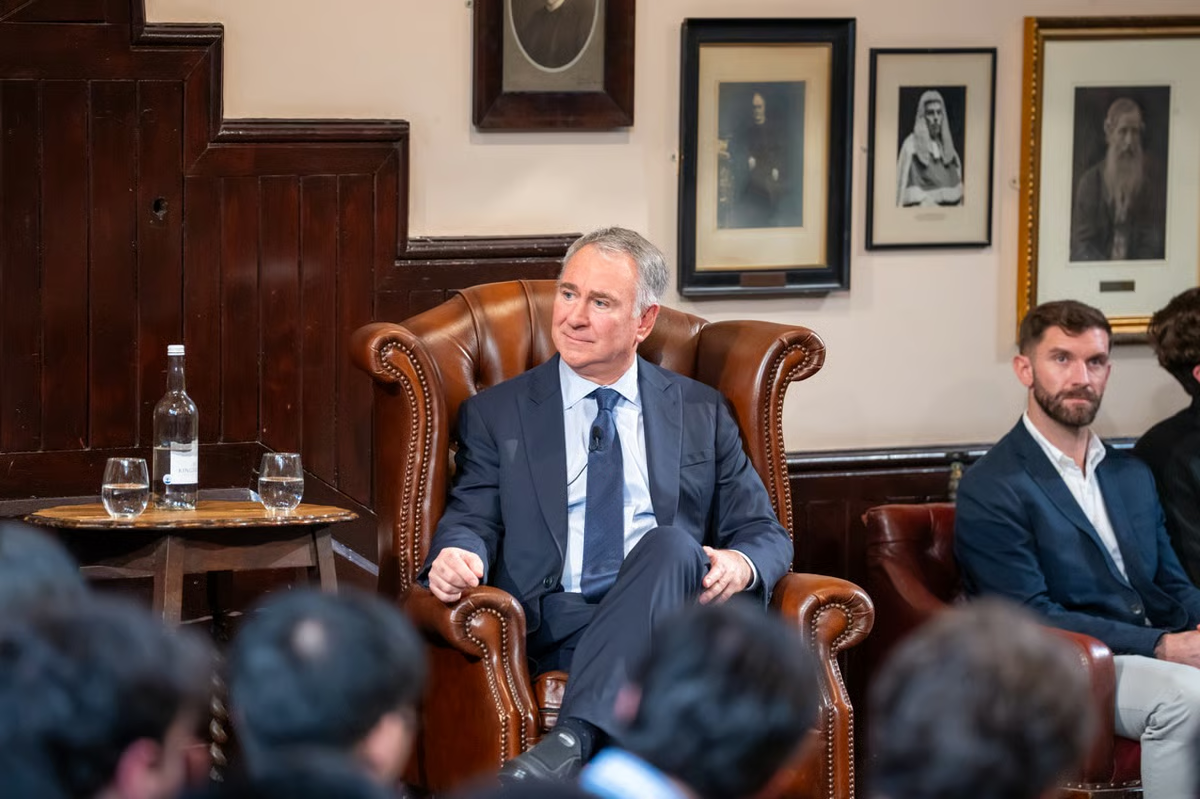
The AI revolution has several prominent cheerleaders on Wall Street, ranging from high-profile CEOs to the savviest billionaire money managers. However, you won’t find Citadel founder and CEO Ken Griffin among them.
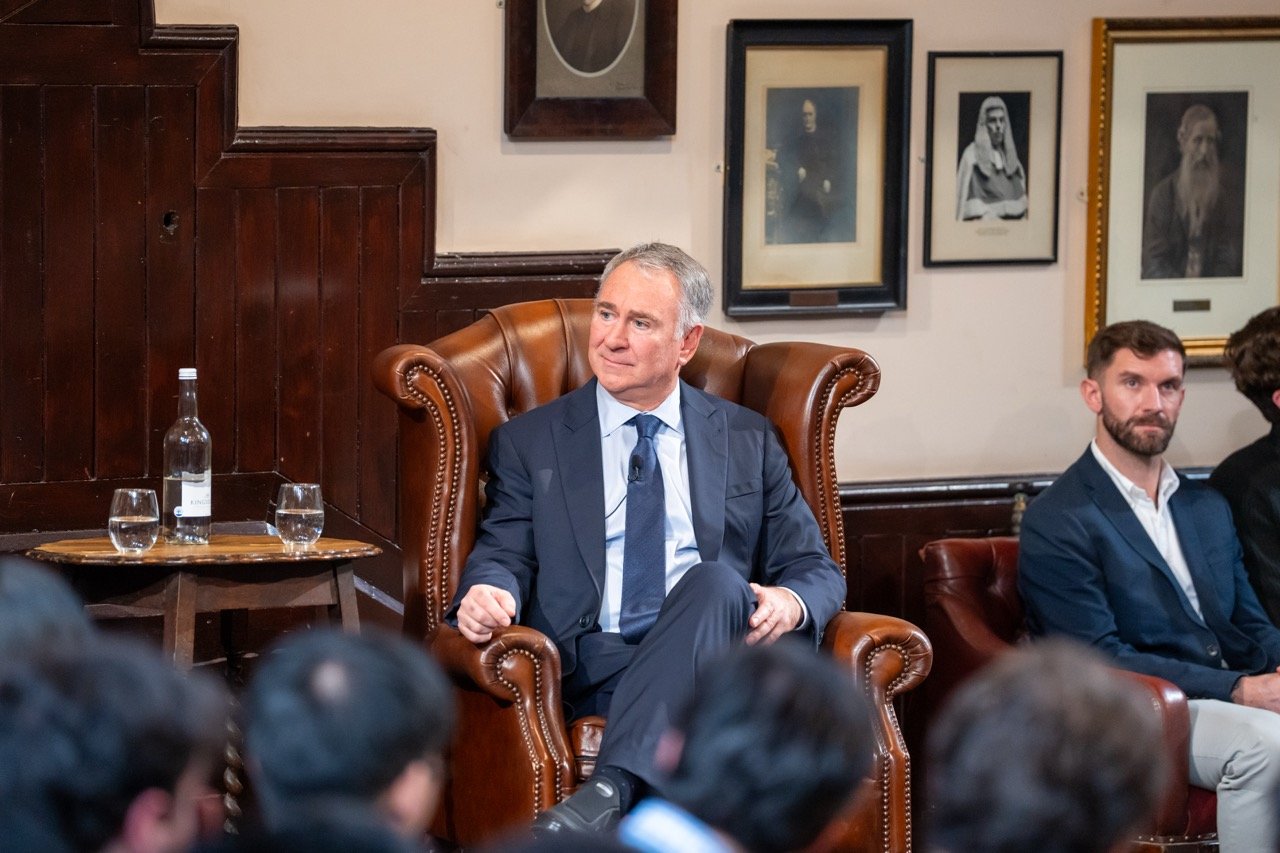
Citadel’s Ken Griffin is one of Wall Street’s most renowned investment minds. Image source: Getty Images.
Billionaire Ken Griffin doesn’t mince his words when talking about AI — but there is a caveat
Six months ago, at the World Economic Forum in Davos, Switzerland, Griffin had a roughly 30-minute conversation with The Economist’s Zanny Minton Beddoes about everything from President Donald Trump’s policies to the impact of AI on businesses. Given that Griffin oversees the most profitable hedge fund since inception, according to data from LCH Investments, he’s an ideal person to ask about the state of AI.
The problem is, AI enthusiasts won’t appreciate his response. When Beddoes asked Griffin point-blank, “So, is it [AI] hype?” Citadel’s founder responded without hesitation: “Of course! Of course! How else are you getting people to write 500 billion dollars worth of checks?”
Goldman’s latest forecast puts hyperscaler capex at $740bn for 2026 and $996bn for 2027.
via @MikeZaccardi pic.twitter.com/em0tKg6Msa
— Daily Chartbook (@dailychartbook) July 9, 2026
Griffin’s immediate two-word admission that “of course” AI is hype, along with a personal anecdote that put a lid on the capabilities of generative AI solutions, throws cold water on the pace of change promised by Wall Street’s leading AI companies.
However, Citadel’s boss did offer one caveat to his comments. Griffin noted that “spending on technology at large is having a clear positive impact on the economy.” AI is just part of this technological revolution, in Griffin’s view.

Image source: Getty Images.
Next-big-thing technologies have a checkered past
While investors may not agree with Ken Griffin, more than three decades of history are in his corner.
Since the advent and proliferation of the internet in the mid-1990s, every game-changing technology has endured an early stage bubble-bursting event. These bubbles form and burst because investors consistently overestimate the pace of adoption and/or optimization of next-big-thing technologies.
Similar to the rise of the internet, AI hasn’t suffered from an adoption issue. AI data center infrastructure is being spoken for, in some cases, years in advance.
Stock market bubbles throughout history…
AI stocks now ~40% of the market. pic.twitter.com/RxSAh09k6F
— Geiger Capital (@Geiger_Capital) May 8, 2026
But optimization is a very real issue. Businesses didn’t understand how to optimize internet-driven sales and profits until well after the dot-com bubble burst. Likewise, generative AI and large language models are a long way from being refined and optimized.
Next-big-thing technologies take time to mature, and nothing suggests that artificial intelligence will be an exception to this historical rule.