Banks see marketing opportunity on college athletes’ jerseys
- Key insight: To boost their name recognition, especially with young people, banks, credit unions and fintechs are jumping on new opportunities to affix their logos on college athletes’ uniforms — and spending big money, in some cases.
- Supporting data: SoFi will reportedly pay between $18 million and $20 million per year under a sponsorship deal with Notre Dame.
- Expert quote: “You don’t have any NFL teams that literally have their own network, every single week nationally” — SponsorUnited Founder and CEO Bob Lynch, referring to Notre Dame’s TV contract with NBC
Processing Content
College athletics have long offered an attractive marketing channel for banks, credit unions and fintechs — and those opportunities keep expanding.
After the arrival of
In January, the NCAA followed the lead of some pro sports leagues, changing its rules
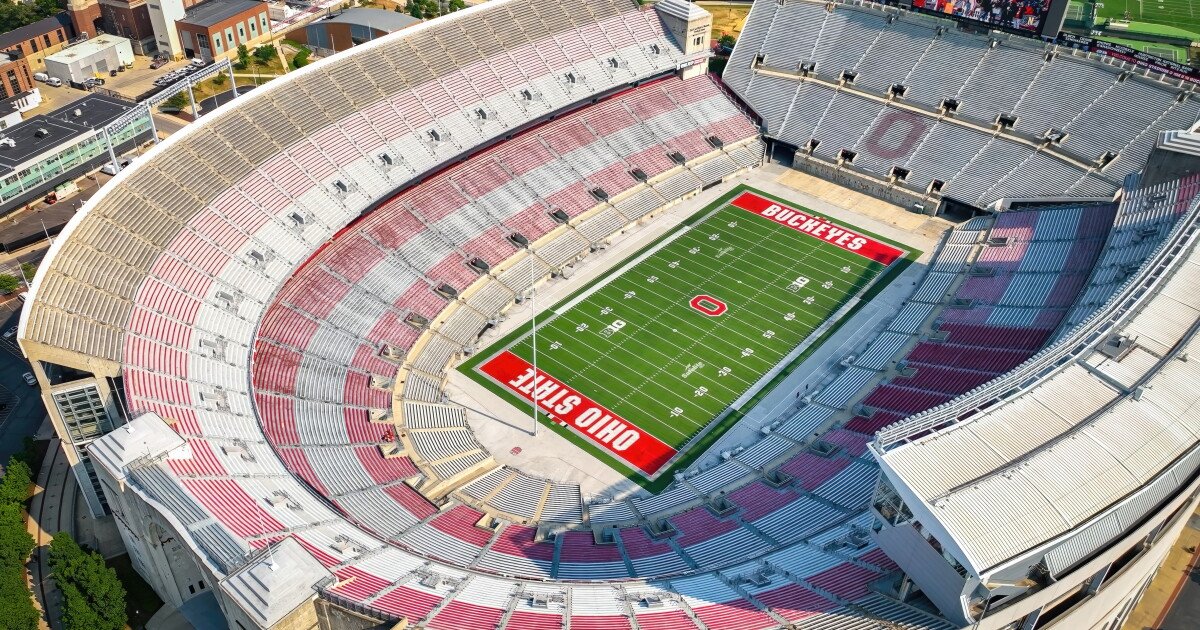
On Tuesday, Ohio State announced a deal with
The Ohio State agreement set a new benchmark, but only for a matter of hours. Later the same day, SoFi announced a deal with Notre Dame. The San Francisco-based fintech will reportedly pay about $18 million to $20 million per year.
Many such marketing deals have been inked in the run-up to Aug. 1, when the NCAA’s new rules take effect. Of course, it’s not just banks and other financial institutions that are paying for visibility on college athletes’ jerseys. For example, FedEx reached a jersey-patch deal with its hometown school, the University of Memphis.
But
He pointed to the opportunities that college sports give banks to tap into the concessions, merchandising and hospitality industries. Being involved with college athletics can also provide wealth-management leads, he noted.
One question that banks are asking as they evaluate the return on investment from these opportunities, Lynch said, is: “How do we use the school as a platform to facilitate introductions, relationship-building and relationship-mapping?”
He explained that the jersey patches themselves may be just one of many marketing tactics that are bundled into these sponsorship deals. College students are an impressionable audience, he noted. “The cost of acquisition of that customer as a 17- or an 18-year-old” creates “tremendous potential lifetime value to these banks,” Lynch said.
What follows is a closer look at several college jersey-patch deals announced this year involving banks, credit unions and fintechs.
Ohio State-JPMorganChase

GARY GARDINER/BLOOMBERG NEWS
Historically, when banks have sponsored college-sports teams, the value proposition has typically involved burnishing their ties to local communities. That’s partly the case with
But Ohio State athletics — and particularly Ohio State football — is very much a national brand.
The Ohio State-
Under the deal’s terms, Chase becomes the official bank sponsor of Ohio State athletics. It will be the jersey-patch partner for a total of 36 men’s and women’s varsity programs, including football.
Chase will also be “presenting sponsor” of the 1922 Club, a private club and dining venue inside the university’s football stadium. And it will offer Ohio State-related benefits to its cardholders, including inside access to special ticket offers.
Chase said the deal will provide new resources to support Ohio State athletes through name, image and likeness opportunities.
Notre Dame-SoFi

If any college football team is bigger than Ohio State, it might be the Fighting Irish, which has its own national TV contract with NBC.
“You don’t have any NFL teams that literally have their own network, every single week nationally,” Lynch noted.
SoFi CEO Anthony Noto told analysts Wednesday: “In football, Notre Dame is a class of one.”
Even before signing the Notre Dame deal, SoFi had made a big play for football fans. Its name is adorned on the Inglewood, California, stadium that’s home to the Los Angeles Rams and the Los Angeles Chargers. SoFi Stadium hosted the Super Bowl in 2022 and will do so again next year.
Under SoFi’s deal with Notre Dame, the company’s logo will be featured on the game and practice jerseys of the university’s 26 teams. SoFi will establish a new annual $1.4 million fund to support Notre Dame athletics. The company will be involved with ticket giveaways, tailgate parties and private events. There will also be a financial education component for student-athletes.
University of Kansas-Ripple

Like the sports industry, interest in the crypto sector skews substantially toward younger males.
That context may help explain why Ripple, the company behind the XRP cryptocurrency, has struck a multiyear jersey-patch sponsorship deal with University of Kansas athletics.
Another likely factor: Ripple CEO Brad Garlinghouse was born in Kansas, and he’s a graduate of the state’s flagship public university, according to his LinkedIn profile.
The Ripple deal marks the first time a cryptocurrency will be integrated into the jersey of a major college athletics program, according to a July 8 press release. An XRP patch will be featured on Jayhawk uniforms across all varsity sports.
“It’s a critical time in college athletics to be bold, and that’s what is being accomplished with today’s announcement,” Kansas men’s basketball coach Bill Self said in the press release. “We will make sure our guys understand the significance of the partnership and why it is beneficial for them moving forward.”
In addition to the jersey patches, Ripple agreed to provide for financial and technology education programs on the Lawrence, Kansas, campus. Ripple also pledged to take steps to connect Kansas graduates to careers in the tech industry.
Service academies-USAA

Tierney L. Cross/Bloomberg
USAA, the bank and insurance company that’s open to members of the U.S. military and their relatives, has long centered its marketing spending on the armed forces. It’s an enviable affinity-marketing angle.
So it’s no surprise that the San Antonio-based company has reached deals to be the jersey-patch sponsor for both the U.S. Military Academy and the Air Force Academy.
USAA’s branding will appear on jersey patches for all varsity sports at the U.S. Military Academy, also known as Army, and its logo will be etched at the 25-yard lines of the school’s football stadium.
Tom Theodorakis, Army’s athletic director, said in a press release: “As the landscape of college athletics continues to evolve, it is essential that we identify innovative revenue streams that align with our mission and values. This partnership achieves exactly that.”
USAA’s agreement with the Air Force Academy includes jersey patches for all 27 varsity programs, logos on playing surfaces inside multiple sports venues and signage at teams’ press conferences.
Smaller banks and credit unions

Many universities that field Division I teams won’t be able to sign highly lucrative deals with national brands, as Ohio State and Notre Dame have done. “It’s the haves and the have-nots in many ways,” Lynch said.
On Monday, the University of Illinois, which competes against Ohio State in the Big Ten Conference, announced a jersey-patch deal with Busey Bank.
Busey’s $18.2 billion-asset holding company, First Busey Corp., is currently headquartered in Kansas, but the bank has deep roots in Champaign, Illinois, where the University of Illinois is located.
At least one other Big Ten school, Michigan State University, has reached a jersey-patch deal with a local financial institution. The Spartans’ agreement with MSU Federal Credit Union will run for 10 years, according to a June 15 press release.
Some of the schools signing jersey-patch deals with local banks and credit unions have less national visibility.
North Dakota State University athletics are being sponsored by Fargo-based Gate City Bank.
And on Thursday, Southern Illinois University Edwardsville announced a deal with First Community Credit Union, which is based in the St. Louis area and has nearly $5 billion of assets.
Many more such deals are sure to follow.