Amit Shah unveils plan for a cooperative life insurance company | Insurance News
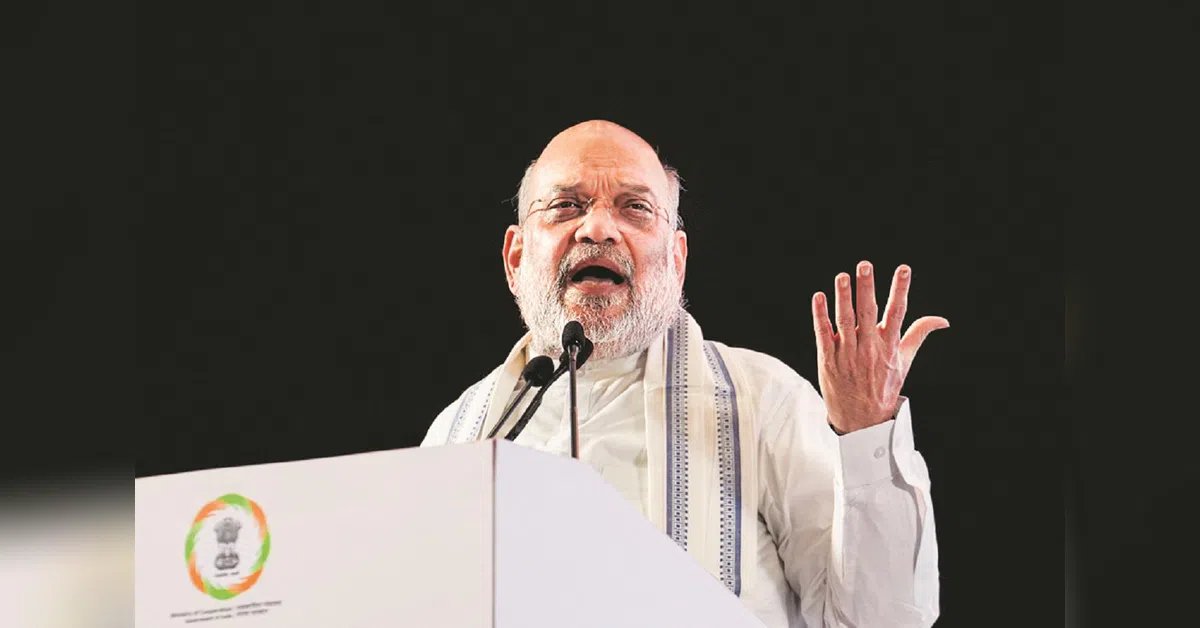
Union Minister Amit Shah on Monday announced that the government will soon facilitate the promotion of a cooperative life insurance company and also help set up a cooperative for utility aggregation on the lines of ‘Bharat Taxi’.
“We will soon launch a utility aggregator cooperative on the lines of Bharat Taxi and taking lessons from the success of IFFCO-Tokio in providing all types of insurance, we are forming a cooperative life insurance company, which will increase the penetration of cooperatives in the insurance sectors as well,” Shah said at an event in the national capital to mark the 5th Foundation Day of the Ministry of Cooperation.
IFFCO-Tokio General Insurance Company was incorporated in 2000 as a joint venture between the world’s largest fertiliser manufacturer, the Indian Farmers Fertiliser Cooperative (IFFCO), and major Japanese insurer Tokio Marine group.
IFFCO holds a 51 per cent in the company with Tokio Marine holding the remaining 49 per cent.
Although much of the insurance company’s plan is still in the nascent stage, initial discussions suggest it could be a company where existing cooperatives become initial promoters, sources said.
At a later stage, a partner may be roped in to join the proposed company.
“The structure could be on the lines of three newly formed multi-state cooperatives for seeds, organic farming and export promotion that have been promoted by large cooperatives like Amul (owned by the Gujarat Co-operative Milk Marketing Federation Ltd), National Dairy Development Board (NDDB), Iffco, Krishak Bharati Cooperative Ltd (Kribhco) and the National Cooperative Development Corporation (NCDC),” a senior official said.
The National Cooperative Organic Ltd (NCOL), which markets its products under the ‘Bharat Organic’ brand, counts NDDB, Amul and National Agricultural Cooperative Marketing Federation of India Ltd (NAFED) among its five promoters. NCOL has an authorised share capital of ₹500 crore and an initial paid capital of ₹100 crore contributed by all promoters.
“The idea stems from the Ministry of Cooperation’s broader objective of financial inclusion and was likely intended to signal a new initiative. However, at this stage there is no indication that any regulatory discussions have taken place. Cooperative institutions already play a role in credit through cooperative banks, while models such as IFFCO Tokio demonstrate how cooperatives can participate in general insurance. The announcement appears to suggest extending this approach to life insurance,” Vivek Iyer, partner and financial services risk leader, Grant Thornton Bharat told Business Standard.
The biggest potential advantage of such an insurance company could be last-mile connectivity, he added.
“Cooperative institutions already have a deep presence in rural areas and established relationships with members, which could improve insurance penetration and reduce customer acquisition costs. However, commercial insurers or joint venture partners may not find partnerships with cooperative institutions attractive because of governance concerns and cultural differences. Any cooperative insurer would require strong regulatory oversight and standards to inspire confidence. As a result, policymakers may consider creating a separate cooperative-owned insurance entity instead,” Iyer added.
Shah, meanwhile, in his address, among other things, highlighted that the ministry has taken many policy initiatives and done commendable work to make the cooperative system modern, transparent, technology-enabled, and competitive.
He said the ride-hailing platform Bharat Taxi, launched under the cooperative model, has been doing well and would be expanded into 500 cities in the next two years.
Bharat Taxi is an initiative of Sahakar Taxi Cooperative Ltd, a driver-centric mobility platform based on the cooperative model. Currently, Bharat Taxi has 0.63 million registered drivers and 3.58 million registered customers.
The service is operational in Delhi-NCR, Gujarat, Lucknow, Chandigarh, Mumbai, Jaipur, and Kanpur and will soon be launched in Ranchi, Patna, Guwahati, Bhopal, Kolkata, Indore, and Nagpur, according to an official statement.
Shah noted that in the last few years cooperative organisations have entered several new sectors, beyond dairy, sugar, fertilisers and banking. India has around 8.5 lakh cooperatives with more than 30 crore members.