Bank of Korea raises rates to 2.75% in first hike in over three years
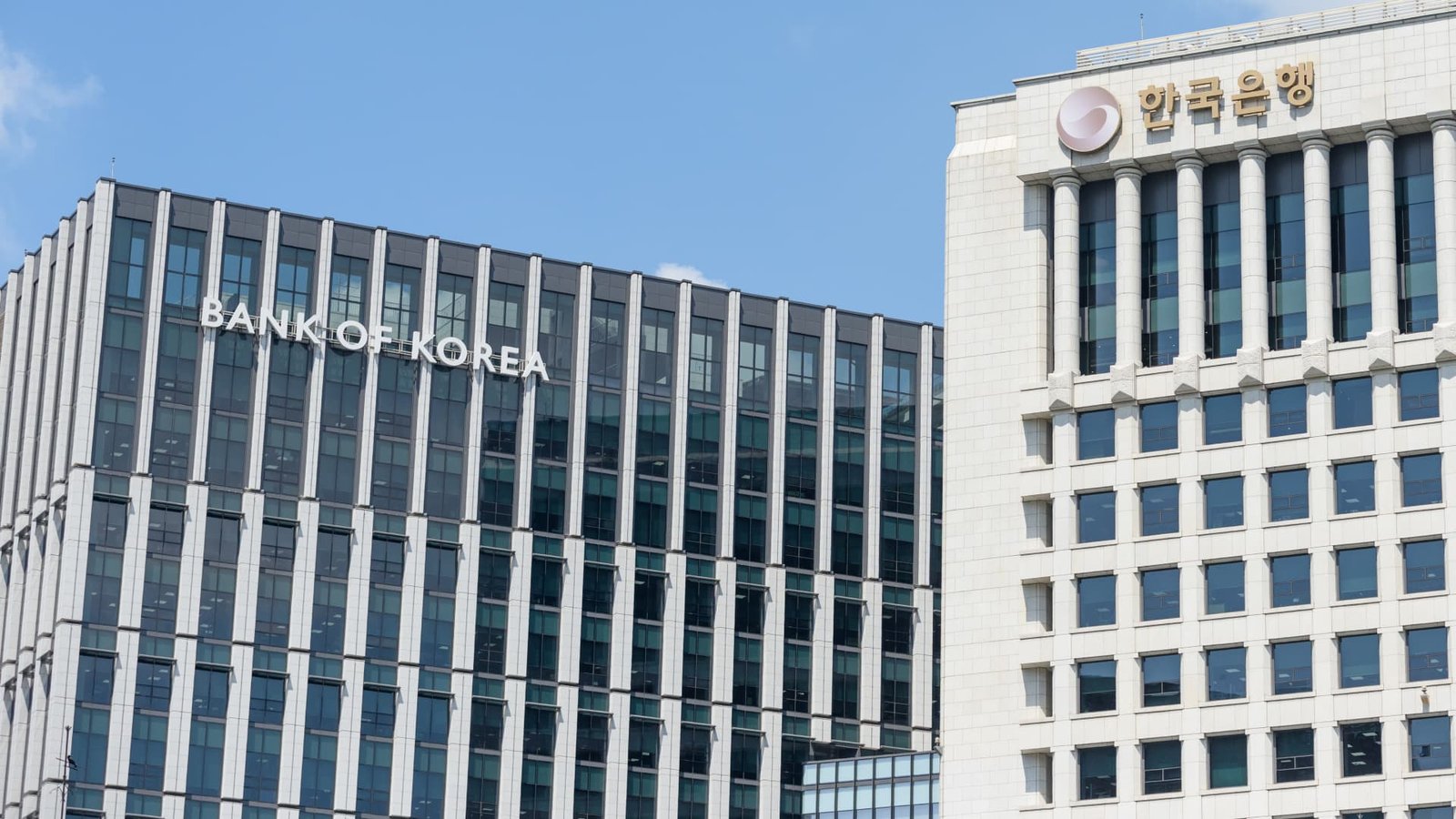
SEOUL, SOUTH KOREA – 2025/05/07: General view of the headquarters of the Bank of Korea in central Seoul. The Bank of Korea (BOK) is the central bank of South Korea and the institution that issues the Korean won. It was founded on June 12, 1950 in Seoul. (Photo by Kim Jae-Hwan/SOPA Images/LightRocket via Getty Images)
Sopa Images | Lightrocket | Getty Images
South Korea’s central bank hiked benchmark policy rates on Thursday, raising them for the first time since January 2023 as inflation in the country creeps up.
The Bank of Korea’s 25 basis point hike that increased rates to 2.75% was in line with median estimates from economists polled by Reuters.
The move comes as inflation is expected to remain above the BOK’s target of 2% “for a considerable time,” the central bank said in its statement. “Inflation is projected to remain elevated for some time as the impact of the rise in energy prices feeds through with a time lag.”
Headline inflation in South Korea in June rose to its highest since 2023, coming in at 3.2%.
The central bank flagged uncertainty in exchange rate, pace of domestic demand recovery, and increase in wages, while projecting headline inflation for 2026 at 2.7% and core inflation to be “somewhat higher” than its previous forecast of 2.4%.
The BOK last month had said that the payment of large performance bonuses recently seen at some major companies in the IT sector could lead to broader wage increases, translating to upward pressure on inflation
South Korea has also been affected by the steady depreciation of the won, which had touched a 17 year low of 1,561.5 on June 5. Earlier this month, the currency neared that milestone again, hitting 1,559 against the U.S. dollar.

The won has strengthened this month and was last trading at 1,484.86 against the dollar. BOK Governor Shin Hyun Song reportedly told Seoul’s parliament last week that there was “ample room for the won to strengthen going forward,” adding “we are currently accumulating a very large current account surplus.”
Higher rates support currencies by attracting foreign inflows.
Providing room for a tighter monetary policy, South Korea’s economy expanded by 3.8% in the first quarter, its strongest growth since the fourth quarter of 2021.
The rate hike, however, comes amid a tumultuous time in South Korea’s markets, as swings in semiconductor stocks Samsung Electronics and SK Hynix, have led to heightened volatility in the benchmark Kospi index.
The Kospi tumbled over 6%, as chipmakers Samsung and SK Hynix plunged, tracking losses in U.S. chip stocks overnight.
Further tightening by the BOK seems to be on the table, according to Gareth Leather, senior Asia economist, at Capital Economics.
In a note following the release, Leather said that as inflation is likely to remain above target for the rest of the year and growth is expected to remain strong, further tightening is likely.
“Recent data suggest the economy is well placed to cope with higher interest rates,” he said, pointing that the South Korean exports rose 71% in June year on year in dollar terms, their fastest pace since 1978.
Although retail sales are falling in real terms and is a concern, he still expects growth to reach an “above-consensus” 4.0% this year.