I Thought a 6-Year Break Ended My Tech Career. I Was Wrong.
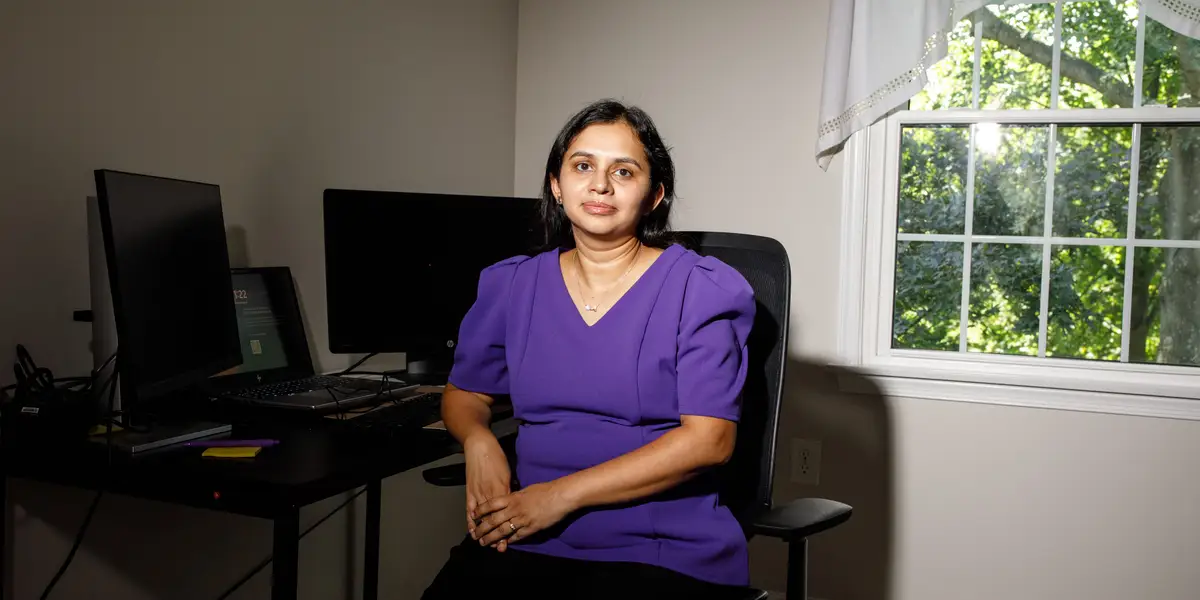
This as-told-to essay is based on a conversation with Ramya Ramesh, 39, who lives in New Jersey. The following has been edited for length and clarity.
In 2018, I was faced with a big decision: quit my job and move to Canada with my husband for a year, or stay in the US alone with our 4-year-old daughter.
I had spent practically my whole career working in the semiconductor industry, first at IBM, and then at a company called GlobalFoundries. I’d been there for roughly three years when my husband was offered a work assignment in Canada. I wasn’t able to stay at the company and work abroad, so my husband and I decided I’d quit and we’d keep our family together.
We expected the assignment to keep us in Canada for a year, but factors including COVID and getting pregnant meant we weren’t ready to move back to the US until 2023, 4½ years after we first moved.
When I looked for work in the US again six years after leaving, I ruled out the semiconductor industry because I was fearful the environment had changed too much. Then, a re-entry program at my previous company helped me ease back into the workforce.
I knew my career gap was getting longer, and I worried if I’d ever find a job.Ramya Ramesh
Language barriers and childcare needs stopped me from working in Canada
When we arrived in Montreal, I knew French was the primary language, but I underestimated how important fluency was for life and work. I struggled to communicate with people, even at my daughter’s daycare and the doctor’s office.
Brian W. Fraser for BI
I looked into semiconductor jobs there, but the adverts I saw required proficiency in French. I took French classes for more than a year, but the pandemic hit in 2020, and I became pregnant with our second child. It didn’t feel like a good time to look for a job. My first child wasn’t able to attend daycare due to COVID, so I wanted to be there for her and our new baby.
Once we returned to the US in 2023, instead of going back to work straight away and putting my son into daycare, I’d take him to the library, the park, or on playdates.
I was worried about finding work, but my niche skills gave me an advantage
I knew my career gap was getting longer, and I worried if I’d ever find a job. I spent time thinking about what industry I’d like to work in, and where I’d be a good fit. I was interested in event management, like planning birthday parties, but never made any steps toward it. I also explored a part-time substitute teaching role for a month, because it aligned with my children’s schedules, but I realized that managing a full classroom didn’t energize me.
In August 2024, former colleagues at GlobalFoundries informed me the company was hiring for a role in the department where I had worked before. They said they were still around and that people remembered me, which encouraged me to apply.
I don’t have any regrets about taking time away from work to enjoy time with my children.
During the technical interview, my break didn’t seem like a big deal. The interviewers asked me situational questions, like what I’d do if our team had to code something new that I wasn’t familiar with. I said I’d schedule a call with people in the neighboring teams to collaborate and gain clarity on what they needed. I think my answers demonstrated that I felt confident about asking others for support as a returnee.
My prior experience seemed to give me an advantage, too, as my area of expertise is very niche. While it takes time to train a new recruit, it’s more like a plug-and-play for someone who’s done this before.
Brian W. Fraser for BI
My company’s returner program showed me you can get back to work with support
In October 2024, I rejoined GlobalFoundries. The first two weeks were very overwhelming, with lots of paperwork to complete and changes to get used to, like adapting to a new company email system.
When content in team meetings went way over my head, the HR department really helped. I got some basic training on getting back to work via the company’s re-entry program, which offered structured support for people joining the company after a break. HR also assigned me mentors even though I didn’t ask for them.
When I was confused by abbreviations people were using, my mentor connected me with another returner who shared a list of the abbreviations they had made. For the first month or two, HR would check in once a week to ask how they could help.
The support I received showed me that returning to your career after a long gap is possible. Things would have been significantly harder without it.
Read more career break stories
My career break changed my approach to work
Living in a different country with a different language in the middle of the pandemic forced me to be proactive about seeking solutions. I apply this to my work today. If I hit a hurdle, I try to get a perspective from multiple people and resolve the issue even if it’s not straightforward.
Before the break, I might have only reached out to one person, but I’m more confident now because of what I’ve learned. As a result, I think I’m more effective at technical problems and more visible inside the organization than before the break.
I don’t have any regrets about taking time away from work to enjoy time with my children. I’d absolutely recommend a career break to others who can financially support themselves. Nowadays, there are many programs at companies that accept returners, and there are ways to get back into work.
Have you taken a career break and would like to share your story with Business Insider? Contact this reporter: ccheong@insider.com