2 Missions, 3 Launches, and Up to $300 Million for Rocket Lab
Rocket Lab (RKLB +0.43%) is on a roll — not that you could tell from the stock price.
Shares of the tiny, U.S.- and New Zealand-based Space Exploration Technologies lookalike are down 32% so far this month. Last month, however, Rocket Lab got some great news from the folks down at NASA: two new contracts to launch sun- and Earth-science missions for the space agency.
Plus, future contracts could help generate up to $300 million for Rocket Lab.
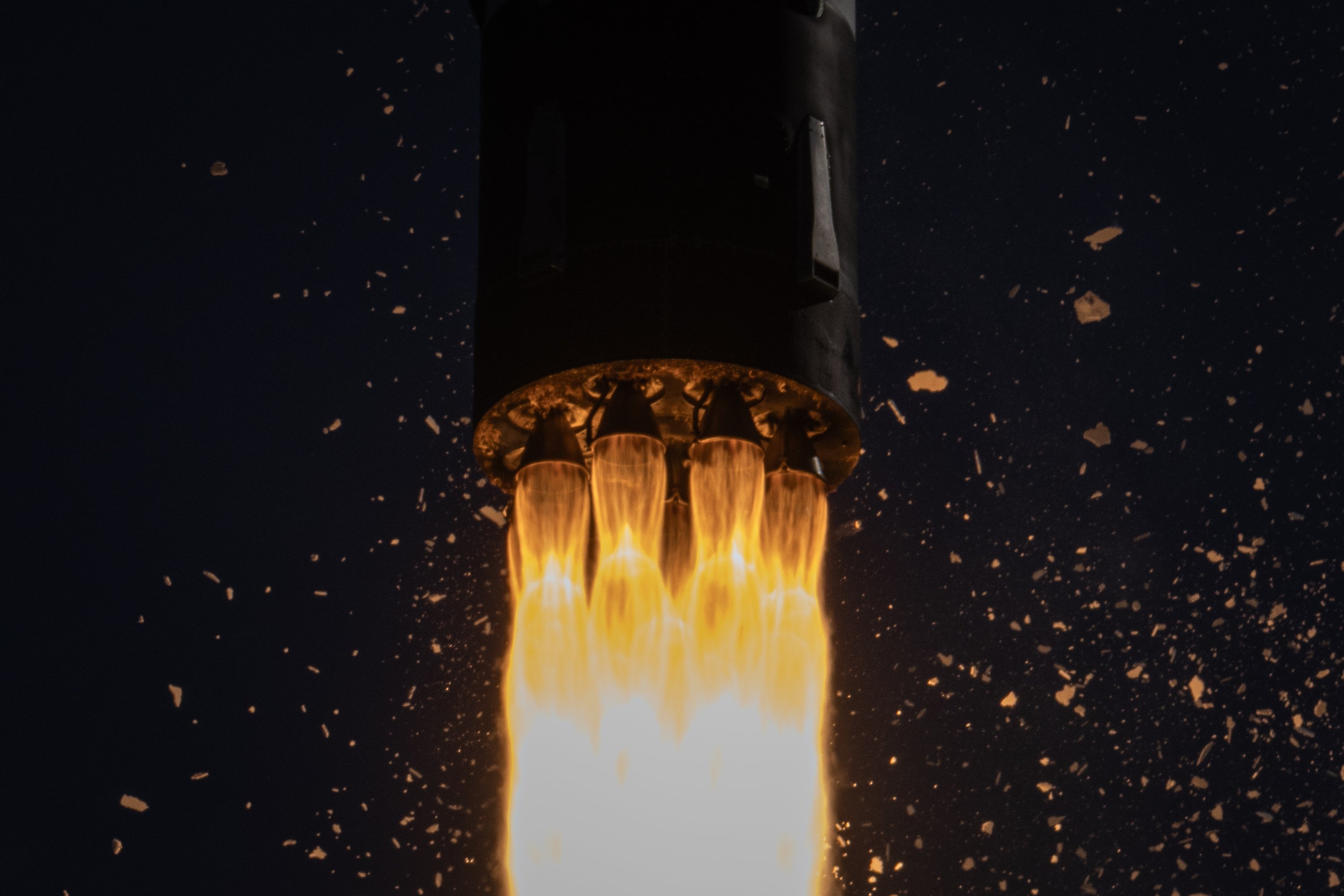
Image source: Rocket Lab.
Two wins for Rocket Lab
The missions in question, announced June 25, are called PolSIR (Polarized Submillimeter Ice-cloud Radiometer) and TSIS-2, and both are due to launch next year (meaning revenue generated from the missions will fall within a single year).
Rocket Lab will launch PolSIR on two separate Electron small rockets, each carrying an identical CubeSat. Its mission: to study ice clouds at high altitudes in the tropics and subtropics. The data they generate will help NASA make more accurate predictions of global weather patterns.
TSIS-2 (Total and Spectral Solar Irradiance Sensor-2) has a different mission. Here, a single Electron rocket will carry a single satellite to “the top of Earth’s atmosphere,” where it will study both the sun’s brightness and how solar energy is distributed across ultraviolet, visible, and infrared wavelengths. NASA hopes this data will help it measure the health of Earth’s ozone layer and predict ground-level air quality.
What the missions mean for Rocket Lab in dollars and cents
Specific price tags weren’t provided for either mission, so they’re probably small — but here’s the upper limit: NASA noted that both missions run under the aegis of its Venture-Class Acquisition of Dedicated and Rideshare (VADR) launch services contract, which permits NASA to buy launch services valued up to $300 million total over a 10-year ordering period.
If I were to venture a guess, I suspect Rocket Lab’s actual take from these two missions will approximate its usual Electron rocket launch cost. We’ve seen those recently priced as high as $9.5 million, so times three launches for the three satellites involved in the two missions equals $28.5 million, give or take.
It’s not a large fortune — but, when combined in a single year, it’s enough to raise Rocket Lab’s annual revenue by about 4%.
More importantly, winning the NASA VADR contracts demonstrates momentum at Rocket Lab, setting the stage for Rocket Lab to bring in even more business. Announcing PolSIR and TSIS-2, Rocket Lab was quick to point out that it also has “an astrophysics mission to study the formation and evolution of galaxies” in the works (Aspera) mission, as well as a demonstration of in-space refueling technologies (LOXSAT) later this year, that will use an Rocket Lab Photon spacecraft as its carrier — yielding revenue both for the launch and for the satellite being launched.

Today’s Change
(0.43%) $0.30
Current Price
$70.05
Key Data Points
Market Cap
Day’s Range
$66.88 – $70.66
52wk Range
$37.57 – $151.00
Volume
379.7K
Avg Vol
26.7M
Gross Margin
33.77%
Rocket Lab’s stock price may be down, but its prospects keep going up.