U.S. Homeowners Dodging Foreclosure with Short Sale Transactions

While short sales are still uncommon, their occurrence has been slowly increasing as homeowners with negative equity look for alternatives to foreclosure, particularly in several mid-priced markets where these transactions are most concentrated. A short sale refers to a real estate deal where a financially troubled homeowner sells their home for an amount that is less than what they owe on their mortgage.
A short sale is a voluntary action taken by the homeowner, whereas a foreclosure is an involuntary process. A foreclosure takes place when the lender legally takes back and sells the property after the homeowner fails to make mortgage payments. In this situation, the lender consents to accept a sum that is lower than the remaining loan balance, allowing them to recover a portion of the debt more quickly without the complications and expenses associated with a prolonged foreclosure process.
According to a recent report from Realtor.com published on Thursday, foreclosures exceed short sales by a ratio of more than 2-to-1, and the overall number of short sales across the country remains significantly lower than historical averages.
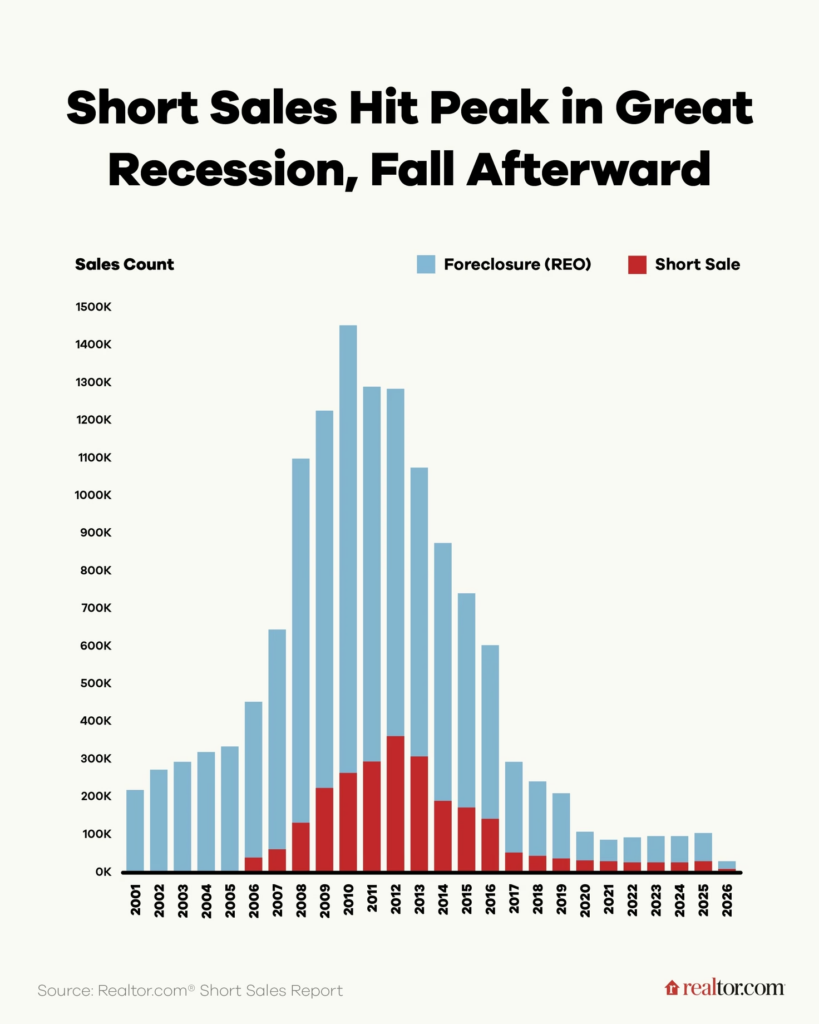
In 2025, approximately 30,000 short sales occurred throughout the U.S., representing just 0.6% of all conventional closings and 28% of distressed home sales, according to the report. These figures are significantly lower than the peak observed after the Great Recession in 2012, when short sales constituted nearly 9% of the housing market.
During that period, lenders and federal initiatives, including the Home Affordable Foreclosure Alternatives program, directed underwater borrowers towards short sales to alleviate their burden of homes with negative equity.
“Then the market recovered,” said Glen Morgenstern, an economist intern at Realtor.com. “Homeowners rebuilt equity, short sales faded along with foreclosures, and the crisis-era programs wound down. Today, short sales are a small corner of the market, but a growing one.”
Short Sale Activity, Popular Markets & More
From 2023 to 2024, there was a 4% increase in short-sale transactions, but the growth rate has since intensified. Transactions saw a 10% rise between 2024 and 2025, and a further 16% increase in the first quarter of 2026. Morgenstern notes that this trend reflects a more extensive rise in various types of distressed sales as the pandemic-related protections have been lifted.
Although short sales constitute a very small portion of the national housing market, some 10 midsized and midpriced U.S. markets are distinguished by their significant number of short-sale listings.
Top Five Metros with the Highest Share of Short Sales (May 2026):
- Lakeland, FL (6.7%)
- Colorado Springs, CO (5.8%)
- Putnam, CT (5.6%)
- Pueblo, CO (5.2%)
- Vallejo, CA (4.5%)
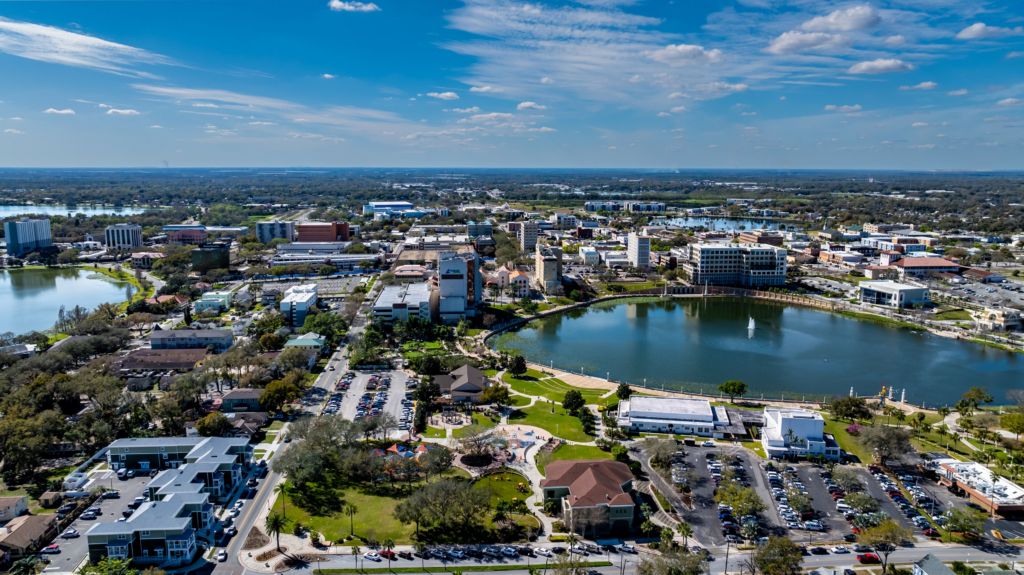
“These markets skew toward short sales, not just distress in general,” Morgenstern said. “In May, Lakeland had roughly three short sales for every foreclosure listing, Pueblo about 8 to 1, and Putnam, a small market, had eight short-sale listings and no foreclosures at all.”
The primary commonality across these markets is the price increase observed after 2020, which was subsequently succeeded by a decline in demand and a rise in inventory. In Lakeland, the number of homes available for sale increased by 60% over a three-year period. Inventory in Pueblo, grew by 65%, while Putnam, saw an overall increase of over 130%, all during a time when prices have either remained stable or declined.
“That is enough to leave owners who bought near the peak owing more than the home is now worth, the precondition for a short sale,” Morgenstern said.
Short Sale & Foreclosure Processes Vary by Region
According to Brian Stephens, a real estate agent in Lakeland, and team leader with eXp Realty, there is a higher number of short sales in the metro area than has been observed in a considerable period. Stephens links this trend to the stagnation of home prices over the last two years.
“Those homeowners that purchased in 2021 through 2023 are most of the people in trouble,” Stephens said. “They overpaid for their homes because there were multiple offers flying around, buyers waiving appraisals, and a frenzy of buyers grabbing the low interest rates that were offered at the time.”
Stephens also indicates that numerous individuals who purchased homes during the pandemic are unable to relocate due to insufficient equity, and they are reluctant to forfeit their 2.5% interest rates while current rates are around the mid-6% range. Lakeland’s declining prices are exacerbated by the increasing carrying costs in Florida. Home insurance premiums in the state surged by approximately 75% from 2021 to 2025, which is about twice the national average increase. Additionally, the median homeowners association fee increased by 8% in 2025, reaching $135 per month.
“Those bills eat into the same thin equity, tipping more stretched owners toward a short sale,” Morgenstern added.
Further, a report released in July by the data research firm Cotality identified Lakeland as one of the markets with the greatest risk of experiencing a price decline. Stephens also noted that distressed homeowners in Lakeland are attracted to short sales because this option has a lesser negative impact on their credit compared to foreclosure. Due to the fact that banks typically exhibit lower efficiency in handling short sales compared to foreclosures, the duration of the process may extend for several months, and in some cases, even up to a year. This allows homeowners to remain in their residences throughout the transition period.
In May, Lakeland secured a position on the top 10 list of markets with the highest total volume of short sales, achieving the eighth rank nationwide with 308 listings. With a metropolitan population of approximately 875,000, Lakeland stands out as an exception in a ranking primarily led by major American metros such as Tampa, FL, Phoenix, AZ, and Miami. Overall, this spring, Lakeland recorded a higher number of short-sale listings than New York City (281), Washington, DC (260), and Denver (230), even though the populations of these three metropolitan areas are three to twenty-three times greater than that of Lakeland.
To read more, click here.