Janeese Lewis George Wants To Stabilize Rent. The Question Is How
Presumptive D.C. mayor-elect Janeese Lewis George will come into office next year with a slate of policy priorities aimed at protecting tenants and stabilizing rent.
But she hasn’t yet offered specifics on how exactly she would accomplish those goals or what her preferred end result would look like.
Lewis George’s senior advisers told Bisnow that all options are on the table while cautioning that linking her to any specific policies — like a proposed rent freeze, for instance — would be inaccurate.
“All the tools will be in the toolbox,” said Tommy Wells, a housing policy adviser for Lewis George. “We’re not leaving anything out to look at.”

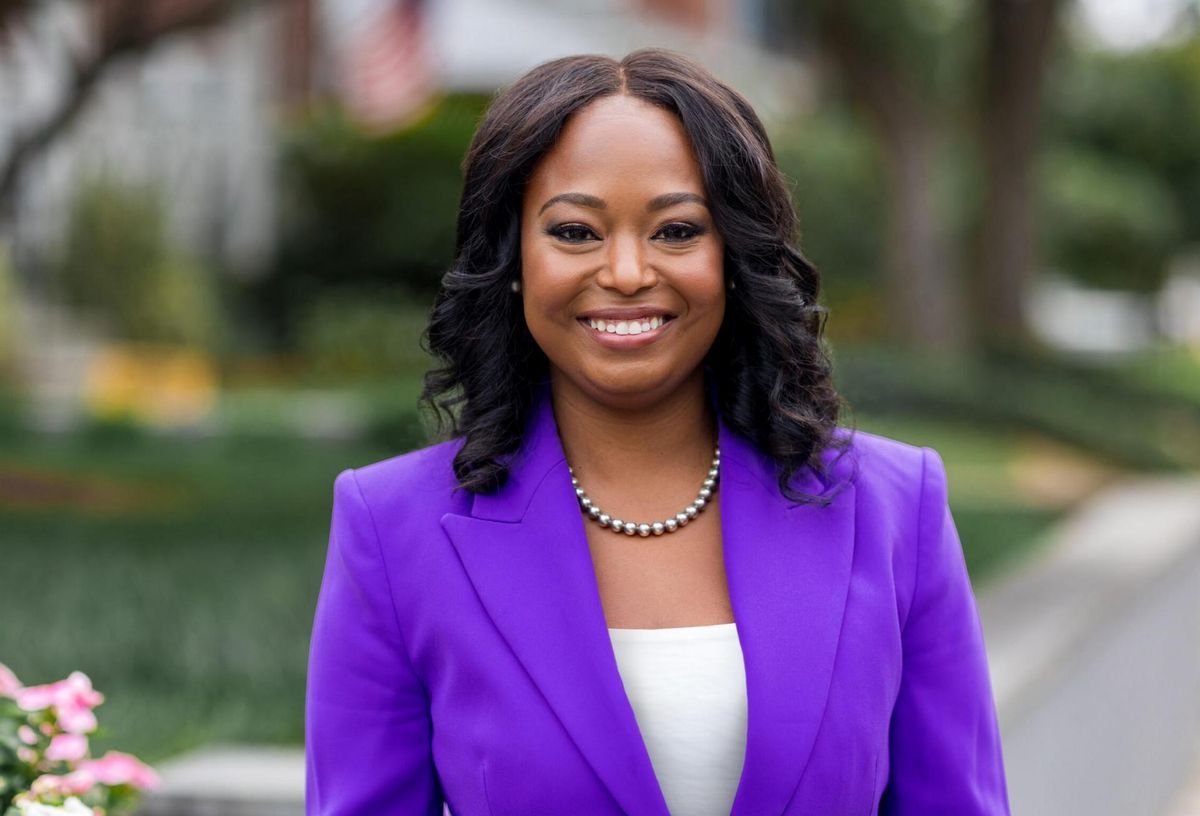
The official portrait of D.C. Councilmember Janeese Lewis George, taken in September 2023
Her transition to mayor comes amid a national housing crisis that has put rent control policies and ballot initiatives in the spotlight. A proposed ballot initiative in D.C. that would freeze rent for two years is tied up in an ongoing legal challenge.
Investors are already wary of investing in the nation’s capital, which lost 24,000 federal jobs alone between January 2025 and 2026 after the Trump administration made massive cuts to the workforce. Expanding rent control would dissuade investment further, real estate developers say.
“I would tell anyone that expanding rent control, as we’ve done in the past, is a death knell to production,” said Richard Lake, founding principal of Roadside Development. “You can’t have expansion of rent control or a rent freeze or any of these other policies, and you still want to grow. It will not happen.”
Lewis George is one of a small wave of politicians aligned with the Democratic Socialists of America platform to win elections. At least one of those victories has already resulted in a rent freeze.
During his campaign for New York mayor, democratic socialist Zohran Mamdani promised a four-year rent freeze for the city’s 1 million rent-controlled housing units. Last month, New York’s Rent Guidelines Board approved a freeze on rent increases for all stabilized units — the first time in history that rents on two-year leases were frozen.
Lewis George’s approach is decidedly different from her New York counterpart. She hasn’t provided specifics on how she will stabilize rents and doesn’t mention a rent freeze or rent control reform in her platform.
But her advisers say she wants to hear from the real estate community on how to best pursue her policy goal.
The issue of tenants having “predictable housing costs” is personal for Lewis George, whose family in 2010 was forced to move from the house they rented on Kennedy Street Northwest after the landlord increased rents to a price they couldn’t afford.
“So that experience obviously is very important to her, and rightly so,” David Alpert, another housing policy adviser for Lewis George, told Bisnow. “It makes sense for us to strive for stability for people, for predictability in some way.”
The average rent in D.C. is $2,279 per month, according to Apartments.com’s July report, 37% higher than the national average. Rent has dropped by 1.5% over the past year.

Bisnow/Jon Banister
Multifamily construction underway in D.C.’s NoMa neighborhood
‘Capital’s Just Not Going To Flow’
D.C.’s rent control law caps rent increases on buildings built during or before 1975 at the consumer price index for the D.C. region plus 2 percentage points, with a hard cap of 10%.
It is a policy that nonprofit Empower DC says works well but would ideally be expanded to newer properties, like to all buildings 15 years old and up, said Farah Fosse, the community development director for the organization.
“Having predictable, stable rent increases is good for everybody,” she said. “Both housing providers and renters need that — knowing that folks will be able to stay from year to year, knowing what your rents will be, being able to plan and make economic decisions.”
But D.C. developers and investors who spoke with Bisnow said expanding the city’s existing rent stabilization program would freeze housing development and investment, which would run counter to the goal of creating affordable housing.
“If the goal is production and more supply, which will ultimately lead to the goal of keeping rent at a reasonable level, the administration should stay away from anything that smells like rent control,” said Joe Clauser, chief financial officer at developer Foulger Pratt.
The real estate industry has historically advocated for more production as a way to create affordable housing, arguing that rent control has the opposite effect.
With rent control, landlords whose incomes per unit are typically set below market values can’t get the cash they need to make required upgrades and improvements, some developers said, a bind that leaves some units in too poor a state to be inhabited — creating even less housing.
“The issue is not predictability of rent,” Small Multifamily Owners Association founder and CEO Dean Hunter said. “The issue is affordability, and you adversely impact affordability when you put these restrictions on the ability of housing providers to raise the resources necessary to provide quality, affordable housing.”
Meanwhile, anxiety over any expansion of rent control could freeze development, which means new supply stalls.
“If you start touching on rent control or rent stabilization, you’re not going to meet your supply goals, because capital’s just not going to flow into the city for development projects,” Clauser said.
He said the “rent stabilization” promises on Lewis George’s website “seem to be a way of tiptoeing around some form of proposing rent control,” resulting in anxiety in the real estate community before she even enacts policy.
But even if the term isn’t read as explicitly referring to rent control, investors are still anxious about how general the platform appears to be and the array of future reforms it could engender.
“I have heard the investor community is kind of in a wait-and-see mode, and they are anxious about what are the policies that we’re going to see out of this administration,” Clauser said.
On-The-Ground Impacts

In neighboring Montgomery and Prince George’s counties, recent rent control policies have already impacted investor sentiment and, in turn, are starting to stall development activity.
Montgomery County enacted a rent stabilization measure in 2023 that caps rent increases at properties that are 23 or older at the local consumer price index plus 3 percentage points or at 6%, whichever is lower.
At the end of last month, developer Saul Centers wrote in a filing to the county Planning Board that the measure is impeding its ability to move forward with a 650-unit mixed-use project in North Bethesda. The company requested a five-year extension to advance to construction.
In the District, several investment and development players who spoke with Bisnow said investment has already started to stall over the proposed ballot initiative that would freeze rents for two years. A lawsuit was filed over that initiative in May in D.C. Superior Court.
“I’ve heard numerous groups that just say, ‘Look, until we get more clarity on the rent freeze ballot initiative and the new mayor’s agenda, we’re not investing in D.C.,’” Clauser said.
He said Foulger Pratt is in the middle of marketing several multifamily buildings in the District, but since the rent freeze ballot measure was filed at the end of last year, investment has shied away, with the firm’s brokers reporting fewer tours, higher cap rates and lower prices.
Lewis George’s campaign didn’t respond to Bisnow’s request for comment on whether she supports the proposed rent freeze ballot measure.
Her incoming administration is now focused on going to the community, including real estate stakeholders, to gather input on her campaign goals.
During the primary, the real estate industry overwhelmingly backed Lewis George’s foremost opponent, former Councilmember Kenyan McDuffie. Wells, one of Lewis George’s housing advisers, said that now that the primary is over, the presumptive mayor-elect will increasingly be able to have conversations with all her constituents, including the real estate community.
“Janeese has been very clear: She’s going to represent everybody, and she’s assigned us to meet with them to talk about how we go forward so it’s not just one side that was at the table when we ran this campaign,” Wells said.
Industry players are hoping they can start that discussion sooner rather than later.
“The quicker we can engage, the quicker we can have dialogue, the quicker we can come and really start working on the ultimate solutions or about how we can revive our ecosystem, the better,” Lake said.