Warren grills Warsh over Bowman dinner, personal investments
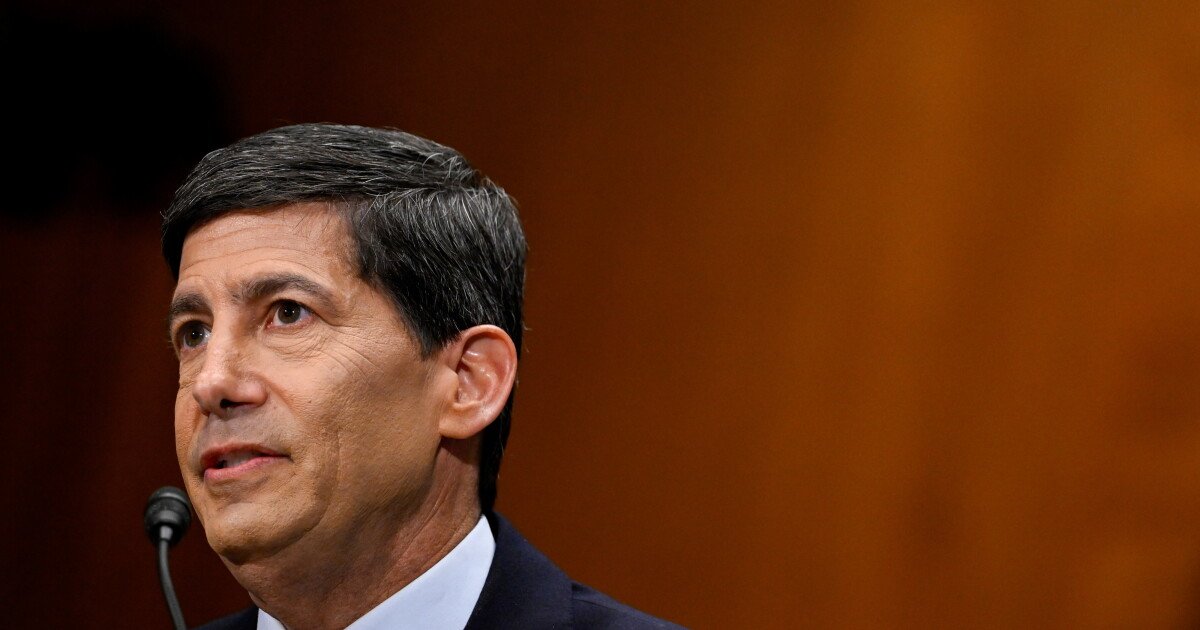

Daniel Heuer/Bloomberg
Processing Content
- Key insight: The top Democrat on the Senate Banking Committee had harsh words and sharp accusations for the new Federal Reserve chair over a pair of recent controversies.
- Expert quote: “I just gotta say, the tone that you are setting is one that seems to invite corruption and that’s going to be a real problem.” — Sen. Elizabeth Warren, D-Mass.
- Forward Look: Warren is pressing the Fed’s Office of the Inspector General to investigate Vice Chair Michelle Bowman’s attendance at a private dinner hosted by Bank of America last month.
Kevin Warsh faced challenging questions from a Democratic hardliner during a
Sen. Elizabeth Warren, D-Mass., grilled Warsh on his personal investments and a recent controversy involving Fed Vice Chair for Supervision Michelle Bowman.
Warren pressed the Fed chair for details about a private dinner hosted by Bank of America that Bowman attended last month. The dinner, which was originally reported on by the Wall Street Journal, took place during the Federal Open Market Committee’s so-called “blackout” period — in which committee members are prohibited from sharing information about the Fed’s economic analysis.
Warsh said he did not know about the content discussed during the event or whether it violated the Fed’s rules, but he confirmed he was aware of a letter Warren sent to the Fed’s Office of the Inspector General asking for a formal investigation into the episode.
The exchange took place on the second of two days of
Warsh said he has avoided probing for details about the event on his own to steer clear of a potential review by the agency’s internal watchdog.
“I wasn’t at the meeting, I don’t know the facts,” Warsh said over interjections from Warren. “But I’d be very interested in the fact-finding being done by the independent inspector general.”
Warren asked whether Warsh addressed the controversy with Bowman directly.
“How can you be chair and not ask your own vice chair whether or not she violated the blackout period, violated the law?” she said.
Warsh declined to say whether or not he discussed the matter with Bowman.
“It’d be inappropriate for me to prejudge facts that are being discovered,” he said.
FOMC members are barred from making public statements about monetary policy beginning on the second Saturday before an FOMC until 11:59 on the day after the meeting concludes. The committee’s external communications rules are aimed at reinforcing “the public’s confidence in the transparency of the monetary policy process.”
Bowman has a long track record of meeting and speaking with individuals in the banking industry, dating back to her time as the designated Federal Reserve Board member with community banking experience. She maintains that she did not speak about monetary policy during the Bank of America event and that her involvement adhered to the Fed’s ethical guidelines.
“I did not share my views on monetary policy,” she said in a written statement. “I have consistently complied with all applicable FOMC and ethics rules and remain firmly committed to doing so.”
During the hearing, Warren also questioned Warsh about how he disposed of his
“You say now that you sold those shares. In other words, somebody wrote you a check for more than $100 million days before you entered office,” Warren said. “Chair Warsh, who wrote that check?”
Warsh declined to specify how he disposed of his investments but noted that he followed a process established by oversight officials.
“I fully honored the obligations I had under … the agreement I had with the Office of Government Ethics, and there is continued disclosure, which I’m happy to make as consistent with the agreement,” Warsh said.
During the hearing, some of the committee members met Warsh with more sympathetic ears. Sen. Mike Rounds, R-S.D., said the Fed chair had been “harassed” by Warren’s accusations and invited Warsh to explain his divestment activities.
“I had earned assets over a long period of time and went over and above any ethics agreements and have sold or in the process of selling — nearly completely sold — everything I had earned during that period, and have rolled those into the equivalent of cash and T-bills,” Warsh said, noting that the assets were sold individually and at market value.
Warsh said he went above and beyond the minimum divestiture requirements to set an example for the rest of the institution.
“I thought that that was the prudent thing to do, given the responsibilities and the importance of setting the tone at the top,” Warsh said. “Culture is the big driver of a lot of things, and in my first seven weeks, Senator, we’re doing our very best in the best of the Fed’s traditions to get the culture right, get the strategy right, to get policy right.”
Warren, meanwhile, said Warsh was setting a very different example for those who work under him at the Fed.
“I just gotta say, the tone that you are setting is one that seems to invite corruption and that’s going to be a real problem,” she said.
During the hearing, Warsh said that while his initial weeks at the Fed have been focused on monetary policy, he has changes in mind for supervision and regulation, too.
“I think reform is coming to supervision and regulation,” Warsh said. “I have my own ideas that might be as dramatic as I’ve already shared on monetary policy here, and I think the sooner we get to them, the better.”
Warsh noted that several reform efforts were already underway when he arrived at the Fed in May, including proposed changes to capital requirements and rethinking of the annual stress testing regime for large banks. He praised the work Bowman has done on this front during the past year.
“Modernizing our banking systems, streamlining regulations so that the rules that apply to those systemically important institutions are not one size fits all for every other [are priorities],” he said. “The secret to the American economy is we have a few thousand banks and other providers of credit that know their smaller markets [better]. I’d rather have that system than what most of our G20 peers have, where they have a half a dozen institutions implicitly backed by their government.”
Warsh said he also supports reforming the way bank examination and supervision are handled, pointing to the failures of Silicon Valley Bank and First Republic as evidence that the institution’s current approach is flawed.
During the hearing, the topic of Fed independence also arose during discussions of regulation and supervision. Sen. Bill Hagerty, R-Tenn., nodded toward recent Supreme Court rulings holding that the Federal Reserve is distinct among agencies because of its monetary policy authority. He asked Warsh if the Fed’s supervision and regulation should be included in that carve out.
Warsh declined to weigh in on the legalities for the Fed’s authorities, but noted that he prefers to handle regulatory and supervisory reforms jointly with other oversight agencies.
“Independence is at its peak in the conduct of monetary policy, I believed that when I showed up at the Fed in 2006, I believed that at my confirmation hearing seven or eight weeks ago, I believe it now,” he said. “In the conduct of bank and regulatory policy, on things like the GENIUS Act, my general view is we should be working with the other bank regulators, the FDIC and the OCC, see if we can’t put out our rules together. What we don’t want is any kind of regulatory arbitrage.”
Several Democratic members of the committee questioned Warsh’s
In particular, the senators raised issues with the composition of the task on employment and productivity, which includes Marc Andreessen, a venture capitalist heavily invested in artificial intelligence; Charles Jones, an academic economist currently working for the AI firm Anthropic; and Asha Sharma, an executive vice president at Microsoft.
Because a central duty of that task force will be understanding the productivity implications of widespread AI adoption, the lawmakers were concerned that the experts were all aligned with the capital interests of AI with a potentially limited view into the technology’s downside implications on the labor market.
“Can you understand why a task force that is led by people, in large part, who are likely to get richer by AI might not be the most credible people to folks on the ground who are doing the work who are worried what impact this AI is going to have on their jobs?” Sen. Tina Smith, D-Minn., said. “The concern, of course, is that the productivity that is expected to be delivered by AI, if that actually happens, the benefits of that productivity are going to accrue to capital and not to labor.”
Warsh said he expects the taskforce members to hear from “folks who will be affected” by AI and noted that Jones’s research has prominently featured labor displacement from past technological shocks. He also said the final decision about how to adjust policy lies with the 19 members of the FOMC.
“We haven’t outsourced this decision to three people,” he said. “What we’ve outsourced is a bunch of thinking about this massive technology shock.”