What Happens to Your Money in a War? India’s Investment Landscape Since Feb 28, 2026 Amid US-Iran Tensions
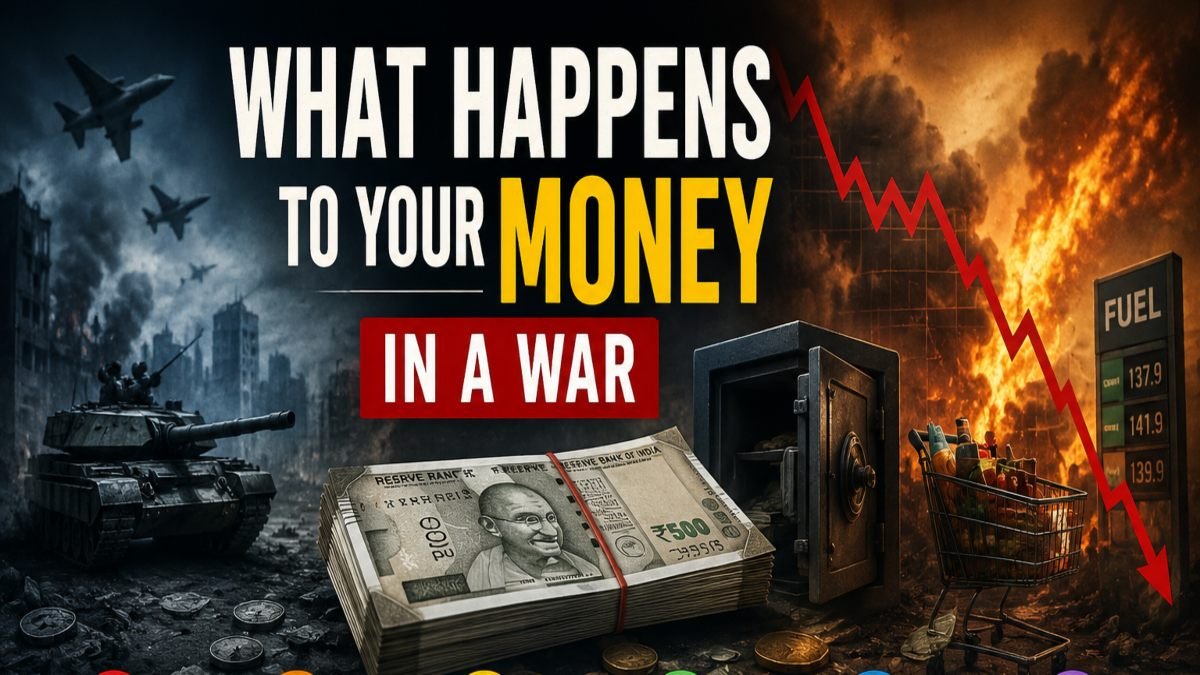
Since the US and Israel struck Iran on February 28, 2026, Indian markets have lost lakhs of crores in value, gold has broken records, and small investors have quietly found the safest route through the storm.
War doesn’t stay confined to the region it’s fought in — it shows up in your portfolio within hours. On February 28, 2026, the US and Israel launched Operation Epic Fury against Iran, killing Supreme Leader Ali Khamenei and igniting a war that, four and a half months later, is still reshaping how Indians invest. From a near ₹47 lakh crore market rout to record gold SIP demand, the episode is a real, ongoing case study in what actually protects money during war — and what doesn’t.
/img/2026/07/sensexfromfebtojuly-36481784121327.jpg "What Happens to Your Money in a War")
Day One: The Shock That Started It All
Markets were shut for a holiday on February 28, so the reaction hit on March 2. The Sensex fell as much as 2,744 points intraday and the Nifty 50 dropped over 500 points, wiping out nearly ₹6.8-8 lakh crore of investor wealth in a single morning. India VIX, the market’s fear gauge, spiked close to 19-20% that day. The rupee slid past 91 to the dollar for the first time in a month, and crude oil surged toward multi-year highs on fears the Strait of Hormuz — a route for roughly a fifth of the world’s daily oil — would shut down.
The pain didn’t stop there. By the war’s fourth week, Nifty and Sensex had each fallen over 9%, erasing roughly ₹40 lakh crore in combined market value, with Nifty Bank down 13.6% and Nifty PSU Bank down 16% as rising bond yields hurt lenders. Within 23 days of the first strikes, the cumulative rout crossed ₹47 lakh crore, and FIIs sold over ₹1.34 lakh crore of Indian equity through the year, with the bulk of it — nearly ₹86,780 crore — flowing out in March alone.
The Long War: Ceasefires, a Treaty, and Relapse
The conflict didn’t stay a single event — it became a five-month arc that markets had to keep re-pricing. A temporary ceasefire held through April, a memorandum to end the war was signed at Versailles in June, and the naval blockade lifted briefly — only for tensions to flare again in early July when Iran resumed strikes on shipping and the US retaliated, sending Brent crude back above $85 a barrel and the Sensex and Nifty into fresh bouts of selling through mid-July. For investors, that on-again-off-again pattern has mattered more than any single crash: portfolios that panicked and exited in March missed the partial recovery through April-June, only to face renewed volatility in July.
Why Gold Kept Winning
Gold and silver hit all-time highs in January 2026, just before the war began, and investment demand only grew from there. In Q1 2026, India’s gold demand rose 10% year-on-year to 151 tonnes, with investment demand up 54% to 82 tonnes — a sign gold is increasingly bought as a financial asset, not just jewellery. A single month’s gold ETF inflow briefly overtook equity mutual fund inflows for the first time on record, and India accounted for roughly 32% of global gold ETF demand in Q1.
The supply chain buckled under the demand: six major fund houses temporarily restricted large lump-sum gold scheme subscriptions in June 2026 due to a physical gold shortage and a new GST levy on bank gold imports — but small SIP and exchange-traded purchases were unaffected. A retail investor’s ₹500 gold SIP kept running uninterrupted even as big-ticket money hit a wall.
A Practical Playbook for the Next Conflict Shock
- Don’t exit equities in panic. DII buying consistently cushioned Indian markets even during heavy FII selloffs.
- Keep a small, steady gold allocation (5-10%) via SIP or ETF — the one asset that held up through every phase of this war.
- Watch defence, upstream oil and select IT stocks — sectors that held ground or gained even as the broader market fell.
- Avoid large lump-sum moves into any single asset during a live conflict — supply-side restrictions (like the 2026 gold curbs) can appear suddenly.
- Micro-investing tools (SIPs from ₹100-₹500) proved more resilient and accessible than big-ticket bets throughout the war.
- Expect relapses, not a clean end. This war saw a ceasefire, a signed treaty, and a fresh breakdown within five months — markets that priced in “peace” too early got caught out twice.
No one can predict when the next war will start, but the 2026 US-Iran war confirms an old truth: diversified, disciplined, small-and-steady investing beats trying to guess the next headline. Safety, in the end, comes less from picking the “right” asset and more from not betting everything on one — and from staying invested through the whole arc, not just the first scary week.
This article is for informational purposes only and does not constitute investment advice. Market data is based on public reporting as of July 14, 2026, and conditions may change rapidly. Please consult a SEBI-registered financial advisor before making investment decisions.