Pfizer Building Scare Unlikely To Slow Residential-Conversion Fever
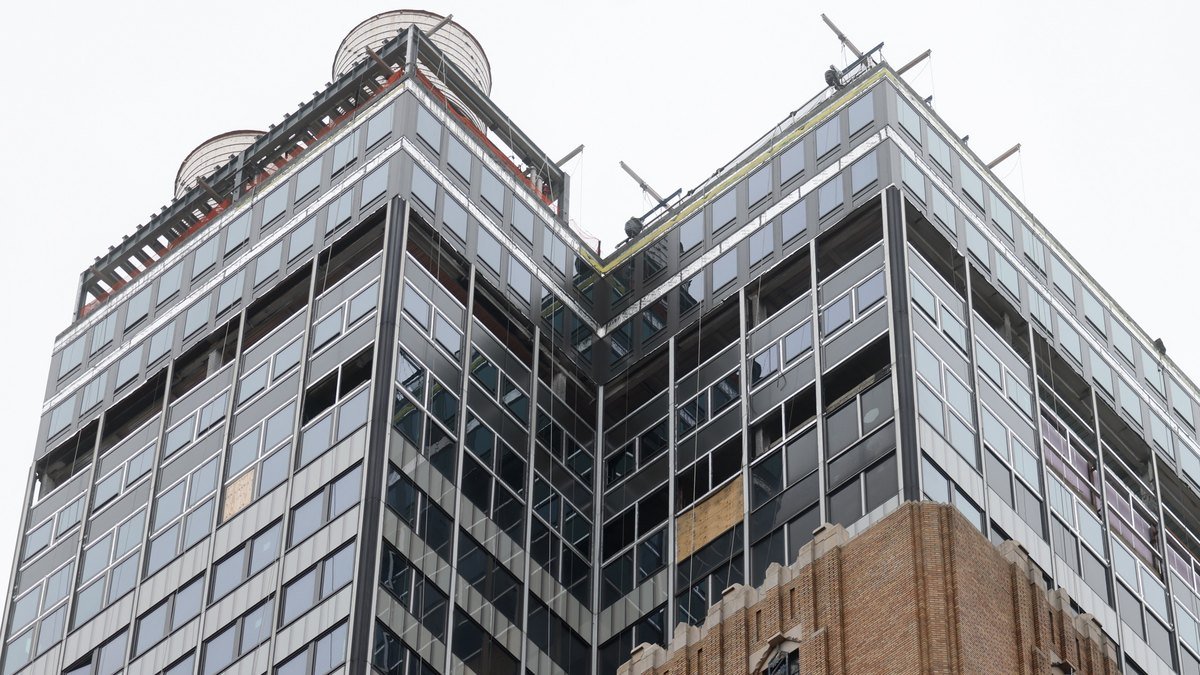
Last week, structural concerns at the Pfizer Building in Midtown Manhattan forced the evacuation of nine buildings and the shutdown of several city streets.
The incident occurred at 235 East 42nd St., the former global headquarters of pharmaceutical giant Pfizer, where the developer MetroLoft is in the midst of transforming the office building into a 1,600-unit luxury residential complex.
Construction crews working on the renovation spotted buckled support columns on the 21st floor, spurring fears of a partial building collapse and prompting a massive response from emergency crews. Fortunately, there were no injuries, and the building has been shored up with additional support beams.
The incident highlighted the engineering challenges involved in office-to-residential conversions, raising questions about the long-term prospects of other conversion projects in the city.
Developer MetroLoft says it had “identified the issue” and installed replacement metal beams to further support the structure’s weight. However, it still faces an open Department of Buildings investigation into the potential “structural failure” of the site.
Meanwhile, New York City Mayor Zohran Mamdani pledged his continued support of conversion projects as “part of our answer to the housing crisis,” noting that “I also consider that we have to do so safely and in a way that is fully accountable.”
Experts in the space tell Realtor.com® that the structural scare at the Pfizer Building is unlikely to derail the broader push toward residential conversions, even as it brings renewed scrutiny and increased regulatory oversight to the space.
Office-to-residential conversions help address the housing crisis
The move to convert office buildings into residential properties is increasingly popular in cities like New York and Philadelphia, where the rise of remote work has reduced demand for office space. Office vacancies remain 50% above pre-COVID levels, and many developers have pounced on the opportunity to address housing shortages and low office occupancy in one fell swoop.
In New York City alone, around 3,000 new residential units have sprung up out of former office buildings in the past six years, with plans for an additional 14,000 or so units in the works.
New York City’s need for more residential units is dire: A 2024 report from McKinsey & Company, commissioned by the Regional Plan Association, found that the region had a housing shortfall of around 540,000 units that could balloon to as many as 920,000 by 2035.
“Office-to-residential conversions are a critical tool for addressing NYC’s housing shortage, and projects on the scale of the Pfizer building are ambitious endeavors that bring new housing models to areas outside traditional conversion hubs,” says Spencer Levine, president of RAL Companies, a national development firm based in New York City that’s developed Class A office buildings like Zero Irving in addition to residential and hospitality projects.
Adaptive reuse is as much an art as it is a science, he says.
“These legacy buildings often hold complexities that go well beyond initial architectural surveys. Modifying a legacy structure’s massing and adding significant expansions requires immense resources—including complex load testing, 3rd-party modeling, and intense oversight. It is a highly demanding engineering process.”
The Pfizer conversion is a reminder that while residential conversions are well-intentioned, they’re difficult to execute successfully, says Justin Ramos of real estate company Compai.
“They are literally an exercise in teaching an old dog new tricks.”
Pfizer’s lasting effects
Despite last week’s scare, it’s unlikely that the Pfizer project will be shut down, says Mark Leverette, a partner in the commercial real estate division of risk advisory firm BPM.
“The economic drivers behind conversions remain compelling: persistent housing shortages, aging office inventory, and public policy support for adaptive reuse,” he says. “What may change is the level of scrutiny from lenders, insurers, regulators, and prospective residents. Projects with experienced developers, strong engineering diligence, and clear risk mitigation plans will likely continue to attract capital, while weaker projects may face greater challenges securing financing and buyer confidence.”
In the near term, the Pfizer project’s structural troubles and the ensuing evacuation may make it more difficult to entice renters and buyers for this particular project. But, says Leverette, “the greatest impact is likely to be on perceptions rather than fundamentals, particularly if the issue is determined to be isolated to a specific building rather than reflective of broader conversion risks.”
Levine agrees.
“Looking ahead, a natural and responsible outcome of an event like this is increased regulatory scrutiny,” he says. “We can likely expect an immediate tightening by the Department of Buildings (DOB) regarding the review processes for conversions, vertical additions, and even new construction. Whenever incidents occur in NYC, it prompts a collaborative industry review of how we can improve our protocols and build more safely as the city continues to evolve.”
At the end of the day, says Ramos, “there’s still a severe housing shortage in New York, which drives up rental prices. If developers can build good homes at reasonable rates, that’s the story that will eventually win out.”
John Walkup, co-founder of the real estate pricing intelligence platform UrbanDigs, doesn’t believe the Pfizer troubles will have much lasting effect.
“In NYC, stigma tends to have a shelf life, especially when the space is good, the amenities are plentiful, and the price is right.”
Get real estate news in your inbox