Fiat, Bitcoin, Stablecoins: Industry Insiders on the Future of Payments at iFX 2026
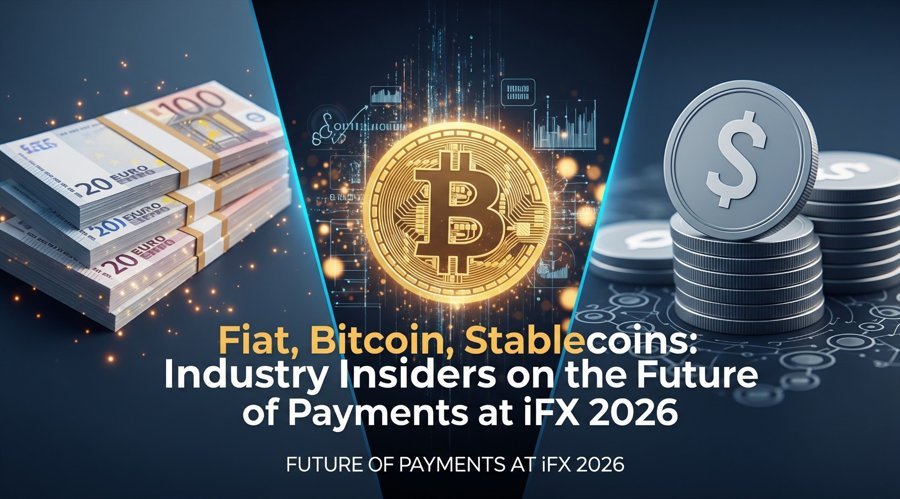
iFX EXPO International 2026 returned to Limassol, Cyprus, this June as the industry’s most prominent gathering of FX, trading, and payments professionals. On the second day of the event, the Money Wars panel brought together operators from across the payments infrastructure space, including Baskar Subramanian, CEO and Co-founder of Mobi, the cross-border payment infrastructure partner operating across Asian markets since 2014 to examine a question that has moved from theoretical to urgent: what role does each form of money play in the global payments stack today, and where is that heading?
Drawing on direct operating experience across the world’s most demanding payment corridors, the panelists shared their read on where fiat, Bitcoin, and stablecoins stand, with takeaways for businesses making near-term infrastructure decisions.
Fiat: Strong Within Borders, Constrained Beyond Them
Fiat remains the default for domestic commerce. Within established banking relationships and single-currency environments, it is mature, reliable, and deeply embedded in the regulatory frameworks businesses depend on.
At the borders, limitations surface. Correspondent banking chains introduce multiple intermediary fees, FX spreads, and settlement windows that close on weekends and public holidays. These are structural constraints at the centre of why cross-border payment infrastructure is under pressure in 2026.
Baskar Subramanian framed the underlying principle clearly: “Today everybody wants money to be available when they want it. The technology behind it does not matter.” Kristin Reischel, Senior Director at Rapyd, reinforced the point, fiat works well within a single currency, but as soon as currencies mix, the constraints become difficult to work around.
Bitcoin: Store of Value Rather than a Settlement Rail
The gap between Bitcoin’s original promise and its current commercial reality was a point of broad agreement on the panel. Satoshi Nakamoto’s original 2008 whitepaper described a peer-to-peer electronic cash system. Fifteen years of market behavior produced something meaningfully different: a speculative asset, a store of value, and for institutional participants, a hedge against currency debasement.
Subramanian was direct on why Bitcoin falls short as a payment mechanism. “Bitcoin today is a means to store value. You cannot transmit value through it. When you move it, the value changes. Even a few basis points of change cannot be absorbed by a transmitting service.”
The transaction data supports that position. Across hundreds of brokers in iGaming, forex, prop trading, and e-commerce, Bitcoin accounts for less than half a percentage point of transaction flow, a figure confirmed by Andrey Kalashnikov, Head of Match2Pay, who noted that the shift away from Bitcoin for transactional purposes is already visible in live payment data.
Stablecoins: Past Proof of Concept, Into Production
Stablecoins have moved well past the experimental stage in cross-border B2B payments. Kalashnikov observed that 95% of crypto payment flow run through USDT, with TRC20 as the dominant rail, followed by BEP20. For businesses managing multi-currency flows across borders, stablecoin settlement has become a serious operational consideration.
Subramanian gave the clearest picture of where demand is currently concentrated. “Today, the biggest use case is transmitting money in bulk: treasury flows, moving large sums from one entity to another. When you are mixing currencies, it is extremely difficult to manage without stablecoins. USDT in Asia is the biggest volume. In Europe, because of MiCA, USDC is being pushed.”
On retail adoption, he set a measured timeline. Consumer-level stablecoin payments at the point of sale are one to three years away. “When you see it in POS machines, that is when retail payments happen.” The B2B corridor is where the volume is now, and where the infrastructure case is strongest.
On the question of national stablecoins and dollar dominance in the settlement layer, Subramanian offered a pragmatic read: “India and China are protective because they are worried about money leaving the country. If they are proactive, get their own stablecoins in order, and ensure interoperability with USD stablecoins, that is the path that works best for everybody.”
His position on regulation was equally direct. “As a business, I want things to be regulated because it gives credibility to provide the service to customers. Convenience drives adoption. Regulation follows and makes it sustainable.”
Mobi, a part of Vaultura, is a cross-border payment infrastructure partner for businesses operating across Asian markets. Reach the team at sales@mobi.xyz
Canis, developed under Vaultura Group, is a stablecoin-native cross-border B2B settlements platform providing real-time settlement, transparent FX conversion, and compliance-embedded infrastructure. Reach the team at ask@canis.xyz
iFX EXPO International 2026 returned to Limassol, Cyprus, this June as the industry’s most prominent gathering of FX, trading, and payments professionals. On the second day of the event, the Money Wars panel brought together operators from across the payments infrastructure space, including Baskar Subramanian, CEO and Co-founder of Mobi, the cross-border payment infrastructure partner operating across Asian markets since 2014 to examine a question that has moved from theoretical to urgent: what role does each form of money play in the global payments stack today, and where is that heading?
Drawing on direct operating experience across the world’s most demanding payment corridors, the panelists shared their read on where fiat, Bitcoin, and stablecoins stand, with takeaways for businesses making near-term infrastructure decisions.
Fiat: Strong Within Borders, Constrained Beyond Them
Fiat remains the default for domestic commerce. Within established banking relationships and single-currency environments, it is mature, reliable, and deeply embedded in the regulatory frameworks businesses depend on.
At the borders, limitations surface. Correspondent banking chains introduce multiple intermediary fees, FX spreads, and settlement windows that close on weekends and public holidays. These are structural constraints at the centre of why cross-border payment infrastructure is under pressure in 2026.
Baskar Subramanian framed the underlying principle clearly: “Today everybody wants money to be available when they want it. The technology behind it does not matter.” Kristin Reischel, Senior Director at Rapyd, reinforced the point, fiat works well within a single currency, but as soon as currencies mix, the constraints become difficult to work around.
Bitcoin: Store of Value Rather than a Settlement Rail
The gap between Bitcoin’s original promise and its current commercial reality was a point of broad agreement on the panel. Satoshi Nakamoto’s original 2008 whitepaper described a peer-to-peer electronic cash system. Fifteen years of market behavior produced something meaningfully different: a speculative asset, a store of value, and for institutional participants, a hedge against currency debasement.
Subramanian was direct on why Bitcoin falls short as a payment mechanism. “Bitcoin today is a means to store value. You cannot transmit value through it. When you move it, the value changes. Even a few basis points of change cannot be absorbed by a transmitting service.”
The transaction data supports that position. Across hundreds of brokers in iGaming, forex, prop trading, and e-commerce, Bitcoin accounts for less than half a percentage point of transaction flow, a figure confirmed by Andrey Kalashnikov, Head of Match2Pay, who noted that the shift away from Bitcoin for transactional purposes is already visible in live payment data.
Stablecoins: Past Proof of Concept, Into Production
Stablecoins have moved well past the experimental stage in cross-border B2B payments. Kalashnikov observed that 95% of crypto payment flow run through USDT, with TRC20 as the dominant rail, followed by BEP20. For businesses managing multi-currency flows across borders, stablecoin settlement has become a serious operational consideration.
Subramanian gave the clearest picture of where demand is currently concentrated. “Today, the biggest use case is transmitting money in bulk: treasury flows, moving large sums from one entity to another. When you are mixing currencies, it is extremely difficult to manage without stablecoins. USDT in Asia is the biggest volume. In Europe, because of MiCA, USDC is being pushed.”
On retail adoption, he set a measured timeline. Consumer-level stablecoin payments at the point of sale are one to three years away. “When you see it in POS machines, that is when retail payments happen.” The B2B corridor is where the volume is now, and where the infrastructure case is strongest.
On the question of national stablecoins and dollar dominance in the settlement layer, Subramanian offered a pragmatic read: “India and China are protective because they are worried about money leaving the country. If they are proactive, get their own stablecoins in order, and ensure interoperability with USD stablecoins, that is the path that works best for everybody.”
His position on regulation was equally direct. “As a business, I want things to be regulated because it gives credibility to provide the service to customers. Convenience drives adoption. Regulation follows and makes it sustainable.”
Mobi, a part of Vaultura, is a cross-border payment infrastructure partner for businesses operating across Asian markets. Reach the team at sales@mobi.xyz
Canis, developed under Vaultura Group, is a stablecoin-native cross-border B2B settlements platform providing real-time settlement, transparent FX conversion, and compliance-embedded infrastructure. Reach the team at ask@canis.xyz