The Diamond Podcast: How Advisor Due Diligence Has Evolved
Due diligence has always been about finding the right fit. But what advisors are evaluating has expanded considerably.
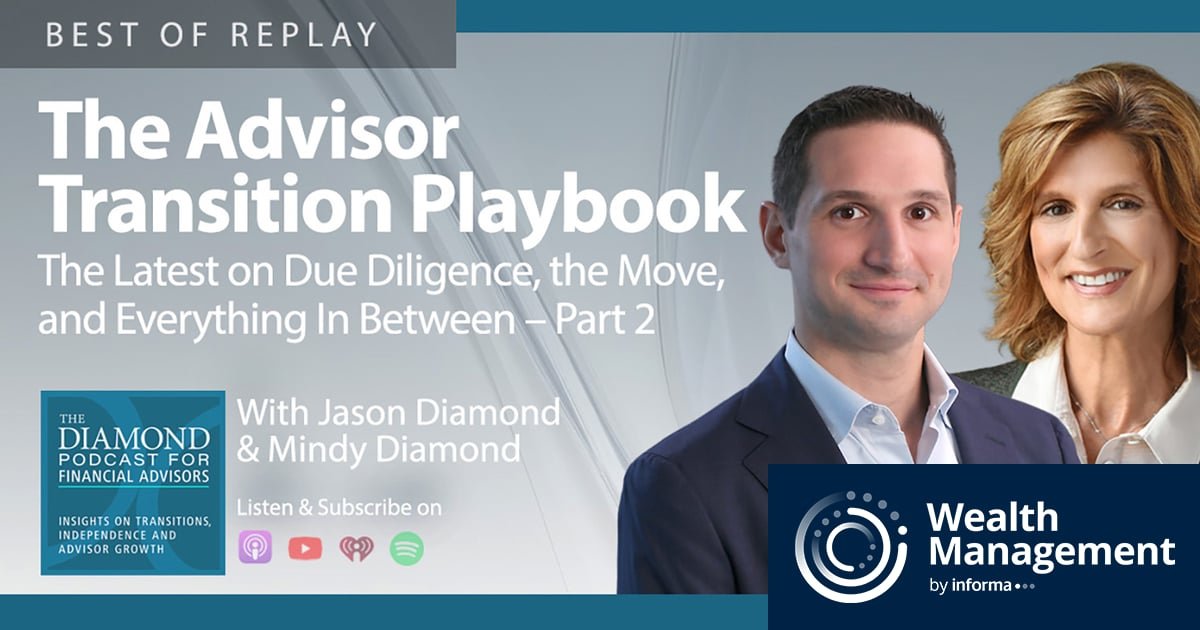
In this replay of an Industry Update, Jason Diamond and Mindy Diamond revisit The Advisor Transition Playbook to explore how advisor priorities continue to evolve. Beyond the traditional reasons advisors consider change, they discuss newer factors shaping decisions today—from artificial intelligence and enterprise value to ownership structure, firm stability, and long-term optionality.
The conversation reinforces that while every advisor’s motivations are personal, the evaluation process has become far more strategic. Today’s advisors aren’t simply comparing recruiting deals or platforms. They’re considering how today’s decisions may influence the value, flexibility, and future of the businesses they’re building.
The Storyline
For years, advisor movement was largely driven by familiar themes: bureaucracy, management changes, technology frustrations, and the desire for greater independence.
Those factors remain important. But the conversations Diamond Consultants has with advisors today increasingly include questions that rarely surfaced just a few years ago.
How should AI factor into firm selection? What is the long-term value of building enterprise value instead of simply maximizing a recruiting package? How important is a firm’s ownership structure? And how should advisors think about stability in a marketplace where acquisitions, recapitalizations, and private equity investment have become commonplace?
Jason and Mindy revisit the transition framework introduced in Part 1, focusing less on the mechanics of making a move and more on the evolving criteria advisors are using to evaluate their options.
The result is a broader discussion about due diligence—not simply as a transition exercise, but as an ongoing strategic process for advisors seeking to build their best business life.
Topics Covered
-
Traditional vs. emerging drivers of advisor movement
-
Artificial intelligence in wealth management
-
Enterprise value and advisor ownership
-
Recruiting deals versus long-term economics
-
Firm ownership and stability
-
Private equity in wealth management
-
Building a long-term advisory business