Mutual fund delivered 15% CAGR? Why your returns may still be lower
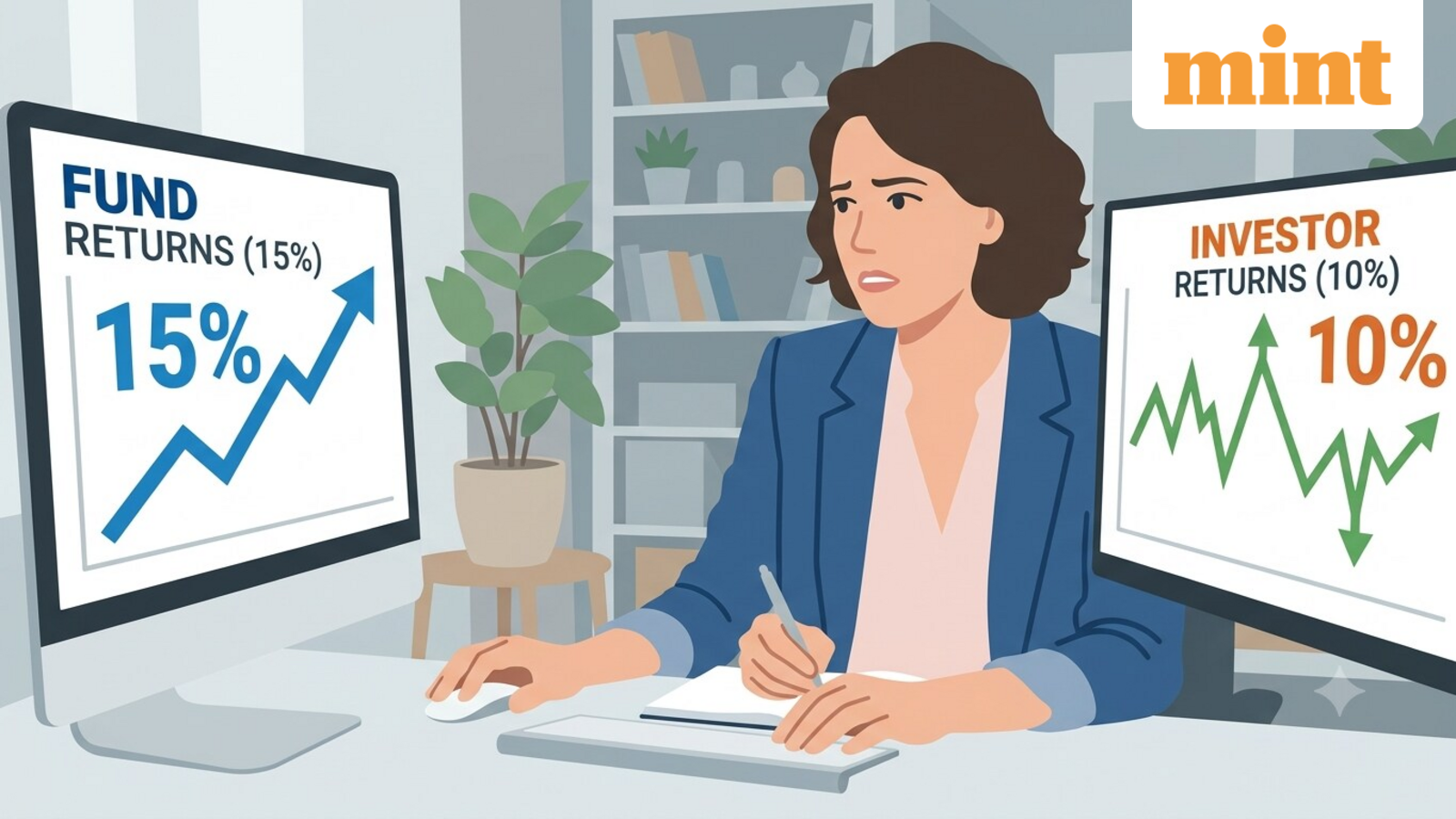
Suppose you invested in a mutual fund that delivered 15% annualised returns over the past five years. But when you calculated your own returns, they were closer to 10%. It may seem like the fund underperformed, but experts say that is often not the case.
The difference usually lies in what the mutual fund earned versus what its investors actually earned. While a scheme’s published return reflects the performance of the fund itself, an investor’s return depends on when money was invested, withdrawn or redeemed. This difference is commonly referred to as the investor return gap.
Why your returns may not match the fund’s returns
A mutual fund’s reported return assumes that money remained invested throughout the period. Investors, however, keep adding, withdrawing or redeeming money over time. Their actual returns, therefore, depend on the timing of these cash flows.
“The fund’s return assumes money invested once and left untouched. Investors don’t behave that way. They add more after a good run and pull back or exit during a fall. That mismatch in timing, not the fund’s performance, is what creates the gap,” said Rhishabh Garg, CEO of FundsIndia.
According to Adil Chacko, Executive Director at Anand Rathi Wealth, emotional investing is one of the biggest reasons investors fail to earn the returns their mutual funds generate.
“We often see a difference between the returns a mutual fund or an asset class generates and the returns investors actually earn. The biggest reason is emotional investing and recency bias,” Chacko said.
He explained that investors often wait until a fund or category starts topping performance charts before investing, expecting the rally to continue. By then, however, a significant portion of the gains has already been made. During periods of volatility, many of these investors either reduce or redeem their investments, widening the gap between the return generated by the investment and the return they actually earn.
Chacko cited pharma mutual funds as an example. He said that, while the category delivered annualised returns of around 23% in the three years ended April 2022, the average investor earned only about 17% because a large share of investment activity occurred in 2020 and 2021, after the pandemic-led rally had already made the category one of the market’s best performers.
A similar pattern played out in Gold ETFs, he said. Between March 2024 and March 2026, gold prices rose nearly 117%. However, around 75% of all Gold ETF inflows came only after gold had already gained about 72%. As a result, investors captured only a fraction of the overall rally despite investing in an asset class that more than doubled over the period, Chacko said.
Investor behaviour often matters more than fund selection
Experts say the investor return gap becomes even wider during market corrections.
According to Bhalchandra Joshi, Chief Business Officer and Chief Operating Officer at The Wealth Company Mutual Fund, redemption requests typically increase after markets have already fallen sharply, when valuations are often the most attractive.
“What we see, almost without fail, is that redemptions pick up after the fall, not before it. The fear isn’t really about the market. It’s about watching your own statement turn red month after month,” Joshi said.
The bigger cost, he added, is not the temporary decline in portfolio value but missing the recovery that follows.
Joshi believes investor behaviour has a much bigger influence on long-term returns than choosing between two reasonably good mutual funds.
“A mediocre fund might cost you a couple of percentage points a year. Bad timing can cost you the better part of the compounding altogether,” Joshi said.
Garg echoed a similar view, saying that selling during market declines converts temporary losses into permanent ones because investors often miss the sharp recovery that follows.
“Redemptions typically rise during corrections, right when they shouldn’t. Selling in a fall converts a paper loss into a permanent one and exits the investor before the recovery, which tends to be sharp and concentrated,” he said.
To narrow the investor return gap, experts recommend avoiding performance chasing, staying invested through market cycles and continuing SIPs even during corrections.