OpenAI, Anthropic Employees Could Buy Nearly One-Third of All Homes in San Francisco With IPO Earnings

- A new Redfin analysis takes a look at how much Bay Area real estate OpenAI and Anthropic employees could hypothetically purchase with their IPO earnings, in the wake of two massively valuable AI companies filing confidentially to go public.
- OpenAI employees could buy 20% of all homes in San Francisco, or 15% of all homes in San Jose.
- Anthropic employees could purchase almost 1 of every 10 homes in San Francisco, or about 7% of Oakland’s real estate.
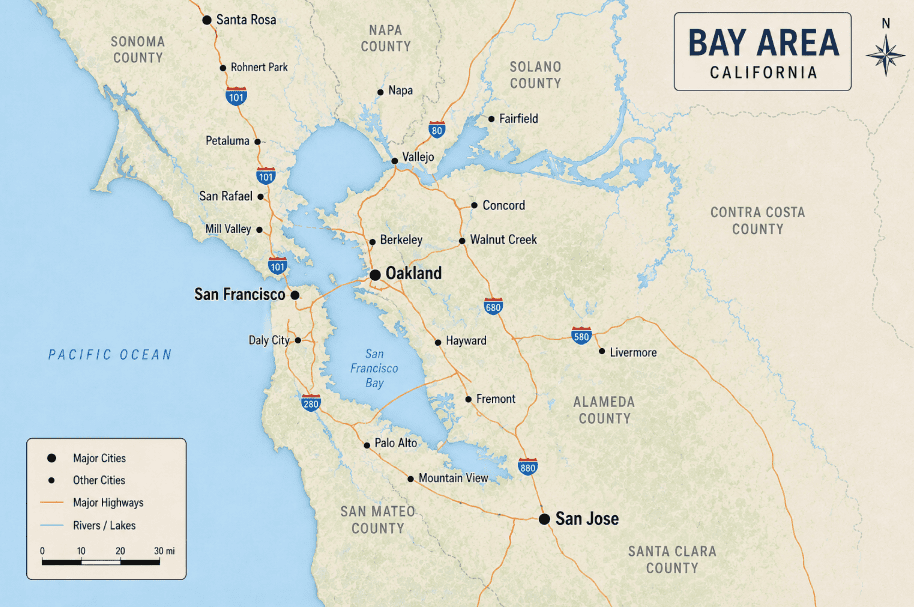
With the wealth created through the two massive AI public offerings coming down the pipeline, current and former employees of OpenAI and Anthropic could buy nearly one-third (29%) of all homes in San Francisco, where both companies are headquartered. That’s not just homes listed for sale–it’s 29% of all homes in the entire metro area.
Here’s a breakdown of the estimated wealth created by each IPO, and how much Bay Area real estate employees could purchase:
OpenAI
- With the wealth created through OpenAI’s anticipated IPO, current and former employees could hypothetically pool their money to buy an estimated 20% of all homes in the San Francisco metro area.
- Alternatively, they could buy an estimated 15% of all homes in the San Jose metro, or 15% of all homes in the Oakland metro.
- We estimate that current and former employees have roughly $135 billion in OpenAI equity post-taxes, and the total value of all homes in San Francisco was $692 billion as of 2024. The total value of all homes in San Jose was $872 billion, and all the homes in Oakland were worth $894 billion.
Anthropic
- With the wealth created through Anthropic’s upcoming IPO, current and former employees could buy an estimated 9% of all homes in San Francisco.
- Alternatively, they could buy roughly 7% of all homes in San Jose, or 7% of Oakland’s real estate.
- Our estimate of current and former employee equity in Anthropic is $63 billion, post-tax.
OpenAI is reportedly targeting a valuation around $1 trillion. OpenAI’s employee equity stake is relatively well-documented: the company has already granted roughly $80 billion in vested equity to employees, and has set aside an additional $50 billion employee stock grant pool, meaning employee equity accounts for approximately 26% of the company, or roughly $260 billion at a $1 trillion valuation; for this report, we’re applying broad tax assumptions and estimating employee equity is $135 billion, post-taxes. Anthropic is reportedly targeting a public listing at a valuation around $965 billion to $1 trillion. Anthropic’s employee equity stake is not publicly disclosed, so we estimate it at 10%–15% of total shares— consistent with comparable late-stage tech IPOs—implying a midpoint of roughly $120 billion in employee equity, or $63 billion post-taxes. See the end of this report for more on methodology.
The AI Boom Is Already Impacting the Bay Area Housing Market
San Francisco home prices are already growing at their fastest pace in nearly a decade as the AI boom drives a surge in demand, even before OpenAI and Anthropic go public.
So far, AI’s impact on the local market is driven mostly by huge salaries and signing bonuses. But when the companies go public, current and former employees–and investors–will earn much more money. While the calculations in this report are purely hypothetical and not a realistic representation of where IPO proceeds will go, they illustrate the huge scale of wealth being created in the Bay Area.
SpaceX Employees Could Buy Half of San Antonio With Their IPO Earnings
SpaceX employees could hypothetically pool their IPO windfall to buy roughly 40% of all the homes in San Antonio, one of the closest major metros to the company’s Starbase, TX headquarters, according to a separate Redfin report. The total value of all homes in San Antonio was roughly $297 billion in 2024; we estimate SpaceX employees hold roughly $200 billion in equity at the midpoint of our 10–15% ownership estimate, which comes to $120 billion post-taxes.
Methodology
OpenAI and Anthropic valuations are drawn from company announcements, SEC filings, and reporting from the Wall Street Journal, Reuters, and Fortune. OpenAI is targeting a listing at a valuation above $1 trillion in late 2026 or 2027; Anthropic confidentially filed its S-1 on June 1, 2026, at a $965 billion valuation, as early as fall 2026.
OpenAI’s employee equity estimate of ~$260 billion (26% of total equity at a $1 trillion valuation) is based on reporting by The Information and Reuters, which disclosed roughly $80 billion in vested employee equity plus a $50 billion stock grant pool. This is a reported figure, not a model. After applying estimated income taxes, we estimate OpenAI employees would net a total of approximately $135 billion in after-tax proceeds. That is a broad figure, as taxes depend on state, stock type and many other factors.
Anthropic’s employee equity estimate of ~$120 billion (10–15% midpoint) is modeled by subtracting known large stakeholders—Amazon (~15–17%), Google (~14%), and other institutional investors—from the total valuation and applying typical employee equity ranges from comparable late-stage tech IPOs. After applying estimated income taxes, we estimate Anthropic employees would net a total of approximately $63 billion in after-tax proceeds. That is a broad figure, as taxes depend on state, stock type and many other factors.
Total housing market values for the San Francisco, San Jose, and Oakland metro areas are from a Redfin report on U.S. housing market values as of December 2024. All real estate comparisons are illustrative and intended to convey scale only.
Important caveats: Neither IPO has been formally priced or scheduled. All wealth figures reflect paper value at IPO pricing—employees face lockup periods of up to 180 days, and tax rates could reduce proceeds by even more than we have estimated. The Anthropic employee equity figure is a modeled estimate and could differ materially from the actual number.