New York’s Power Supply Not Keeping Up With Electrification
When rolling blackouts become a regular occurrence in New York, don’t say we weren’t warned. Forecasts from the electric grid operator have become increasingly dire.
The latest one chides elected officials, if you can decipher the jargon:
“All scenarios require significant new generation, and policy-driven scenarios require far more installed capacity than exists today to reliably meet demand.”
Policy-driven scenarios? What?
Translation: dilemmas created by lawmakers.
For example, New York has passed an electric buildings mandate, an emissions cap (Local Law 97) and a requirement that landlords provide air-conditioning on request. Whether you agree with such policies or not, they all increase demand for electricity.
Data centers and private electric vehicles are not policy-driven. They are happening largely on their own. (Data centers often get tax breaks, but would be built regardless.)
An unwelcome reversal
Believe it or not, power consumption fell for years, thanks to efficiencies like LED bulbs, but started rising again because of bitcoin mining and other factors. Now it’s AI.
The point is, we’re using more electricity each year. Lawmakers encouraged it, believing solar, wind, hydropower and maybe nuclear would grow to meet demand.
It’s growing, but not enough. The New York Independent Systems Operator warns that we are falling short. One reason is the electric grid is outdated, so connecting wind and solar farms to it is time-consuming, difficult and sometimes impossible.
What about nuclear power? Some countries — France, South Korea, Japan and China — used a cookie-cutter strategy to build plants efficiently. Here, projects took forever and cost a fortune.
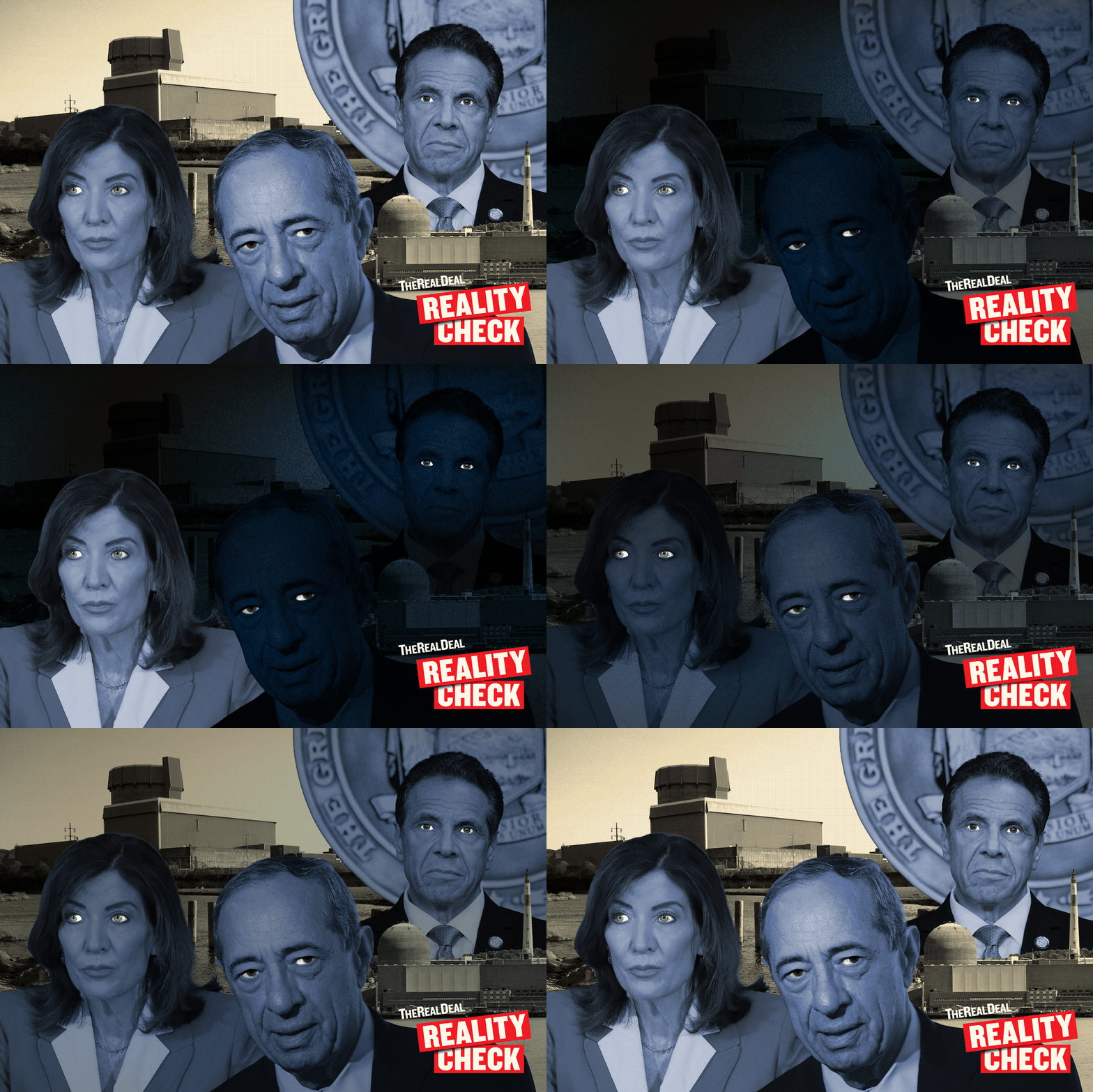
The Shoreham Nuclear Power Plant sucked $6 billion from Long Island ratepayers and never opened because Gov. Mario Cuomo caved to panicked residents. Later, his son Andrew closed the Indian Point Nuclear Generating Station. Terrible decisions.
More recently, President Donald Trump canceled hundreds of clean energy grants to blue states and paid wind-project developers $2.5 billion in taxpayer money to cancel their projects. Beyond terrible.
“The transition to a cleaner energy system, combined with rapid electrification and new energy-intensive economic development, is creating opportunity and risk not seen in decades,” the NYISO wrote. As old plants age and new ones don’t get built, “the electric system is operating with narrower margins for error.”
The implications for real estate are obvious. Buildings are worth less if they suffer frequent power outages, and all-electric towers without geothermal wells are facing cold winters and hot summers.
The gadfly
New York Communities for Change’s Pete Sikora has been fighting the real estate industry for years on climate issues. A fervent supporter of the policies that NYISO warned about, Sikora spends his days defending Local Law 97 and the state’s landmark clean-energy law, which he said Gov. Kathy Hochul “gutted” this year.
I emailed him about NYISO’s warnings. He didn’t deny that New York has a supply problem, but blamed the agency and the past two governors.
“The NYISO has stalled utility-scale renewable energy projects for many years now in a dysfunctional interconnection process, so it’s ironic when they call for new renewable power generation,” Sikora replied. “In contrast, they never met a gas project they didn’t love.”
He fingered Cuomo and Hochul for the state’s having “fallen behind in utility-scale solar and wind generation.”
In response, the NYISO pointed to its blog post that says since 2019, more than 100 clean energy projects totaling 14,000 megawatts have completed its interconnection process. But only 14, accounting for 4,561 megawatts, are in construction.
“Many of the most significant challenges facing developers arise after interconnection requirements have already been resolved,” the post says.
NYISO’s current cluster study (jargon alert!) has no new gas–fueled generation projects, and Hochul is trying to get nuclear plants built.
Meanwhile, the City Council keeps advancing bills that increase energy consumption. In 2017 it raised the minimum temperature for rental buildings and in 2022 tried to raise it even more.
Last year it set a new maximum temperature, requiring landlords to air-condition a tenant’s primary sleeping space on request.
Something’s got to give. The way things are going, it will be the power grid.
Read more

Policy Pro: NY electric buildings fight could reach the Supreme Court

New real estate investment under attack: battery storage

Power restored after blackout envelops West Side of Manhattan