Bank of England holds interest rates at 3.75% for the fifth time
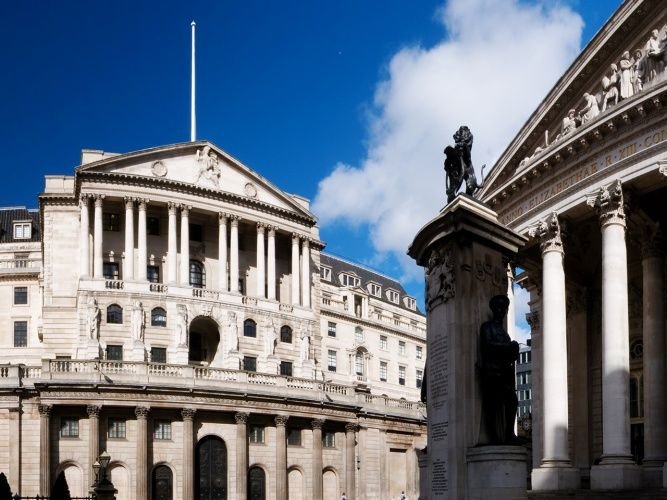

The Bank of England has kept interest rates at 3.75% for the fifth time in a row as policymakers weighed easing inflation against the risk of renewed price pressures from higher energy costs.
The Monetary Policy Committee (MPC) voted six to three to hold Bank Rate, with three members preferring a 0.25 percentage point increase to 4%.
The split was more hawkish than June’s seven-to-two vote, when two members supported a rise.
The decision followed official figures showing Consumer Prices Index inflation eased from 2.8% in May to 2.6% in June, although it remained above the Bank’s 2% target.
Core inflation was unchanged at 2.6%, while services inflation dipped from 3.7% to 3.6%.
The economy also returned to modest growth in May, expanding by 0.1% after contracting by the same amount in April.
However, policymakers face uncertainty over the effect of higher household energy bills and continuing volatility in global oil and gas markets.
Richard Carter, head of fixed interest research at Quilter Cheviot, said the hold came despite “increasing noise that rate rises are around the corner”.
He said: “Inflation remains uncomfortably above target, with the latest figure registering 2.6% in June, but with the 13% rise in the energy price cap now in effect, that figure is likely to spike once again.”
Carter added that mortgage providers were already raising the rates on some deals, suggesting borrowing costs could remain higher for longer.
He said a September increase was possible, although uncertainty surrounding chancellor John Healey’s expected Autumn Budget could encourage the Bank to maintain its current stance.
Abhi Chatterjee, chief investment strategist at Dynamic Planner, said softer-than-expected June inflation had given the MPC “tactical space to hold fire”.
However, he argued that domestic gas and electricity costs, rather than fuel prices alone, would be crucial to the UK inflation outlook.
“As long as those remain contained, rate-hiking pressure dissipates,” Chatterjee said. “The moment they do [rise], the calculus inverts. For now, the MPC’s room to manoeuvre remains intact.”
George Brown, senior economist at Schroders, said the majority of the committee did not yet believe the increase in energy prices would develop into persistent domestic inflation.
He said weaker wage pressures should reduce the danger of an external price shock becoming embedded across the economy.
“That should limit the risk of second-round effects becoming embedded and, in our view, mean the Bank can remain on hold for the foreseeable future,” Brown added.
Scott Gardner, investment strategist at J.P. Morgan Personal Investing, said falling headline, core and services inflation had supported the decision, but warned that higher household energy bills would cloud the outlook.
He said markets were pricing in one or two increases, although it remained too early to know whether these would materialise while energy prices remained volatile.
For borrowers, the unchanged rate offers a measure of stability after expectations of continued reductions faded during the first half of the year.
Ben Nichols, chief executive of RAW Capital Partners, said: “Such has the turnaround in economic conditions been in the past six months that, while previously the property market was expecting steady base rate cuts, today a hold feels like a victory.”
He said lenders and brokers would need to respond quickly to developments in the Middle East and the policies announced by prime minister Andy Burnham’s government, particularly in the Autumn Budget.
Burnham takes power with pledge to restore stability
Nick Henshaw, head of intermediary distribution at Wesleyan, said advisers should encourage clients to look beyond individual rate decisions.
“Inflation remains above target, and the outlook could change quickly if energy costs continue to rise,” he said.
“In uncertain markets, helping clients maintain a disciplined, long-term investment strategy is far more valuable than trying to anticipate the next interest rate decision.”
Adam Ruddle, chief investment officer at LV=, said stable rates would be welcomed by households, but many remained under pressure from living costs.
LV= research found 40% of consumers were worried about everyday expenses, 38% about energy bills and 21% about the effect of rates on mortgage repayments.
Ruddle said: “By leaving rates unchanged, the Bank is keeping its options open as it assesses the impact of geopolitical uncertainty, persistent inflationary pressures and a subdued growth outlook.”
The MPC’s next scheduled interest rate decision is due on 17 September.