Mumbai’s Rs 10-cr-plus home sales hit record Rs 18,512 cr; Worli leads boom | Personal Finance
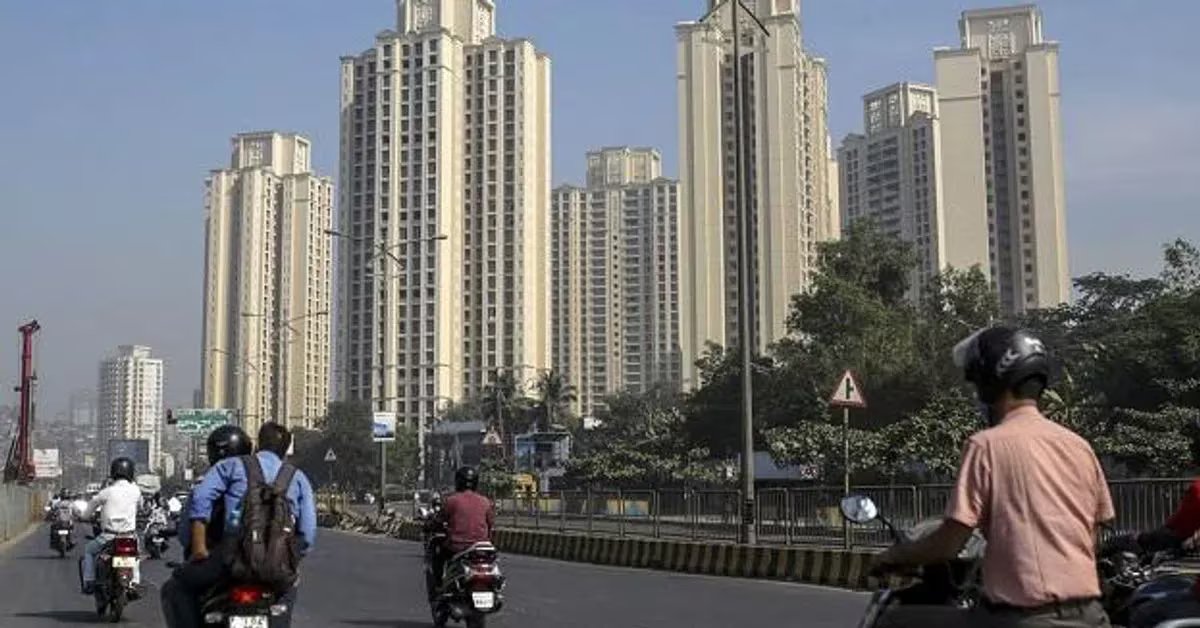
Mumbai’s luxury residential real estate market has reached a historic milestone as ales of homes priced at Rs 10 crore and above touched a record Rs 18,512 crore during the first half of calendar year 2026, making it the strongest six-month period ever recorded for the city’s luxury residential market. The figure is 12 percent higher than the Rs 16,518 crore recorded a year ago and almost double the value seen five years ago, shows data analysed by India Sotheby’s International Realty and CRE Matrix.
The momentum was driven not only by fresh launches but also by a buoyant resale market, signalling sustained appetite among India’s wealthy despite global economic uncertainties.
Mumbai recorded 957 luxury home transactions, representing a 26% increase over the corresponding period last year, reflecting sustained demand for premium residential properties.
The report highlights that Mumbai’s luxury housing segment has nearly doubled in size over the past five years. During the last one year, approximately 1,699 luxury homes were sold, the highest ever recorded over any 12-month period, with combined transaction value touching nearly ₹34,000 crore.
Over the past 12 months, nearly 1,700 luxury homes changed hands — the highest annual volume recorded in the city.
After rising 37% between CY ’21 and CY’25, Mumbai’s luxury home prices for units priced at ₹10 crore and above have eased about 4% in CY ’26 YTD, reflecting cautious pricing by developers.
Rs 20-40 crore homes become the sweet spot
One of the biggest shifts in buyer behaviour is happening in the Rs 20 crore-Rs 40 crore segment.
Sales in this category have jumped from 66 homes in H1 2023 to 156 homes in H1 2026, a growth of 136 per cent, making it the fastest-growing price bracket within Mumbai’s luxury market. Meanwhile, the ultra-luxury segment of homes priced above Rs 40 crore continued to remain resilient, recording 41 transactions during the period.
The 2,000–4,000 sq. ft. segment remained the sweet spot for luxury buyers, contributing 58% of primary market sales. 19% of luxury homebuyers in Mumbai’s top 10 micro-markets are upgrading from locations beyond South Mumbai, highlighting sustained aspirational demand as wealth grows.
Worli steals the spotlight
Luxury home sales in the locality jumped more than four-fold, with transactions rising from 35 units in H1 2025 to 159 units in H1 2026. In value terms, Worli clocked Rs 4,493 crore worth of sales, up 79 per cent year-on-year, making it Mumbai’s largest luxury residential market by transaction value.
“Worli emerged as the standout performer, recording transaction value of ₹4,493 crore, up 79% year-on-year, while unit sales surged nearly five-fold from 35 units in H1 CY’25 to 159 units in H1 CY’26, making it Mumbai’s most active luxury residential market. Lower Parel also emerged as one of the fastest-growing luxury destinations, registering a 79% increase in transaction value,” said the report.
The buyer profile also continues to evolve. Homebuyers aged 35 to 55 years accounted for 58% of luxury home purchases during H1 CY’26, while buyers aged above 65 years contributed 12% of transactions, highlighting the increasing participation of affluent end-users and wealth creators across age groups.
“The first half of 2026 signals Mumbai’s luxury housing market as one of India’s most resilient with sales of homes priced above ₹10 crore nearly doubling and crossing ₹18,500 crore, the highest half-yearly transaction value on record. Established micro-markets like Worli, Tardeo, Lower Parel and Bandra West continue to lead, backed by improving infrastructure and quality launches, with Worli emerging as the standout, cementing its status as Mumbai’s most coveted address,” said Sudershan Sharma, Executive Director, India Sotheby’s International Realty.
Price growth has stayed rational, with developers mindful of overpricing. Secondary markets have moved in sync with primary sales, and with momentum sustained, India’s financial capital’s luxury segment is positioned for continued, cautious, end-user driven growth.”
“Mumbai’s luxury real estate market reached a new benchmark in H1 CY’26, recording ₹18,512 Cr. in sales. Combined with H2 CY’25, total transaction value over the trailing 12 months approximately reached ₹34,000 Cr. — an all-time high. This period also saw ~1,700 luxury units sold, the strongest 12-month performance on record. The sustained momentum, particularly within the ₹20–40 Cr. segment, reflects a high-end buyer who remains engaged and confident — but increasingly deliberate in where that confidence is placed,” said Abhishek Kiran Gupta, Co-founder & CEO, CRE Matrix.
Resale market scales new high
The secondary market is no longer playing second fiddle.
Luxury home resales touched a record Rs 4,840 crore during H1 2026, the highest half-yearly value recorded since 2021. Over the past five years, resale transactions have consistently contributed around 30 per cent of Mumbai’s luxury housing value, indicating that premium homes are increasingly functioning as tradable wealth assets rather than one-time purchases.
Bigger homes continue to dominate
Affluent buyers continue to prioritise space.
Apartments measuring 2,000-4,000 sq ft accounted for 58 per cent of all primary luxury home sales during H1 2026. Homes exceeding 4,000 sq ft represented only 11 per cent of transactions, but contributed more than a quarter of the overall transaction value because of significantly higher ticket sizes.
Prices consolidate after four-year rally
Luxury home prices have also remained elevated.
Average prices rose from Rs 54,661 per sq ft in 2021 to Rs 75,006 per sq ft in 2025, a gain of roughly 37 per cent over four years. Prices have corrected modestly by about 4 per cent so far in 2026 but remain 32 per cent above 2021 levels, suggesting the market is consolidating rather than weakening.
Who is buying?
The largest share of buyers belonged to the 45-55 year age group, accounting for 36 per cent of purchases, while buyers aged 35-55 years together represented 58 per cent of the luxury market. Interestingly, those aged above 65 accounted for 12 per cent of transactions, underscoring continued participation from long-time wealth creators