Zero PSB locker thefts in FY26: How bank lockers are secured in India | Finance News
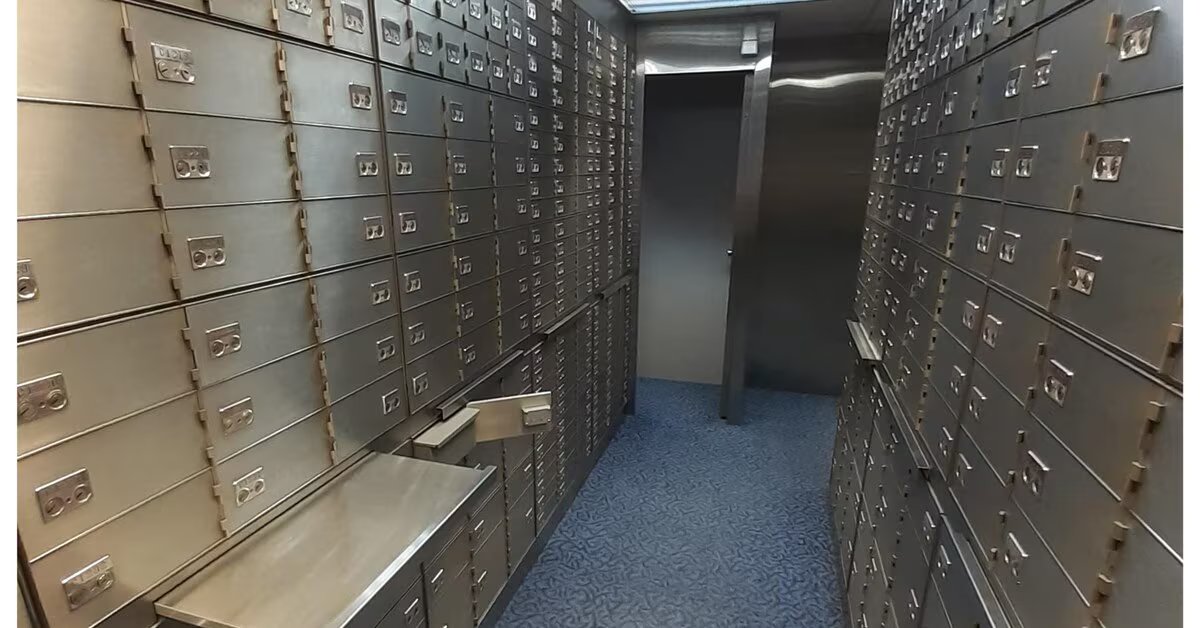
For the first time in five years, public sector banks (PSBs) reported no locker theft cases in 2025-26, according to the government. This marks a significant improvement after the country’s 12 PSBs reported 40 established locker theft cases between 2021-22 and 2024-25.
In a written reply to a question in the Rajya Sabha, Minister of State for Finance Pankaj Chaudhary said that 40 cases of locker theft were established during FY21-22 to FY25-26. He further informed that a total of 11,111,077 bank lockers were operational across PSBs as on March 31, 2026.
The years immediately after the Covid-19 pandemic saw the highest number of locker theft cases. While 16 cases were reported in 2021-22 and 17 in 2022-23, the number declined to three in 2023-24 and four in 2024-25 before falling to zero in 2025-26.
Which banks and states reported the highest number of locker thefts?
The bank-wise breakdown showed that Bank of India and Central Bank of India reported the highest number of established locker theft cases over the last five financial years, with 14 cases each. State Bank of India reported 10 cases, followed by Indian Bank and Indian Overseas Bank.
Among states, Uttar Pradesh recorded the highest number of established locker theft cases at 18 during the five years, followed by Jharkhand with 12 cases. Maharashtra reported five cases, while Andhra Pradesh, Bihar, Chhattisgarh, Gujarat and Haryana reported one case each.
What are the RBI’s guidelines for bank locker safety?
The Reserve Bank of India (RBI) issued revised guidelines in 2021 on deposit lockers and the safe custody of articles, requiring banks to strengthen security standards and adopt a model locker agreement for customers.
The guidelines mandate enhanced safety and security standards for locker premises, adequate guarding of locker areas at all times, SMS and email alerts for locker operations, standardised procedures for breaking open lockers under specified circumstances, and a defined liability and compensation framework. Banks are also required to disclose their locker-related policies and procedures on their websites.
The minister said compliance with the RBI’s guidelines is examined by the central bank on a sample basis during the supervisory assessment of banks. Any non-compliance observed is taken up with banks for rectification, apart from supervisory or enforcement action wherever deemed necessary.
What security measures are banks required to implement?
Banks are required to put in place multiple physical and digital safeguards to protect locker facilities. The RBI mandates that security cameras cover the entry and exit points of strong rooms and common areas, with footage preserved for at least 180 days. Strong rooms must have a single defined entry and exit point and be protected against fire, floods and unauthorised break-ins.
Branches are also required to maintain working theft alarms equipped with passive infrared devices and integrated fire alarm systems. Customers must receive an SMS and email notification immediately after their locker is accessed using the contact details registered with the bank. In addition, banks are required to maintain detailed access logs recording the exact check-in and check-out time of every locker operation, backed by verified signatures.
Banks are further required to ensure that locker premises are adequately secured against criminal break-ins as well as natural and man-made hazards in accordance with prescribed standards.
Are banks liable if the contents of a locker are lost?
Yes, banks may be held liable if the loss of locker contents is attributable to their negligence or deficiency in service.
Under the RBI’s guidelines, banks are liable for losses arising from incidents such as fire, theft, burglary, dacoity, robbery, building collapse or fraud committed by bank employees where such incidents occur because of the bank’s negligence. In such cases, the compensation payable by the bank is capped at an amount equivalent to 100 times the prevailing annual locker rent.
For instance, if the annual locker rent is ₹2,000, the maximum compensation payable by the bank would be ₹2,00,000, irrespective of the actual value of the items lost.
Banks are generally not liable for losses arising from natural disasters or other ‘acts of God’, unless negligence on their part can be established. Events such as floods, earthquakes and similar natural calamities ordinarily fall outside the liability framework prescribed by the RBI.