ITR filing 2026: Expecting an income tax refund? Check these 5 details before filing your return to avoid delays
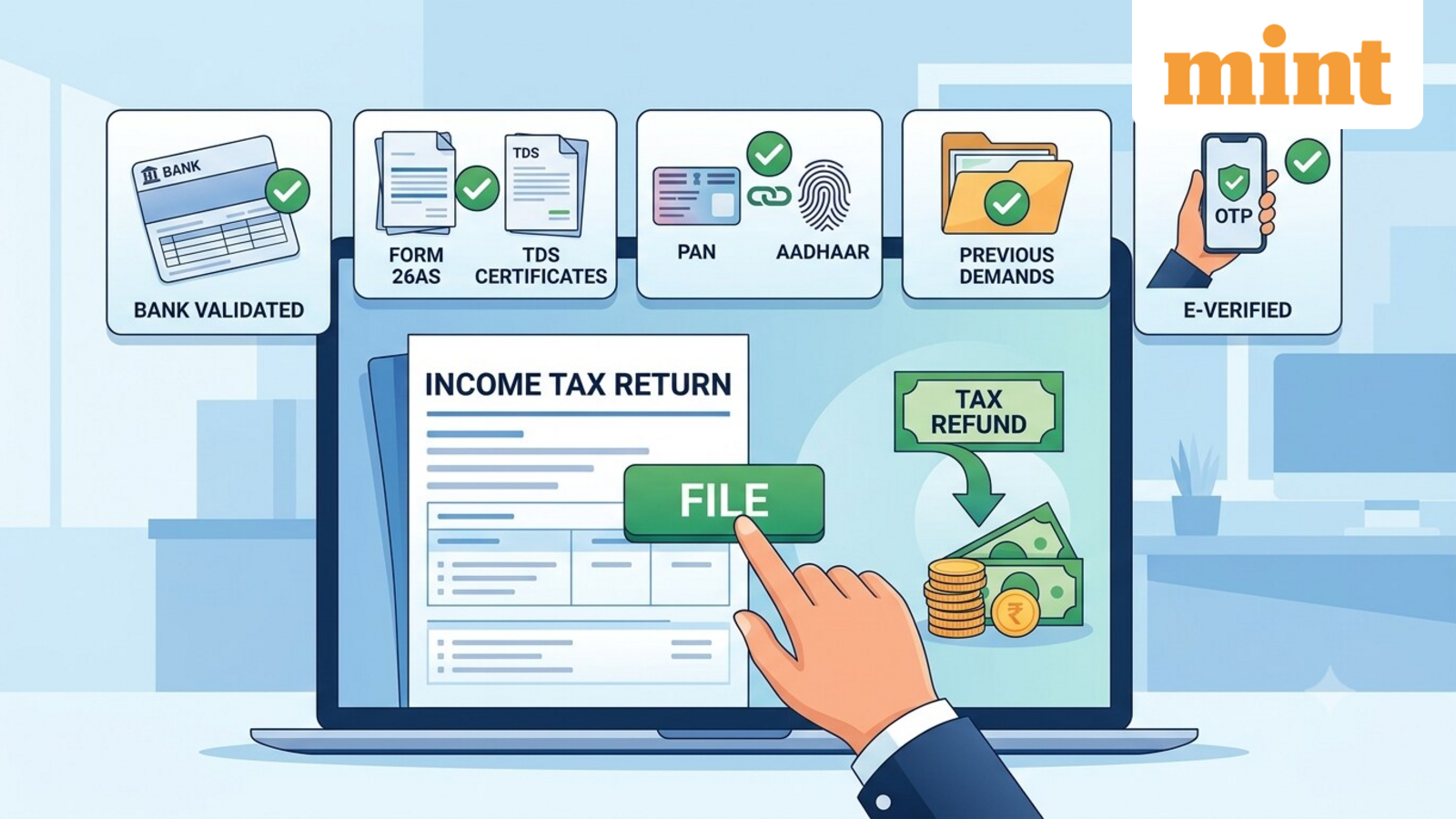
Taxpayers expecting an income tax refund this filing season should do more than simply submit their income tax return (ITR) before the deadline. A few overlooked details, such as an unvalidated bank account, mismatched tax credit records or an outstanding tax demand, can delay the refund even after the return has been successfully filed.
A refund becomes due when the taxes already paid during the financial year through tax deducted at source (TDS), advance tax or self-assessment tax exceed the taxpayer’s actual tax liability. However, the Income Tax Department processes refunds only after the return is successfully verified and all required details match its records.
Five checks to make before filing your ITR
1. Ensure your bank account is pre-validated
The bank account selected for receiving the refund must be pre-validated on the income tax e-filing portal. The account should be active, and the account number, IFSC and account holder’s name should be correct. Only validated bank accounts can be nominated for receiving income tax refunds.
2. Reconcile Form 26AS, AIS and TDS certificates
Before filing the return, taxpayers should compare the tax deducted at source reflected in Form 26AS and the Annual Information Statement (AIS) with their Form 16, bank interest certificates and other income records. Any mismatch between the tax credit claimed in the return and the department’s records may lead to delays in processing the refund.
3. Check whether your PAN is linked with Aadhaar
A PAN that has become inoperative because it is not linked with Aadhaar can lead to refund-related issues. The Income Tax Department’s e-filing portal also flags this during the refund process, making it important to verify the linkage before filing the return.
4. Look for any outstanding tax demand
Before submitting the return, taxpayers should check whether there are any pending tax demands from earlier assessment years. Under Section 245 of the Income-tax Act, the department may adjust the current year’s refund against any outstanding demand after issuing an intimation to the taxpayer.
5. E-verify your return within 30 days
Filing the ITR is only the first step. The return must also be e-verified within 30 days. Until the return is verified, it is treated as incomplete and refund processing does not begin. Taxpayers can complete verification through Aadhaar OTP, net banking, a pre-validated bank account or other approved methods.
What to do if your refund is delayed
After filing and verifying the return, taxpayers can track the refund status through the Income Tax Department’s e-filing portal. If the refund has failed because of incorrect bank details, the account can be revalidated and a refund reissue request can be submitted.
If the department has adjusted the refund against an outstanding demand under Section 245, taxpayers should review the notice and respond within the prescribed timeline if they disagree with the demand. In eligible cases, taxpayers may also receive interest on delayed refunds under Section 244A of the Income-tax Act.
For most taxpayers, taking a few minutes to verify these details before filing can help ensure that an eligible refund is credited without avoidable delays.