17% of work exposed to AI, 48% of jobs in India will benefit: Goldman Sachs | Personal Finance
Generative artificial intelligence (Gen-AI) could automate up to 17% of the tasks currently performed by India’s non-agricultural workforce, but it is more likely to enhance jobs than eliminate them. Nearly half of India’s workers could use AI as a productivity tool, while only 8-12% of jobs face a meaningful risk of substitution, according to a Goldman Sachs report.
The report estimates that 42-48% of India’s non-agricultural employment is likely to be complemented by AI, while the remaining workforce will largely remain unaffected. Rather than triggering widespread job losses, the investment bank expects AI to reshape how Indians work over the next decade by automating repetitive tasks and allowing workers to focus on higher-value activities.
The findings come as businesses across sectors—from IT services and banking to healthcare and education—step up investments in generative AI.
Up to 17% of work tasks could be automated
Goldman Sachs estimates that AI could automate 9-17% of all tasks currently undertaken by India’s non-agricultural workforce, depending on how quickly the technology evolves. Under its baseline scenario, around 13-15% of work tasks are exposed to AI automation.
The report measures tasks rather than entire jobs, suggesting that most occupations will combine activities AI can perform with those that still require human judgement, creativity or physical work.
“We estimate that Gen-AI could perform 9-17% of the tasks currently undertaken by India’s non-agricultural workforce, depending on assumptions about the level of task complexity that it can perform. We further classify occupations by the share of task content exposed to Gen-AI: occupations with high exposure are more likely to face substitution, while those with moderate exposure are more likely to be complemented. Weighting these occupations by employment across sectors, we estimate 8-12% of non-agricultural employment is at risk of substitution, while 42-48% of non-agricultural employment is likely to be complemented, with the balance remaining largely unaffected,” said Santanu Sengupta, economic analyst at Goldman Sachs.
Education, healthcare and finance among the biggest winners
Knowledge-intensive sectors stand to benefit the most.
According to the report, education, healthcare, media, and financial and professional services have the highest exposure to AI because employees spend much of their time analysing information, producing content and making decisions that AI can support.
By contrast, sectors such as construction, manufacturing and mining remain less exposed because their work is more physical.
“Exposure is concentrated in services: Healthcare, education, financial and professional services appear more exposed to AI-related augmentation through diagnostics and data analytics, while IT-enabled business-process services (BPS) and postal & telecom services face greater substitution risk given their concentration in repetitive, codifiable tasks. Manufacturing is less directly affected given the more physical task mix. An important caveat is that Gen-AI adoption, as with earlier technology cycles, is also likely to create new job categories over time, which is outside the scope of this report,” said Sengupta.
Routine office jobs are most vulnerable
The report identifies clerical support workers as the occupation facing the highest substitution risk, followed by some professional, technician and customer-service roles.However, employment in physical occupations, craft trades and machine operations could increase because such work remains difficult for AI to automate.
AI could make India’s economy more productive
The report projects AI could raise India’s annual labour productivity growth by around 0.4 percentage points every year over the next decade, with the gain rising to 0.8 percentage points if AI capabilities improve faster than expected.Media, education and healthcare are expected to see the largest productivity gains.
India’s IT story is more resilient than feared
Despite concerns that AI could hit India’s outsourcing industry, Goldman Sachs says the evidence so far suggests otherwise.
While India’s six largest listed IT services companies have reduced headcount by about 64,000 employees, the broader technology ecosystem—including Global Capability Centres (GCCs)—has added around 700,000 jobs over the past three years, taking employment to 4.4 million.The report also notes that software services exports continue to remain above pre-pandemic trends.
India’s biggest AI bottleneck isn’t talent
The report argues that India’s biggest challenge is infrastructure rather than skills.
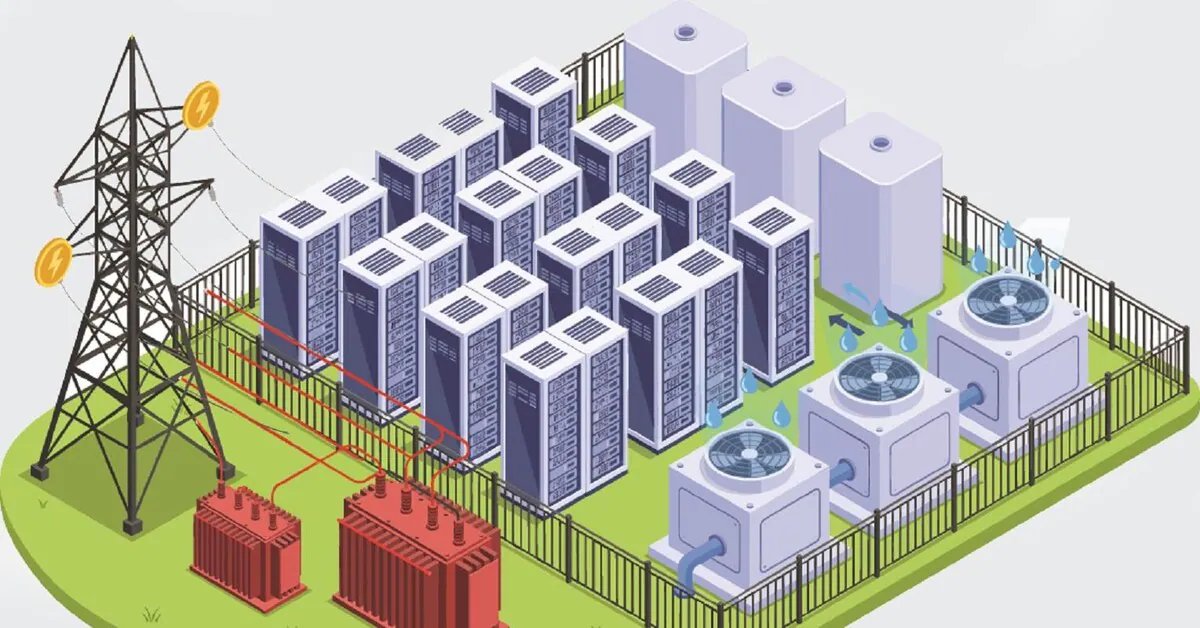
India currently accounts for only around 1% of global data centre capacity, compared with 47% in the US and 25% in China. Scaling AI adoption will therefore require significant investments in computing infrastructure, electricity and data centres.
“Infrastructure remains a key constraint. India’s Gen-AI diffusion will depend not just on software capability, but also on compute affordability, data-centre buildout, reliable power, water availability, and broader digital infrastructure. With India’s current data-centre capacity of only around 1GW (1% of global data centre capacity), scaling AI adoption will require substantial investment in both physical and digital infrastructure,” said the report.
Beyond the usual dependence on global ICT spending, a more restrictive policy environment around cross-border data, digital services, and the use of foreign AI models could weigh on services export growth, the report added.
For example, the EU has tightened scrutiny of cross-border data transfers, while the US has increasingly emphasized AI sovereignty, potentially advocating for restriction of deployment of Gen-AI models outside the US.