Mamdani Seeks Private Operators for City-Backed Grocery Stores
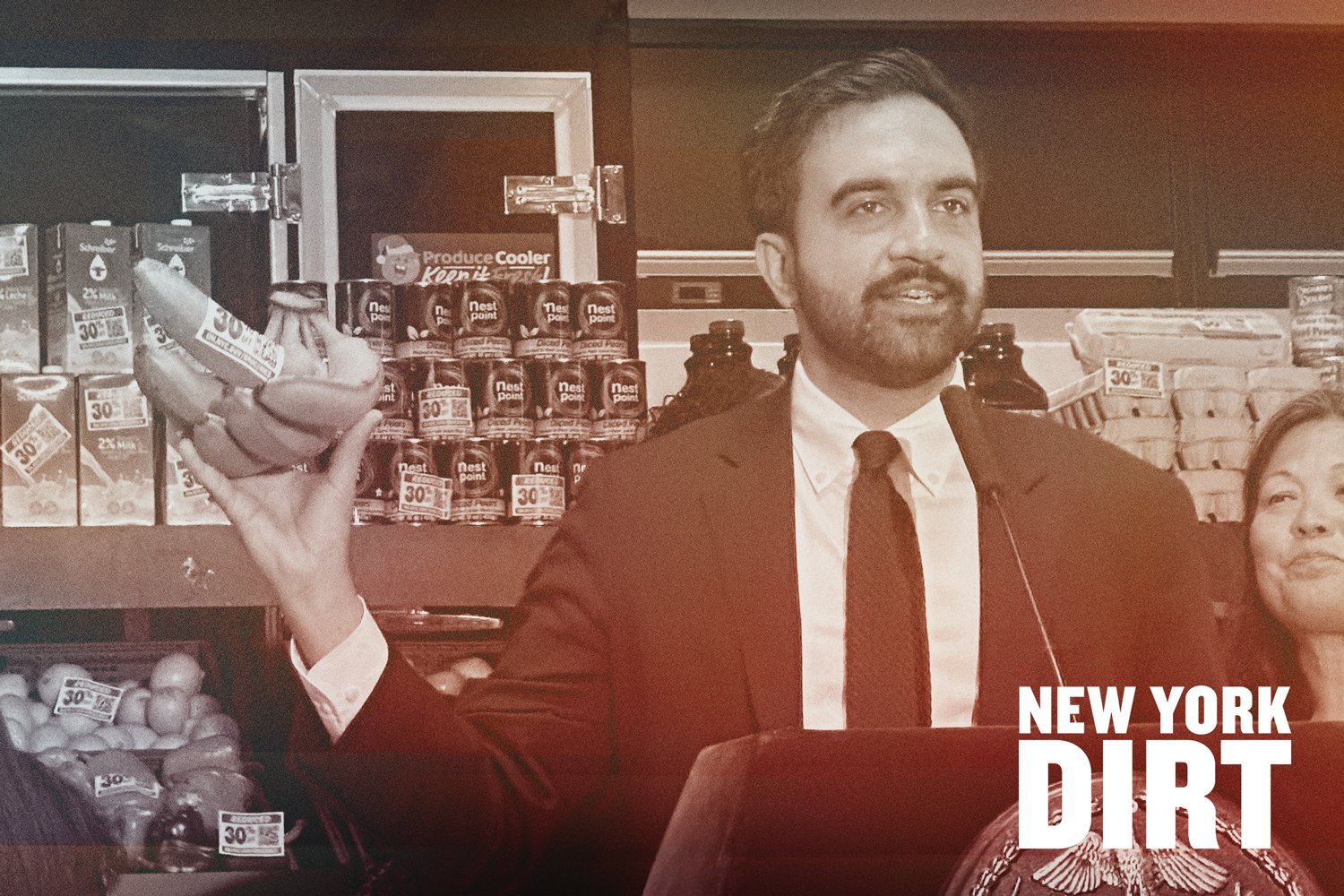

The city is looking for a “best in class” operator to run its first five municipal grocery stores.
Grocers across the five boroughs who balked at the prospect of competing with Mayor Zohran Mamdani’s city-backed supermarket pilot now have a chance to get in on the action, after the Economic Development Corporation put out a request for proposals seeking private partners to handle day-to-day operations.
The democratic socialist mayor, an unlikely business partner for the city’s grocery magnates, has made them an offer they can’t refuse, promising to cover costs related to the physical footprint at the first five stores slated to open by 2029, including turnkey sites, free rent and zero property taxes.
In return, the private operating partner must pass along savings to employees, including 30 percent lower costs for a basket of essential goods, including all meat, seafood, fresh produce and 20 additional pantry staples, dairy products and refrigerated items.
The city is looking for “strong market knowledge and experience” in a prospective partner who will “embrace” high standards laid out by the EDC, but not explicitly seeking a perfect ideological fit or expecting the private sector to operate socialized pantries across the city.
Operators of existing local grocery stores, bodegas and food banks in the neighborhoods where the city-owned stores will land won’t get a direct subsidy from the government. But Mamdani hopes that city stores — which won’t sell cigarettes, alcohol or lottery tickets — will leave room for neighborhood businesses that do offer those items to generate revenue, citing Essex Market as an example of successful integration into the Lower East Side’s small business landscape.
I asked the mayor whether the staple items that he plans to offer at a steep discount would be limited per customer to avoid potential shortages.
“Our RFP makes very clear that this is a program for New Yorkers to be able to put food on the table, not a program for people to be able to make a quick buck through reselling,” he said.
Private partners enticed by the prospect of managing a supply chain, recruiting staff and selling groceries without the significant overhead costs associated with commercial real estate have an opportunity to visit planned sites at La Marqueta in East Harlem and Peninsula in Hunts Point next month. Proposals to operate NYC Groceries locations are due by October 16, 2026.
What we’re thinking about: Who do you think is vying to run these stores? We know John Catsimitidis, of Gristedes and D’Agostino fame, met with the mayor despite past disagreements. Once-great local chain Fairway shrank its footprint due to bankruptcy. Let me know at ben.miller@therealdeal.com.
A thing we’ve learned: The giant Macy’s shopping bag billboard on the corner of 34th Street and Sixth Avenue has been taken down, and is one of the most famous real estate “holdouts” in New York City history. In the early 1900s, as Macy’s began picking up land in Herald Square to build its flagship department store, rival Siegel-Cooper scored the corner plot and built a five-story building to disrupt Macy’s “Big Store.” The building — albeit shopping bag-less — remains there today.
— Spencer Davis
Elsewhere…
— Frank Carone, who served as chief of staff to former Mayor Eric Adams, hired Luigi Mangione’s lawyers for his upcoming trial for bribery, Gothamist reports. Carone is accused of accepting $12,000 in bribes to help a Long Island City hotel owner get a multimillion-dollar emergency contract for a migrant shelter.
— Around 300 staff with the Bronx Defenders Union went on strike Monday, amNY reports. The public defenders union joined the Harlem-based Neighborhood Defender Services and Brooklyn Defender Services, who both went on strike in the past month. The Brooklyn Defender Services ended its strike after reaching a tentative deal last Tuesday.
— The New York Police Department issued more criminal summonses to street vendors in the first three months of 2026 than it did the year prior, Documented reports. The NYPD issued at least 564 criminal summonses for vending-related offenses in the first quarter of this year, compared to 504 summonses last year, despite Mayor Zohran Mamdani championing new vendor reform laws that seek to stop the NYPD from issuing summonses for offenses such as standing within 10 feet of a crosswalk or not displaying a permit.
— Spencer Davis
Closing time
Residential: The most expensive residential sale recorded Monday was $26 million for 73 Wooster Street, 4A. The Soho condo is nearly 5,000 square feet and last sold in 2024 for $16 million. The seller is Lucky Acres, LLC.
Commercial: The most expensive commercial transaction was $16.4 million for 235-237 Kent Avenue. The seller for the Williamsburg mixed-use property is 235-237 Kent Owner LLC, an affiliate of DAX Real Estate, who acquired the property in 2021 for $12.3 million.
New to the Market: The highest price for a residential property hitting the market was $9.8 million for 498 West End Avenue, Unit 11A. The Upper West Side condo is new construction and 3,800 square feet. Brown Harris Stevens’ Louise Phillips Forbes has the listing.
Breaking Ground: The largest new building permit filed was for a proposed 83,744-square-foot, 26-story building at 147-45 94th Avenue in Jamaica. Lu Ning Architecture is the applicant of record.
— Joseph Jungermann