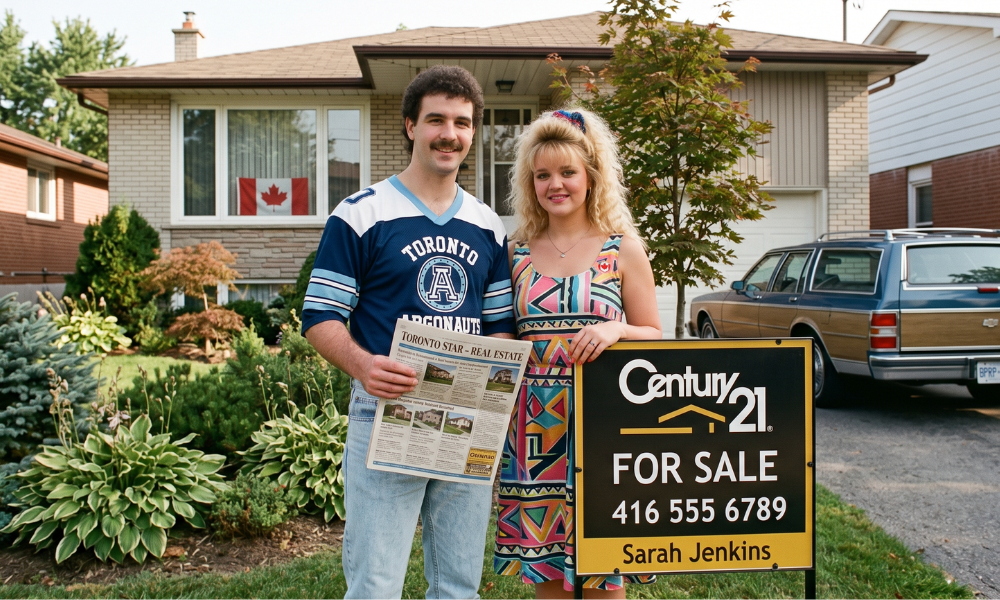
Mom and Dad say the early ’80s were harder for homebuyers. They’re not completely right.
The numbers
The national average sale price was $673,335 in December 2025, according to the Canadian Real Estate Association – roughly unchanged from December 2024 but up around 57% from the national average of approximately $430,000 in 2015. The National Bank of Canada Housing Affordability Monitor puts the national mortgage payment as a percentage of household income at 52.3% in Q1 2026 – still well above its long-term average of 40.6% since 2000, even after nine consecutive quarters of improvement.
The national figure conceals the extremes. In Toronto, buying the average home ($941,800) requires a household income of roughly $207,000 to qualify at current rates, according to Ratehub’s March 2026 Affordability Report. The National Bank Monitor puts the Greater Toronto Area mortgage payment to income ratio at 70.9% in Q1 2026 – above its long-term average of 54.4%. In Vancouver, the ratio of house prices to median income is among the highest of any city in the developed world. The median first-time buyer age in Vancouver is now 46, and in Toronto it is 40, according to a November 2025 global analysis by Bloom Holding.
Read that again. The median person buying their first home in Vancouver is 46 years old.
In the early 1980s, the generation now citing their high rates got on the ladder in their mid to late twenties at three to four times their income. The rate was brutal and temporary. The debt was smaller and manageable. By the time rates fell – and they fell dramatically through the 1980s and 1990s – those buyers held an asset that had appreciated substantially and a mortgage that had become cheap to service.
Three things the comparison omits
Prices have left incomes behind. CREA data shows the national average home price rose from approximately $430,000 in 2015 to $673,335 in December 2025 – a rise of around 57%. Statistics Canada’s Survey of Employment, Payrolls and Hours shows median wage growth of roughly 15-18% over the same period. CMHC’s 2026 Housing Market Outlook calculates that Canada needs to build between 430,000 and 480,000 homes per year through 2035 just to restore 2019 affordability levels – itself an acknowledgment that prices have moved structurally beyond income growth.