Tech Weekly: Investors Flee Tech Sector on Earnings, CAPEX Spending
Welcome to the Investing News Network’s weekly brief on tech news and tech stocks driving the market.
This week’s tech sector performance
Chip stocks led Wall Street gains in early trading on Monday (July 20), even as hostilities between the US and Iran intensified. Houthis said that day that they would impose a naval blockade on Saudi Arabia, but a senior Iranian official told Reuters that mediators had sent a proposal to de-escalate that would offer a 10 day ceasefire.
While all three major indexes closed lower on Monday, the tech-heavy Nasdaq Composite (INDEXNASDAQ:.IXIC) lost less than the S&P 500 (INDEXSP:.INX) and the Dow Jones Industrial Average (INDEXDJX:.DJI).
Adding pressure to US chip and artificial intelligence (AI) infrastructure stocks were reports that Chinese startup Moonshot AI had to pause new subscriptions to Kimi K3, its open-weight frontier model, due to overwhelming demand.
A sharp surge within 48 hours of the model’s July 16 release culminated in the subscription pause on July 19. Reports also surfaced about the company’s plans for an initial public offering in Hong Kong.
The market reaction was centered on worries that stronger, cheaper Chinese AI models could pose a threat to US dominance and challenge the economics of the current AI spending boom.
In addition, political figures and executives debated whether to respond with procurement rules, export controls or other measures that would create compliance risks for enterprises using Chinese AI.
While some have argued that such regulation would create unnecessary fear and slow US innovation, others believe the government would eventually need to increase regulatory pressure around open-weight Chinese systems.
Tuesday (July 21) brought positive sentiment, with stocks rising in early trading and closing up. A continued semiconductor recovery and a rally in IT shares provided support to the Nasdaq, which closed 1.29 percent higher. New 50 percent tariffs on a broad set of Canadian goods were a major part of the macro backdrop.
Global markets were mixed, and Wall Street futures were in the red ahead of earnings for Alphabet (NASDAQ:GOOGL) and Tesla (NASDAQ:TSLA) on Wednesday (July 22). Both big-name tech stocks slipped in after-hours trading in a clear signal from Wall Street that AI spending needs to start generating results.
Alphabet reported accelerating cloud growth, and core search advertising remained resilient, but full-year CAPEX projections climbed toward US$205 billion, bringing free cashflow into negative territory.
Tesla, on the other hand, saw its profitability take a big hit as price cuts and incentives squeezed gross margins alongside rising CAPEX on the company’s Full Self-Driving, Cybercab and Optimus components.
Vehicle deliveries hit a Q2 record, however, and total revenue rebounded year-on-year.
On the flip side, Super Micro Computer (NASDAQ:SMCI) was the top gainer on the S&P 500 for the day, rallying a strong 19.8 percent after reporting over US$60 billion in new orders.
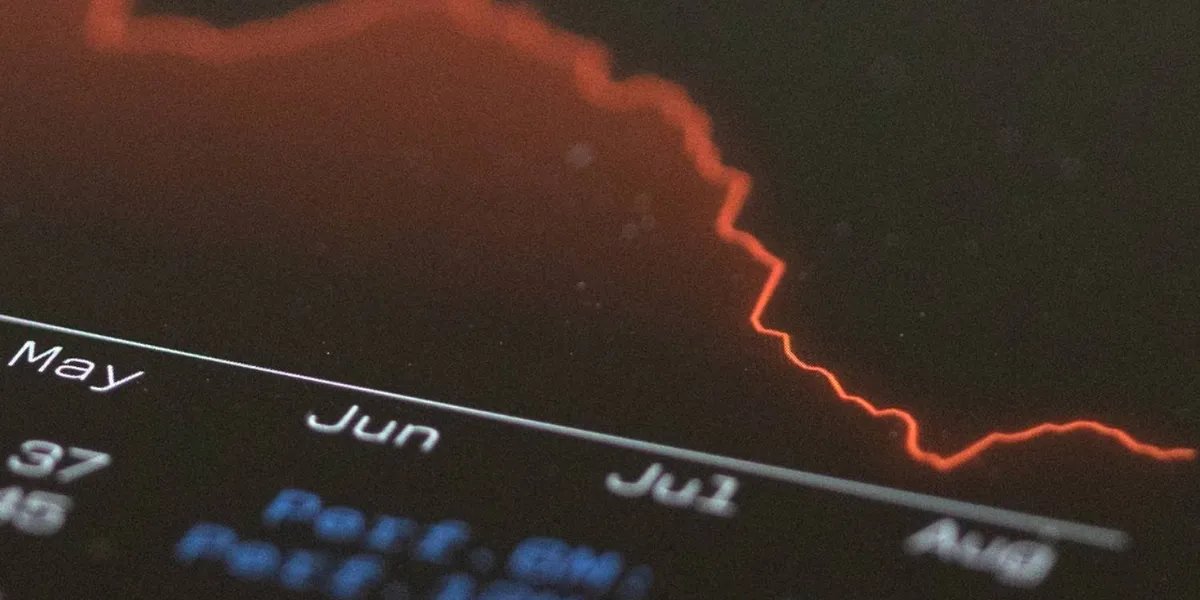
Underwhelmed investors pushed tech stocks lower on Thursday (July 23) amid intensifying Middle East hostilities. After a volatile day of trading, the Magnificent 7 experienced their worst single-day drop since US President Donald Trump’s tariffs were announced in April 2025. US$797 billion in market value was wiped out, with Alphabet and Tesla being the two hardest-hit large-cap tech stocks. The Bloomberg Magnificent 7 Total Return Index shed 4.8 percent.
Additionally, the Volatility Index (INDEXCBOE:VIX), better known as the VIX, was at its highest level in almost a month, hitting 20.3 midday before recovering slightly to finish at 18.7.
Defense stocks were one bright spot. Shares of Lockheed Martin (NYSE:LMT) rallied 10.5 percent after the company lifted its 2026 sales and profit forecasts. RTX (NYSE:RTX) also raised its 2026 sales and profit forecasts on demand for commercial aircraft maintenance and military systems, finishing up 7.3 percent.
The S&P 500 Index closed down 1.2 percent, while the Nasdaq-100 (INDEXNASDAQ:NDX) tumbled 1.9 percent.
Investors sold off tech stocks on Friday (July 24), prompting the Nasdaq to log its second consecutive weekly loss as worries over AI spending and new tariffs weighed on sentiment.
The index closed down 0.64 percent on the day and 2.13 percent for the week. The S&P finished the day slightly ahead today, but lost 1.03 percent on the week.
Securities Disclosure: I, Meagen Seatter, hold no direct investment interest in any company mentioned in this article.