Large drop in new defaults may signal reprieve for servicers
A performance measure for Federal Housing Administration-insured loans improved markedly in the past month, according to the latest numbers from Intercontinental Exchange’s mortgage technology unit.
Processing Content
New FHA defaults were down 15% over the previous year’s levels in June, marking the biggest decline in more than four years and potentially giving servicers more bandwidth to focus on other areas.
“While serious delinquencies including foreclosures have reached pre-pandemic levels, new default activity has leveled off in recent months,” said Andy Walden, head of mortgage and housing market research at ICE Mortgage Technology, in a press release.
This adds to
ICE Mortgage Technology declined comment on whether the drop in transitions from shorter-term arrears to 90 days-plus is related to the policy shift, but a
“Early signs of improvement are emerging in cure activity as the first cohort of borrowers progress through the TPP and permanent modification process,” the report on May data from Ginnie’s Office of Capital Markets said.
However, Ginnie also indicated that the improvement in performance may not persist long-term.
“There is uncertainty whether cure rates will continue moving toward prior historical levels,” Ginnie said in the report.
Other performance data and drivers
Ultimately, loan performance in the latest First Look report was mixed.
Serious delinquencies outside of foreclosure dropped to a six-month low, but
Even with an increase, that number was historically low on a long-term basis due to ongoing post-pandemic normalization.
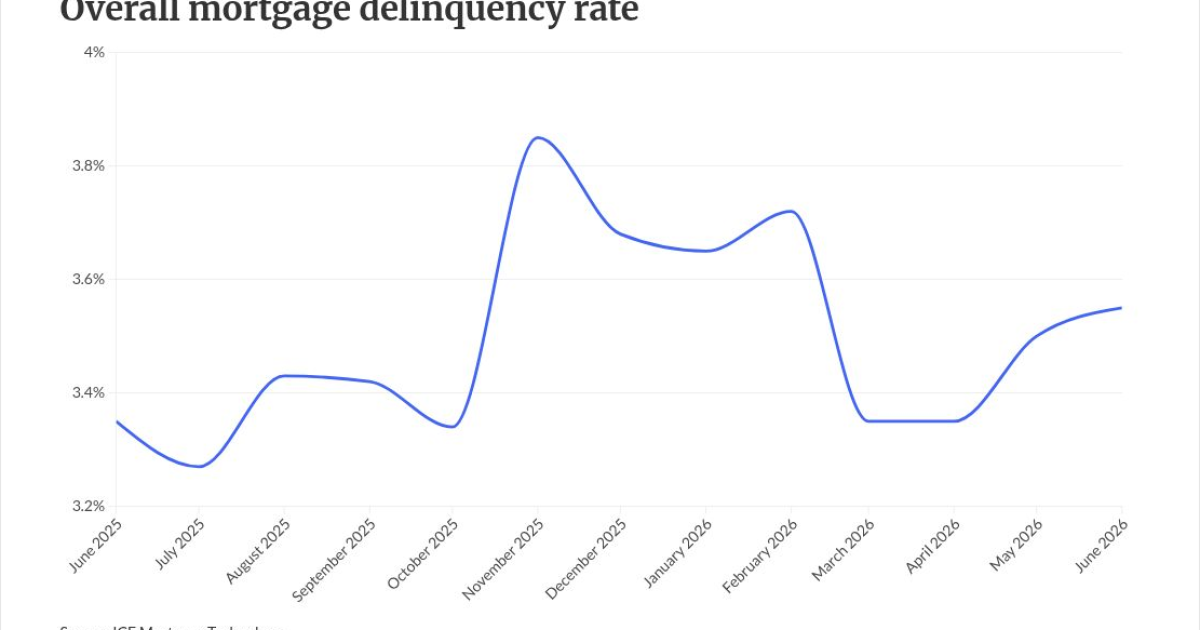
Overall, the mortgage delinquency rate was 5 basis points higher in June at 3.55%, in part due to waning seasonal improvements from tax refunds. This was still below a prepandemic level pegged at 4.16%, which may also have been a factor.
“Performance has been so strong for so long that at a certain point you do need some degree of normalization,” Ryan O’Loughlin, senior director at Fitch, said during an online housing-outlook event on Friday.
Loan performance is delivering mixed signals right now in part because there are higher levels of home equity in some loan vintages than others, he said.
“Any loan that was taken out prior to 2020, 2021 has just benefited from the really really strong kind of rise in home prices that was seen from about mid 2020 through about mid 2022,” O’Loughlin said.
Later vintages have less equity as home price growth has slowed, but compared to other consumer-finance asset classes more likely to have adjustable rates, they’ve experienced less pressure from increases in financing costs during subsequent years.
Because home equity levels have generally been high, albeit with some variation, consumers are unlikely to deprioritize mortgages relative to other types of borrowing as they did in the Great Financial Crisis when many houses were worth less than the debt on them.
“There is a pretty meaningful amount of equity on a lot of these loans,” O’Loughlin said.