CFPB nominee won’t break with Vought on bureau shutdown push
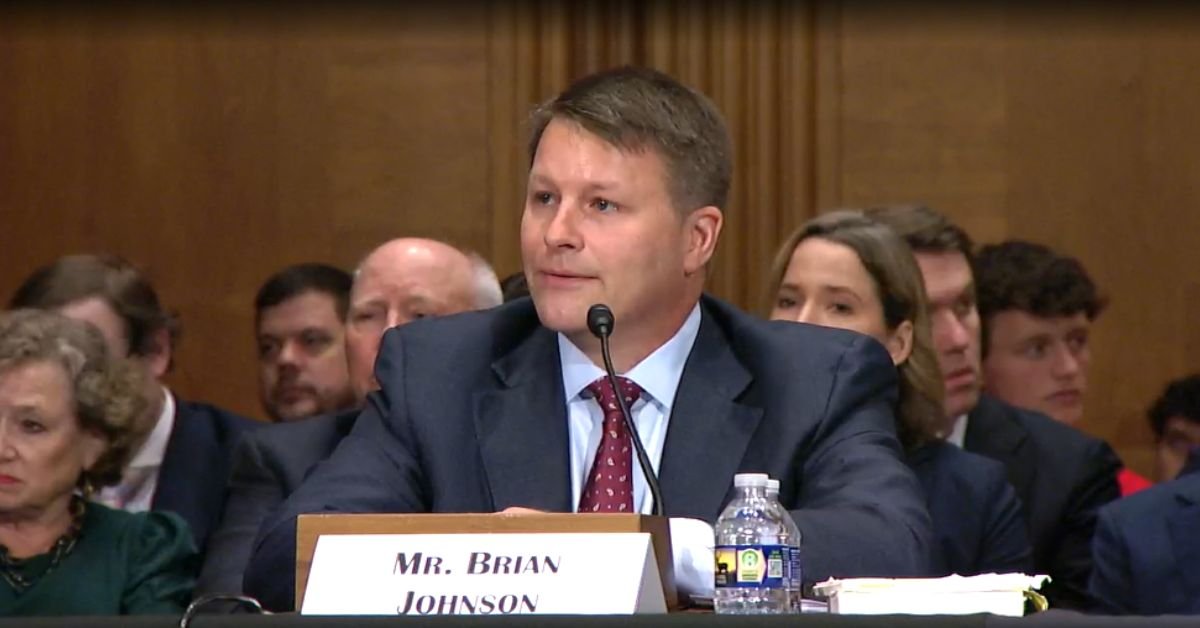
Brian Johnson, the White House nominee to become permanent director of the Consumer Financial Protection Bureau (CFPB), told U.S. senators on Thursday that he would keep an “open mind” about bureau staffing levels but repeatedly declined to distance himself from Acting Director Russell Vought’s call to shut the agency down.
The former deputy director of the federal mortgage regulator during President Donald Trump’s first term declined multiple opportunities during his nomination hearing to reject Vought’s testimony last week that the bureau should be eliminated.
“Would you like to eliminate the CFPB?” asked Sen. Chris Van Hollen, D-Md., a member of the Senate Banking, Housing, and Urban Affairs Committee, which is reviewing Johnson’s nomination.

“Senator, that’s not my intention,” replied Johnson, a senior compliance executive with Capital One since late 2024. “The CFPB is a creature of statute. Congress has assigned to it important laws to implement and execute and my intention is to execute the law.”
“Do you agree with Mr. Vought and do you favor eliminating the CFPB, yes or no?” asked Sen. Raphael Warnock, D-Ga., when it was his turn to question the nominee.
“Senator, I’ve advocated for legislative restructuring of the agency to ensure it can better enforce the law,” answered Johnson.
“The question is eliminating it,” pressed Warnock. “Do you think it should be eliminated, yes or no?”
“Senator, if confirmed, I’ll enforce the law, which includes Title X of Dodd-Frank,” said Johnson, referring to the statute of the 2010 Dodd-Frank Wall Street Reform and Consumer Protection Act that established the CFPB as a consumer financial watchdog and federal nonbank mortgage regulator.
“Where the CFPB writes clear and durable rules of the road, obeys its own statutory bounds, justly enforces the law, and enables consumers to make their own financial decisions, both consumers and market participants win,” stated Johnson in his opening remarks.
“To the contrary,” he continued, “where the CFPB tries to remake markets according to an ideological agenda, it deprives consumers of choice, restricts their access to financial products and services and drives up costs for providers, which are ultimately borne by customers and investors.”
The questioning could have been more difficult for Johnson.
Not only did the hearing begin 90 minutes behind schedule, but Johnson shared questioning with a pair of other pending Trump appointees. That included Irving Dennis, acting chief financial officer of the Department of Housing and Urban Development, whom Trump nominated for the permanent role Dennis also held during Trump’s first term.
Only one Republican senator questioned Johnson on Thursday, that being Bernie Moreno from Ohio, who owned dozens of car dealerships before joining Congress. Stating his personal belief that the online car retailer Carvana “needs to be investigated,” Moreno asked for Johnson’s commitment to examine the company if confirmed.
“Senator, if confirmed, I’d be happy to take a look,” said Johnson.
Efforts by Vought to downsize, if not eliminate, the CFPB formed the basis for most Democratic committee members’ questions, and accounted for the overwhelming majority of Johnson’s exchanges.
Ranking member Elizabeth Warren, D-Mass., stated her objection to Johnson’s nomination more plainly than any other committee member Thursday morning.
“The most damning thing about Mr. Johnson’s nomination is that he has gotten a rousing stamp of approval from the outgoing director, Russ Vought, who spent a year and a half trying to kill the agency,” said Warren, addressing questions to Johnson related to dozens of settlements and CFPB enforcement actions dropped against major firms in 2025.
Warren cited companies with links to Trump family members that she says have benefited from these dropped enforcement actions. She singled out a $2 billion settlement with Johnson’s employer, Capital One, that the bureau had reached with the bank for allegedly misleading consumers about interest rates on savings accounts.
“Will you commit to notifying Congress and the inspector general, immediately, if the White House contacts you about an enforcement action against a Trump family company or a big donor that cheated families?” asked Warren.
“Senator, I’m not going to engage in a hypothetical. I don’t anticipate that happening,” said Johnson, after repeatedly disputing the premise of Warren’s question.
Johnson conceded during Thursday’s testimony that if “properly structured and properly governed” the CFPB is “capable of great good,” but claimed that “deficiencies in the current legislative structure” of the bureau ultimately prevent it from achieving that good.
A proposed reduction in force that would shrink the bureau’s examination staff from around 350 to 77 as part of a roughly two-thirds reduction in total staffing has been held up in federal court pending the appointment of a permanent director.
“One CFPB employee facing termination described you and Acting CFPB Director Russell Vought as ‘two peas in a pod,’” noted Sen. Ruben Gallego, a Democrat from Arizona, as he questioned Johnson. “Are you and Russell two peas in a pod?”
“Senator, I’m not Russell Vought,” replied Johnson, who testified that he came to know Vought when they were both staff members for Jeb Hensarling, a Republican congressman who represented Texas’s 5th District from 2003 to 2019. Hensarling was a staunch critic of the CFPB as chair of the House Financial Services Committee from 2013 to 2019.
“If confirmed,” continued Johnson, “I would make my own decisions.”