Canada’s forest industry plays a big part in the wildfire problem. Will it be part of the solution?

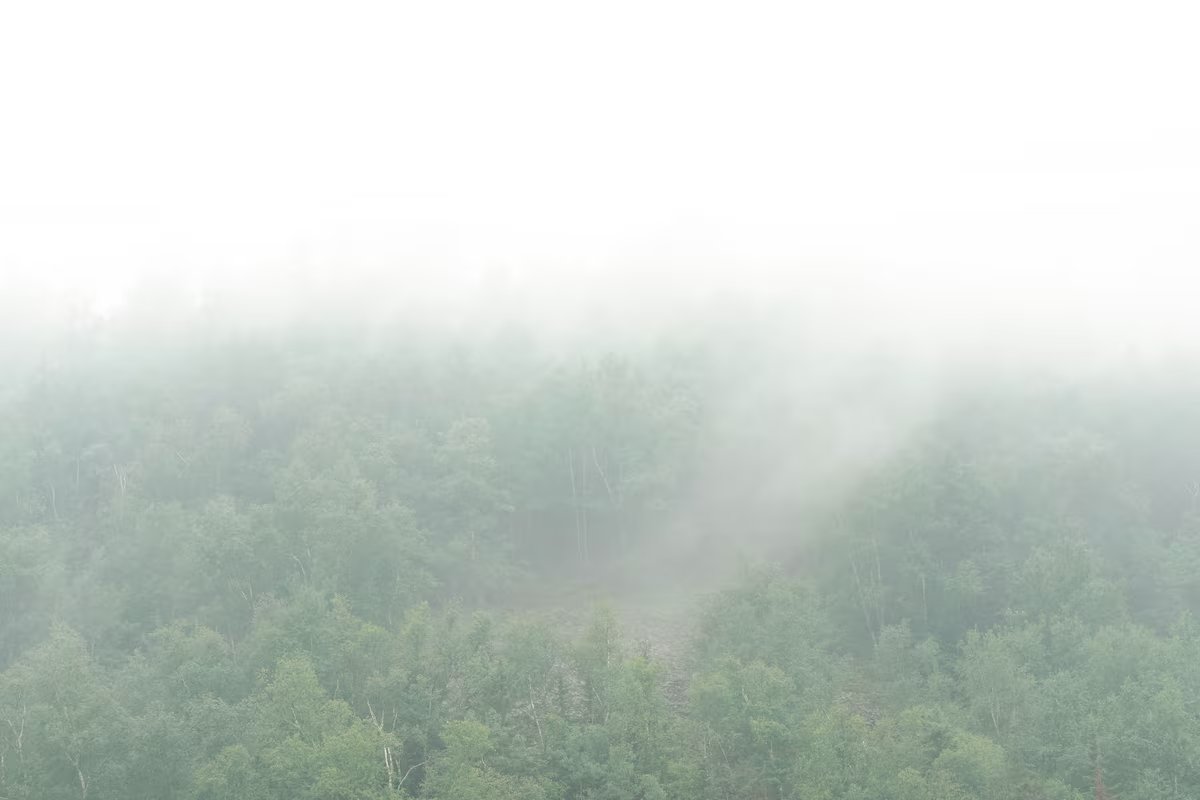
Wildfire smoke settles over trees in Thunder Bay, Ont., on July 17.Chris Young/The Canadian Press
Peter Kuitenbrouwer is a registered professional forester who teaches in the Master of Forest Conservation at the University of Toronto. He is the author of Maple Syrup: A Short History of Canada’s Sweetest Obsession.
On May 1, Fort McMurray celebrated a grim milestone: the 10th anniversary of the start of the 2016 forest fire that would eventually burn an area larger than Prince Edward Island and force the evacuation of more than 80,000 people.
This year, apparently, it is Ontario’s turn to burn. An out-of-control conflagration is raging in the boreal forest north of Thunder Bay. The biggest wildfires in the province’s history, labeled Thunder Bay 36, 54 and 56 and Dryden 34 and 35, have forced First Nations from their homes and sent billowing smoke to blanket the northeast all the way to Washington and make Toronto smell like a campfire.
First Nations chiefs demand public inquiry, resignations over Ontario’s wildfire response
In his 2023 book Fire Weather, author John Vaillant argued that Canada’s oil industry was tempting fate by developing both the oil sands and a city in the middle of a boreal forest, a naturally flammable ecosystem that is dependent on fire to renew itself. (The cones of both jack pine and lodgepole pine trees need fire to open and release their seeds.) The forest was always going to burn.
Forest fires in Northern Ontario cause poor air quality over Toronto, on July 15.COLE BURSTON/AFP/Getty Images
Now Canada’s forest industry, a pillar of our economy since colonial times, must also look itself in the mirror. First Nations have long harnessed fire to manage the forests; the Secwépemc peoples of British Columbia’s interior, for example, used fire to limit forest encroachment on grasslands, stop sagebrush spread and improve forage for hooved game. Settlers banned this practice, however, and for more than a century since, we have sought to suppress fires – yes, to safeguard communities, but also to protect the forests from ignition, so as to maximize forest products for our pulp, paper and lumber mills. This has increased the flammability of our forests, and the danger that they will burn out of control.
Canada wildfire maps: Where and how many are currently burning
In the boreal forest, mechanized logging machines can fell our forests with impressive efficiency. The forest industry argues that these techniques emulate natural disturbance, i.e. the fires and storms that periodically wipe out forests. After they are logged, legions of youth – brave industrial athletes whose ranks include my son – fan out each summer to replant trees. This all works, to a point. But the forests we grow back are homogenous and the same age, and thus more flammable.
Across Canada (except in Quebec), the forest industry also uses aircraft to spray the newly planted Crown forests with glyphosate, better known by its commercial name, Roundup, to suppress leaf trees, such as poplar and birch, which grow naturally after disturbance. The industry wants only conifers to grow, for the mills; leaf trees are competition. But leaf trees are also less flammable; witness the comparative rarity of forest fires in our leaf-dominant forests in the south of eastern Canada. When we kill leaf trees in the boreal forest, we increase fire risk.
So does that mean the Americans are right? This week on X, Republican John James, a U.S. Congressman from Michigan, fumed at the smoke blanketing his border state, and blamed Canada for abdicating its “responsibility to prevent a foreseeable disaster from crossing into another country’s airspace.”
The short answer is no. This kind of talk boils my blood. Mr. James is correct in his description of forest fires, but the responsibility lies not with Canada, per se; the main culprit is human-caused climate change. Canadians, per capita, may be more guilty than most of Earth’s citizens, given the amount of fuel we burn – a family member visiting from Australia this week was gob-smacked by the sheer number of gas-guzzling pickups in driveways across rural Ontario – but then, we’re in good company with the Americans, who are equally complicit in warming the planet. Burning fossil fuels traps greenhouse gases in our atmosphere, heats the planet, dries our forests and causes bigger fires.
Wildfire expert offers reality check for U.S. lawmakers who castigated Canada for smoke
The current U.S. administration has recklessly and suicidally turned its back on a transition to a low-carbon economy. The U.S.-Israeli attacks on Iran that led to the closure of the Strait of Hormuz, the world’s most significant fossil-fuel shipping lane, have caused a spike in fuel prices, encouraging the electrification of our economies. Meanwhile, our own federal government under Prime Minister Mark Carney has pulled away from Justin Trudeau’s bold moves to curb fossil-fuel use, and has instead championed pipelines. This is the wrong way to fight climate change.
Canada’s forest industry may be part of the problem with the forest fires, but it is also part of the solution.
Well-managed forests in both private and public hands, as well as intact (unlogged) forests, are less likely to burn; they sequester and store vast quantities of carbon. (Scandinavia has much to teach us about this.) The University of Toronto is currently erecting Canada’s tallest academic timber building, a 14-storey tower made of wood. Manufacturing things from concrete and steel releases copious amounts of carbon, whereas wood is an endlessly renewable building material that stores carbon for the life of the structure. Engineers at U of T, meanwhile, are innovating with AI-powered fire-prediction models that may help curb fires. The problem there is that AI data centres are themselves voracious consumers of energy and water, threatening to wipe out any benefits these technologies bring us.
The key, big-picture, is to transition to a low-carbon future. In the meantime, we can do a better job with forest management, informed by Indigenous knowledge, to avert or mitigate wildfire disaster.