Mamdani in Talks on Program to Give Tenants Stake in Buildings
It seemed like a far-left fantasy — not a serious idea but something to titillate the base: on page 38 of Zohran Mamdani’s housing plan, a program to give tenants part-ownership of their buildings.
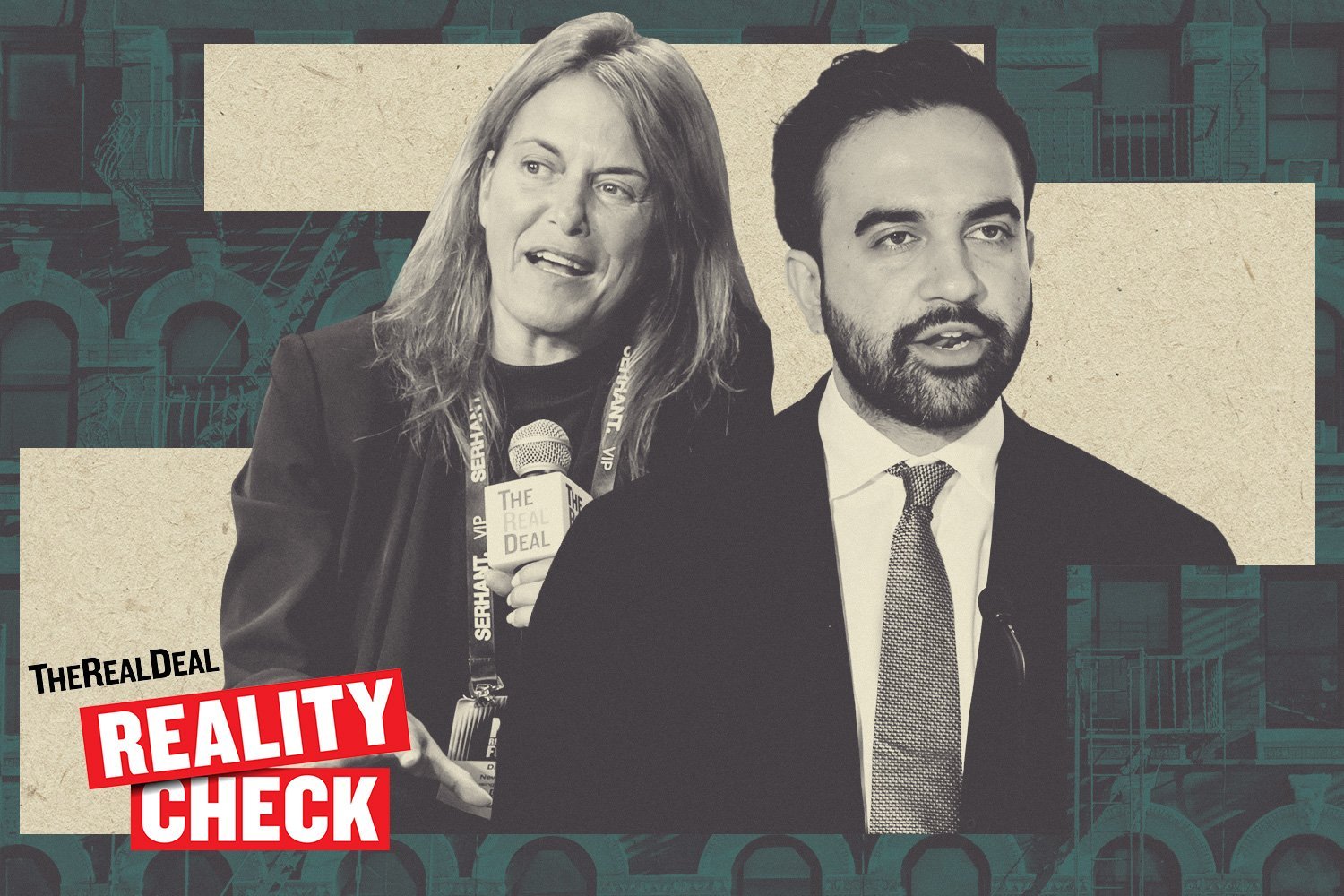
But last week his housing commissioner, Dina Levy, said the administration is having “really interesting conversations” with for-profit real estate firms about making it happen.
“So if a building is performing well and rents are being paid and the building is appreciating,” Levy said at a conference, “could tenants in some way basically share in that appreciated value through some type of equity stake in the building?”
Before you grab a pitchfork and a torch, this is not, it seems, a plan to force owners of existing buildings to cede any ownership to tenants.
But the city could make it a condition of affordable projects it is subsidizing. Developers would know going in that the program would apply.
So, is this a reasonable idea or bat-shit crazy?
Here is Mamdani’s stated rationale for giving tenants an equity reward without any of the risk of ownership:
“Renters contribute to their buildings’ stability by paying rent, maintaining their apartment, and building community with their neighbors. Yet the value created by those contributions is not shared with tenants, with all appreciated value flowing to the owner. This pilot will aim to address that imbalance.”
Let’s say I’m an Equinox member who “contributes to the fitness chain’s stability” by paying my membership fees, wiping down the equipment after use and “building community” with other gym members. Should Equinox give me an ownership stake?
Running such a program would be a nightmare. It’s easy to track who pays membership fees, but not who is nice (spotting other members on the bench press) or naughty (clogging the toilets with paper towels).
Similarly, landlords don’t necessarily know which tenants perpetuate the building’s pest problem by leaving food out and hoarding junk in their apartments.
Gauging “community building” would be subjective, and impossible in any case. If a neighbor doesn’t return my “hello” when I pass him in the hallway, should I report him to the superintendent? What if he occasionally rents his unit to noisy tourists on Airbnb?
“No equity stake for you, Mr. Jones! You didn’t build community!”
The legal fees and documentation involved in parceling out ownership stakes to tenants, who might stay for a few months or a few decades, would be an expense better spent on housing.
Would the mayor’s pilot program inspire tenants to pay rent on time, not hoard, allow inspectors inside to clear violations, and generally be more responsible?
Some companies have profit-sharing plans or award company stock to make longtime employees shareholders. That might improve retention and work performance. But they are employees. Tenants are more like customers.
Even in shared-ownership housing, meaning co-ops, the incentive to help the building is weak. Thomas Yu, executive director of the housing nonprofit Asian Americans For Equality, spoke at the same conference as Levy about problems at limited equity co-ops.
Residents “couldn’t work together after the UHABs of the world left,” he said. “They didn’t have someone organizing them. Sometimes, life happens. Even, like, market-rate co-ops are a pain in the butt to run.”
As Yu noted, a few shareholders typically do most of the work while the vast majority contribute nothing. Tenants in affordable housing are unlikely to be incentivized by the prospect of a tiny ownership stake.
Mamdani is not predicting his program would improve renters’ behavior. Rather, it’s one of several strategies to give them the benefits of ownership without the downside, such as risking their own capital. He expects lenders and philanthropic organizations to pitch in.
Maybe some will, but landlords seem unlikely to embrace the program. Aside from its likely administrative complexity, the notion that tenants should get a piece of their building is a hard sell.
“They don’t own the building!” said Zachary Rothken, a landlord-side lawyer at Rosenberg & Estis. “Making friends with their neighbors does not add value to the building!”
In a tone of disbelief, Rothken read aloud the pilot program’s description.
“What it says,” he surmised, “is counter to any economic reality that the United States of America lives by.”
Read more

With NY poised to lose billions, socialists fight real estate

Landlord does the math on his vacant apartment

Mamdani’s housing plan picks winners and losers