RBA’s Hunter says board will act as needed to return inflation to target
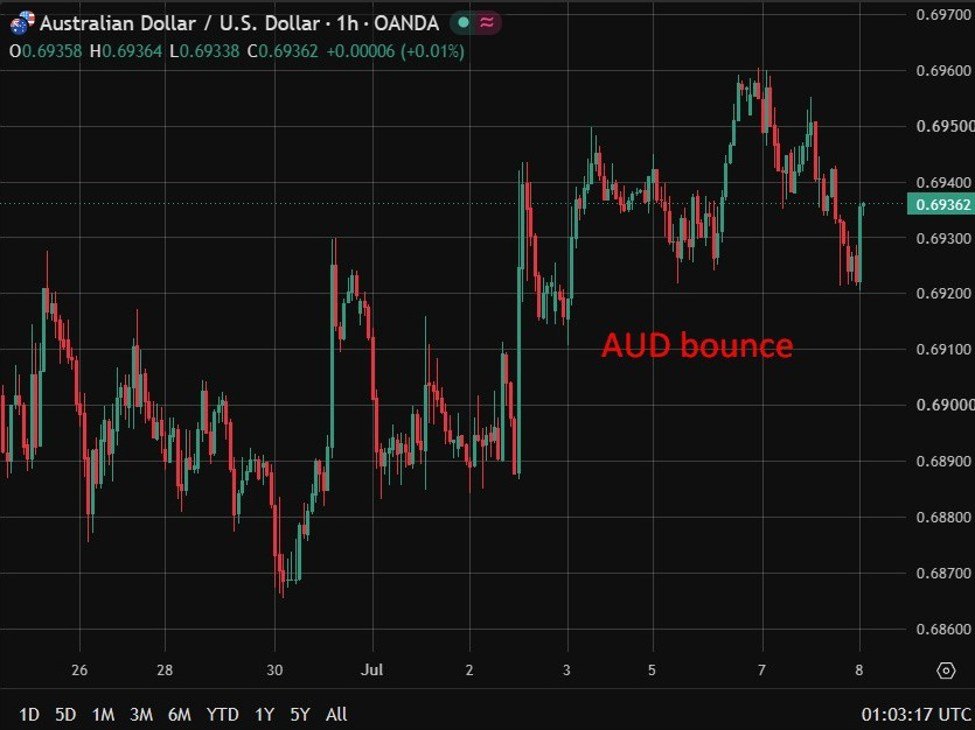
Hunter’s comments keep a tightening bias alive at a moment when Brent has just spiked to 76.38 dollars a barrel on fresh US strikes on Iran, reversing the market’s earlier bet that Australian rates had peaked with only 15 basis points of further tightening priced by year end. Her explicit warning that supply shocks should not always be looked through, combined with the RBA’s stated readiness to act if inflation expectations drift higher, gives the market reason to reprice that peak rate view if oil stays elevated. At the same time, her acknowledgment that policy would have to weigh any tightening against a weakening labour market and activity leaves the door open to a more patient stance if the economic damage from the oil shock deepens. The tension between those two forces, persistent inflation risk against growth and employment costs, is likely to keep rate expectations volatile as the Iran situation evolves.
—
RBA’s Hunter says the board will act as needed to return inflation to target, warning some tightening may be required if the oil shock lifts inflation expectations, per Reuters.
The RBA isn’t ruling out more hikes, even as Brent spikes again on fresh Iran strikes.
Summary:
- RBA Assistant Governor Sarah Hunter said the recent oil shock has led to falls in consumer and business confidence but there are so far few signs of a marked slowdown in activity
- She said it is not always correct to look through supply shocks and that a period of low inflation and higher unemployment might be needed if inflation expectations start to drift up
- Hunter said supply shocks create difficult trade-offs but do not lessen the importance of maintaining low and stable inflation
- She said the board will continue to act as needed to ensure inflation returns to target and the labour market to sustainable full employment
- The RBA has raised rates three times this year to 4.35% to head off a global energy shock from the Iran war, holding steady in June
A senior Reserve Bank of Australia official said Wednesday the central bank will act as needed to bring inflation back to target, even as the recent oil shock has yet to produce a marked slowdown in economic activity.
RBA Assistant Governor (Economic) Sarah Hunter, speaking about the effects of supply shocks, said according to Reuters that the oil shock has weighed on consumer and business confidence, but that signs of a broader economic slowdown remain limited so far. She cautioned that it is not always appropriate for policymakers to look through supply shocks, and that if inflation expectations begin to drift upward, a period of lower inflation and higher unemployment might ultimately be necessary to contain them.
“While supply shocks create difficult trade offs, they do not lessen the importance of maintaining low and stable inflation,” Hunter said, adding that the board will continue to act as needed to ensure inflation returns to target and the labour market to sustainable full employment.
The RBA has lifted interest rates three times this year, taking the cash rate to 4.35%, in response to the global energy shock stemming from the Iran war. Policymakers held rates steady at the June meeting but warned further tightening could not be ruled out as they continued to monitor how much of the rise in oil prices was passing through to broader prices across the economy.
A possible resolution to the Iran war in June had briefly sent oil prices sliding back toward pre-war levels, leading markets to bet that Australian interest rates had likely peaked, with only around 15 basis points of further tightening priced in by year end. That view is now being tested, with Brent crude futures climbing on Wednesday after the United States launched fresh strikes on Iran following attacks on commercial vessels in the Strait of Hormuz.
Hunter said that if the economy faces a supply shock with a persistent upward effect on inflation, some further tightening could be warranted, but that policymakers would need to weigh that against any softening in economic activity and the labour market. She added that if activity were to be hit harder by the shock, the bias toward further tightening would likely be more limited.