World Cup final is already the biggest ever prediction market as Kalshi bets top $1.27 billion—with Spain favored to beat Argentina
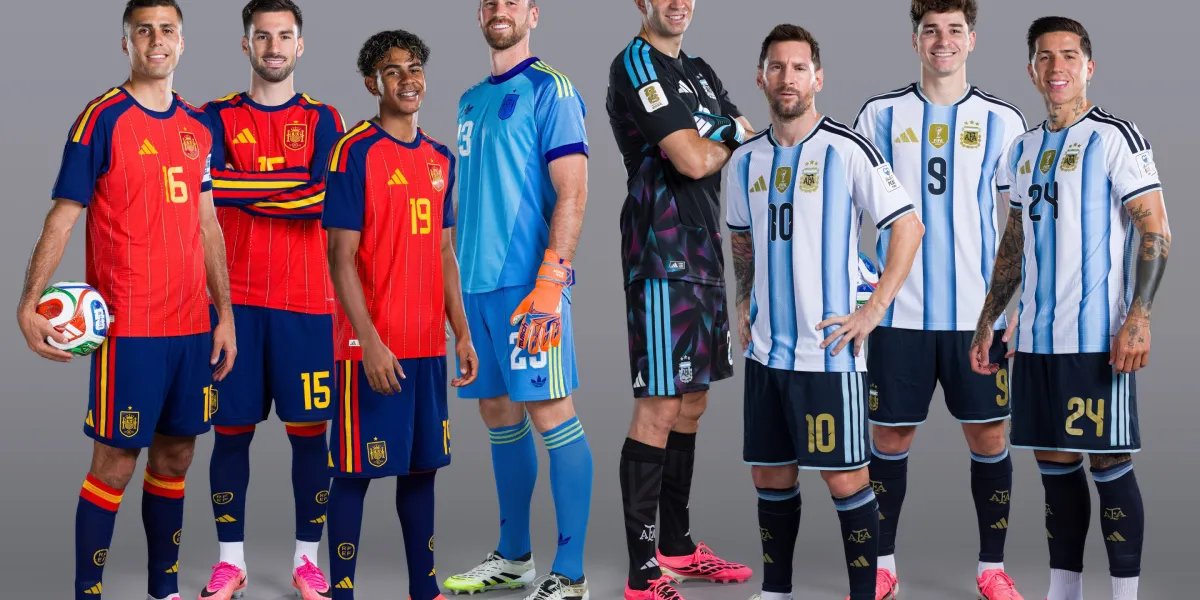
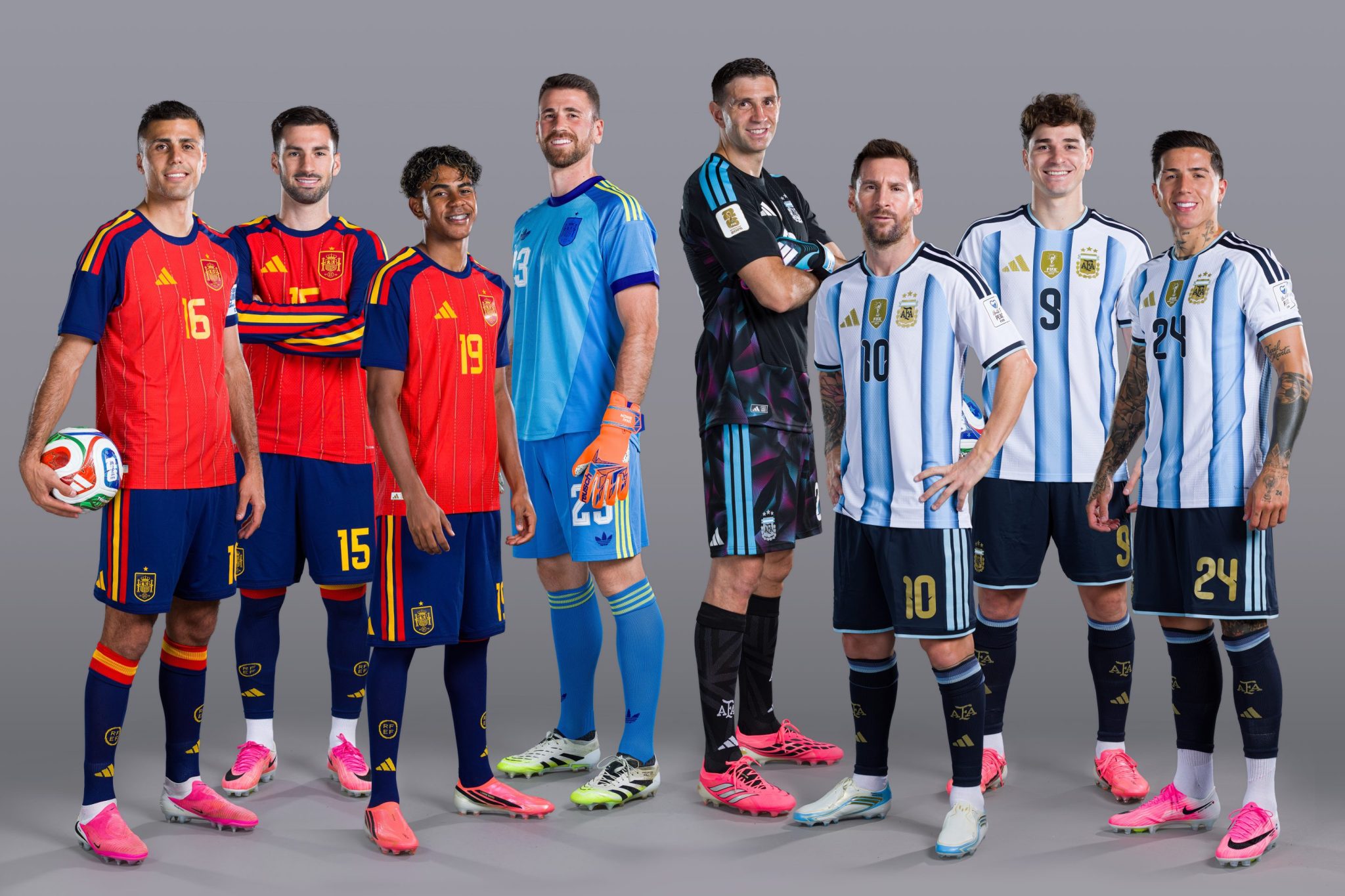
The World Cup is driving record-breaking activity on prediction markets, with popular platforms Kalshi and Polymarket reporting their highest trading volumes to date. Just days ahead of Sunday’s final, the Argentina–Spain contract has become the single largest market in the platforms’ history, while overall World Cup trading has outpaced other major sports-related contracts.
According to data shared by Kalshi, the contract for the outcome of the Argentina–Spain final, which went live Wednesday following Argentina’s win over England, has already surpassed $1.27 billion in trading volume. As of mid-day Friday, bets on Kalshi showed the Spanish team with 61% odds to prevail over Lionel Messi’s squad.
As of Tuesday morning, total trading across World Cup contracts had exceeded $25 billion—dwarfing volumes seen in other major sports markets, including roughly $2 billion for the NBA finals and $1 billion for the Super Bowl.
Polymarket has seen a similar surge in activity, with the Argentina–Spain contract reaching nearly $3 million in trading volume as of Friday. The platform told Fortune that more than 64,000 users had engaged with the match page three days before the final, signaling deep liquidity. Its World Cup Winner market has generated $4 billion in cumulative trading volume since launching in July 2025, making it the largest single market in Polymarket’s history and surpassing the 2024 U.S. presidential election. In June alone, the platform recorded nearly $11 billion in global monthly notional volume, largely driven by World Cup trading.
Prediction markets are not simply riding a World Cup wave. The tournament is reinforcing their broader ascent in the United States, where they are gaining traction as an accessible way to trade on real-world outcomes. These platforms allow users to take small positions directly from their phones, across markets that range from sports to politics. For many fans, these markets have become part of the standard playbook for engaging with major events, alongside traditional sportsbooks and fantasy leagues.
Mixed accuracy
Prediction markets can be used to gauge public sentiment and assign probabilities to future events. But unlike interest rate decisions, where traders can draw on economic data, or political elections, where polling and sentiment offer clearer signals, sports outcomes are far less predictable. Soccer in particular has produced some of the most surprising results in modern sports, which makes it a uniquely difficult arena for forecasting.
As a result, Kalshi and Polymarket’s World Cup contracts have shown mixed accuracy in predicting match outcomes. Two of the most closely watched semifinal matchups this week were France vs. Spain and Argentina vs. England. Early market pricing ahead of kickoff did not end up matching the eventual results.
In both matches, Kalshi markets initially gave roughly a 10% edge to the team that ultimately lost. Polymarket mirrored that pattern, though with a smaller percentage gap. In France vs. Spain, odds flipped about 20 minutes into the game, just before Spain scored its first penalty goal. England vs. Argentina was more volatile, with the odds largely tracking whichever team was ahead on the scoreboard. Results were especially unpredictable, given the caliber of all four teams. In earlier rounds, however, market predictions tended to be more accurate.
When Morocco faced France in the quarterfinals, Kalshi bettors favored Kylian Mbappé’s side at 76%, while Polymarket users put the team at 62%. Ahead of Argentina’s match against Switzerland, the odds were tilted toward Messi’s team. Spain’s matchup against Belgium was similar, with Lamine Yamal’s side favored at 73% on Kalshi and 59% on Polymarket. Only in Norway vs. England was the gap slightly smaller, favoring the latter team.